One Paste Starts a Series: the Same Little Hero, a New Adventure Every Volume.
336 Agentic Prompts That Each Build a Complete Read-and-Color Storybook in Two Finished Editions
Every Prompt Hands Your AI Agent a Whole Children’s Book — a 24-Page Story Painted in Full Color and Redrawn as Coloring Pages, Packaged and Ready for Amazon KDP and Etsy
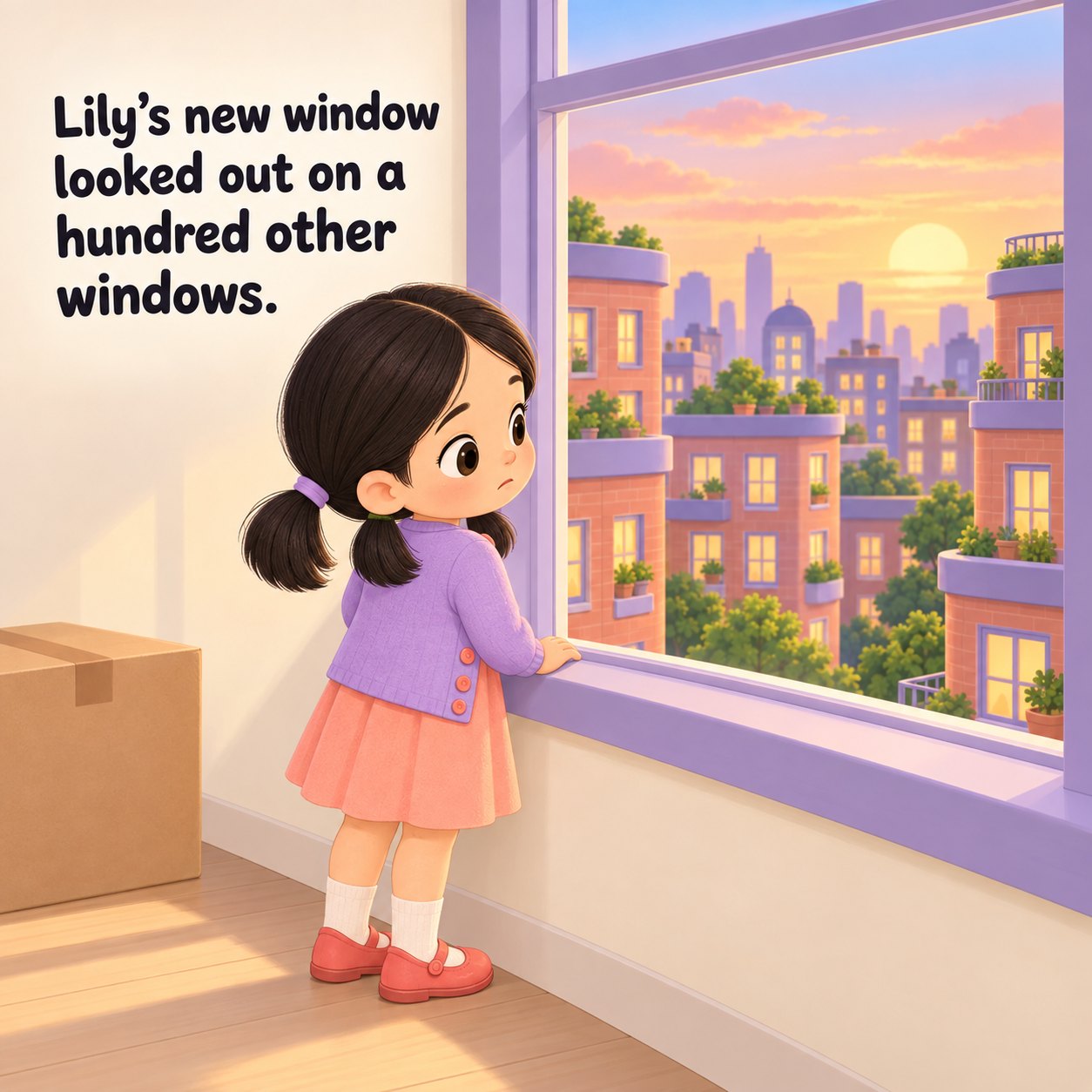
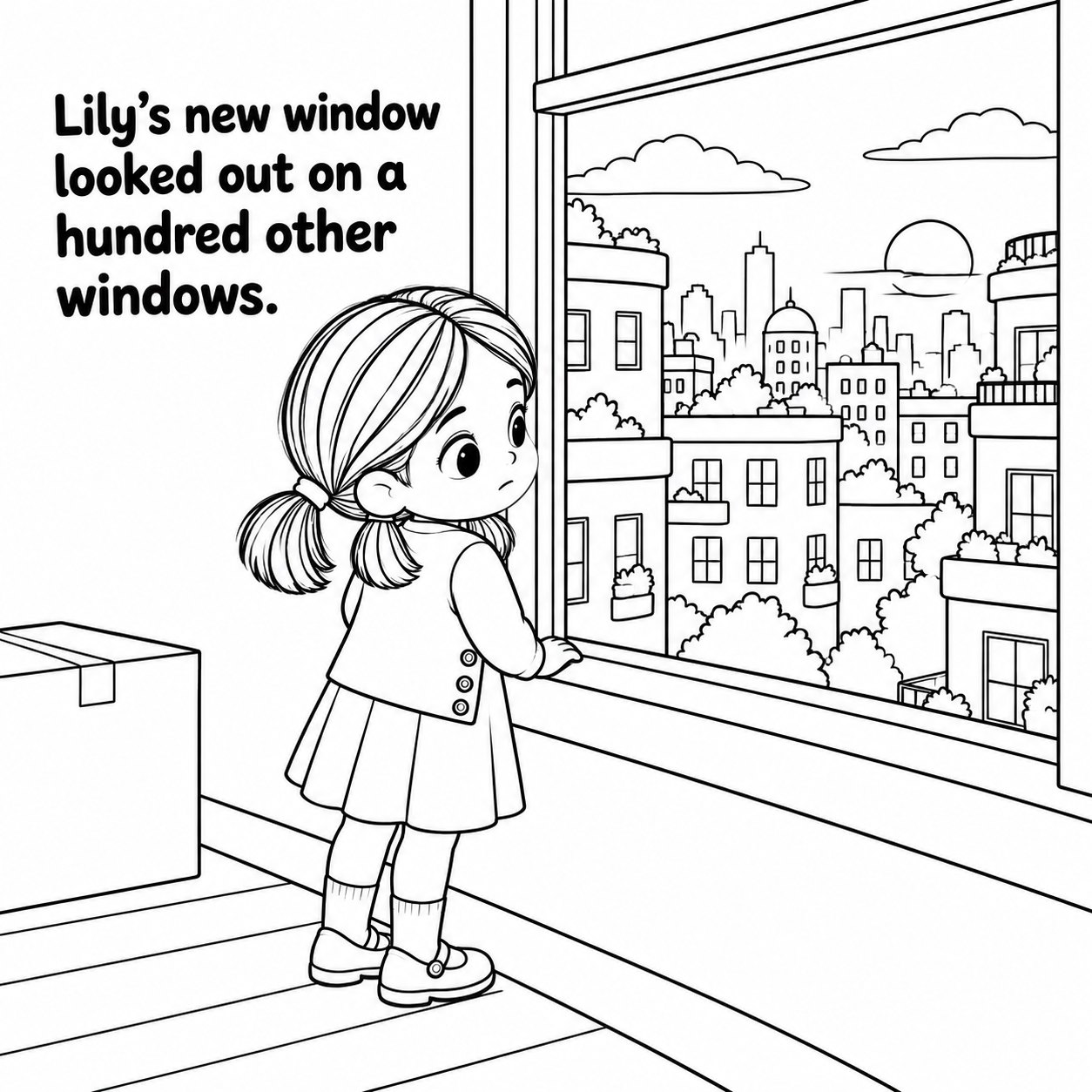
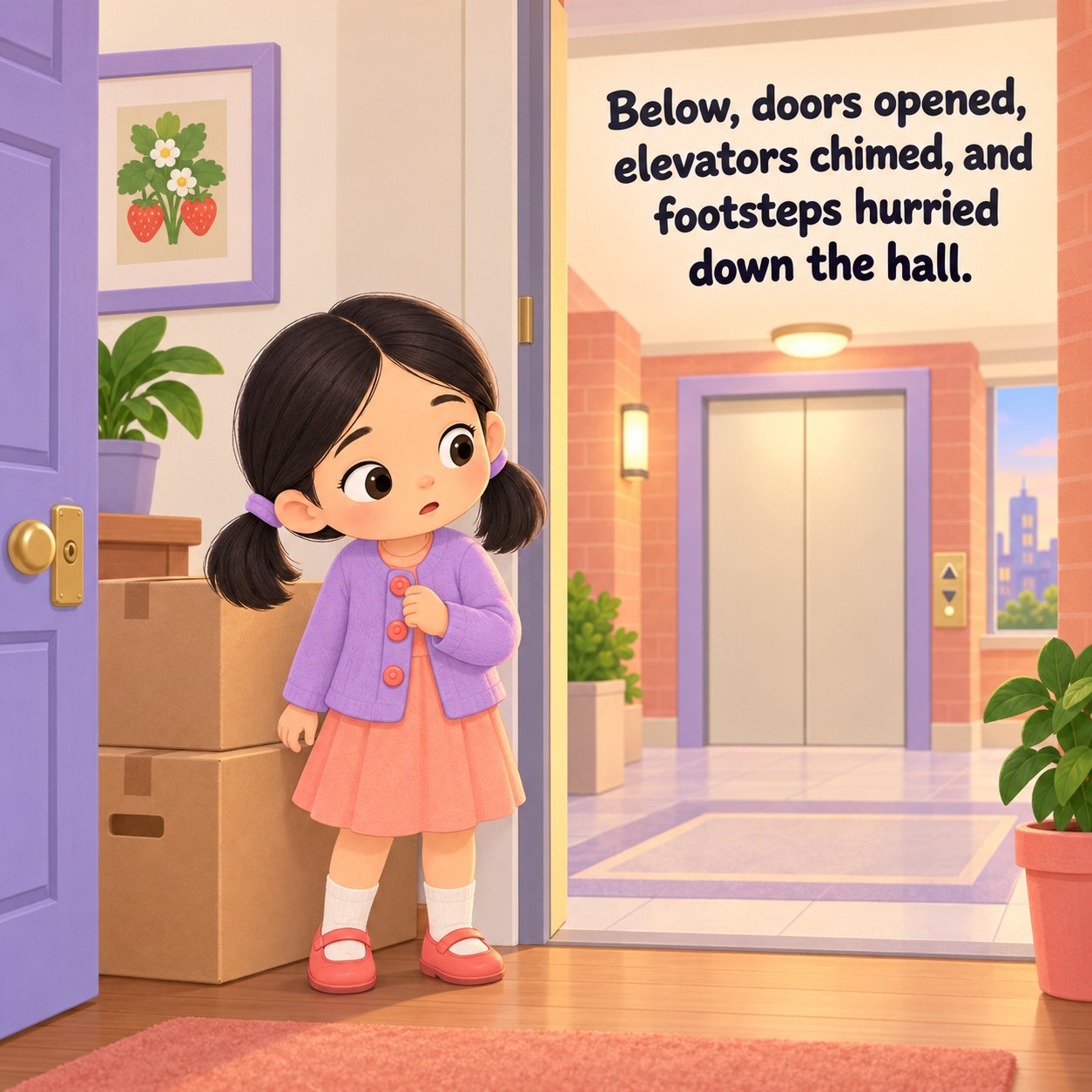
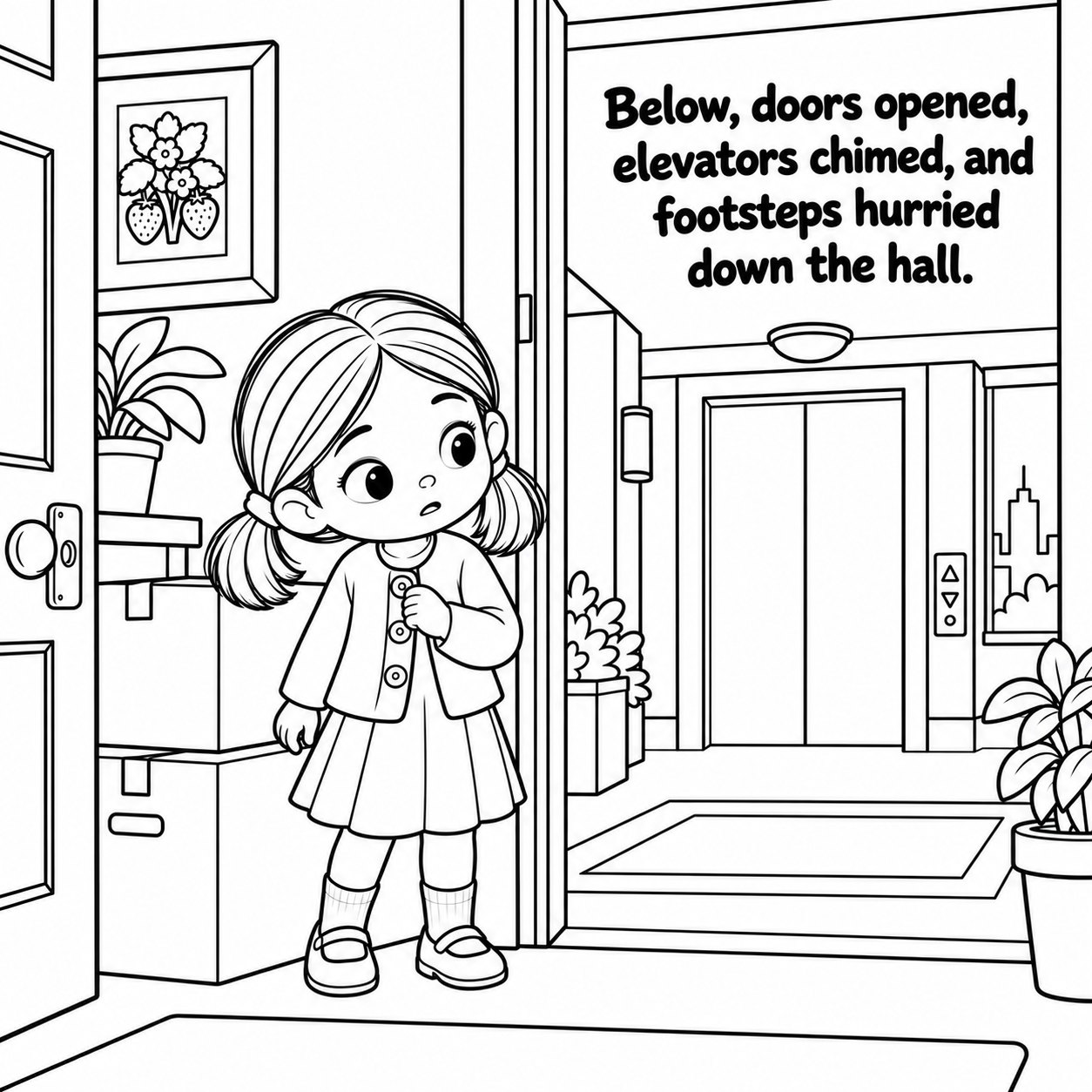
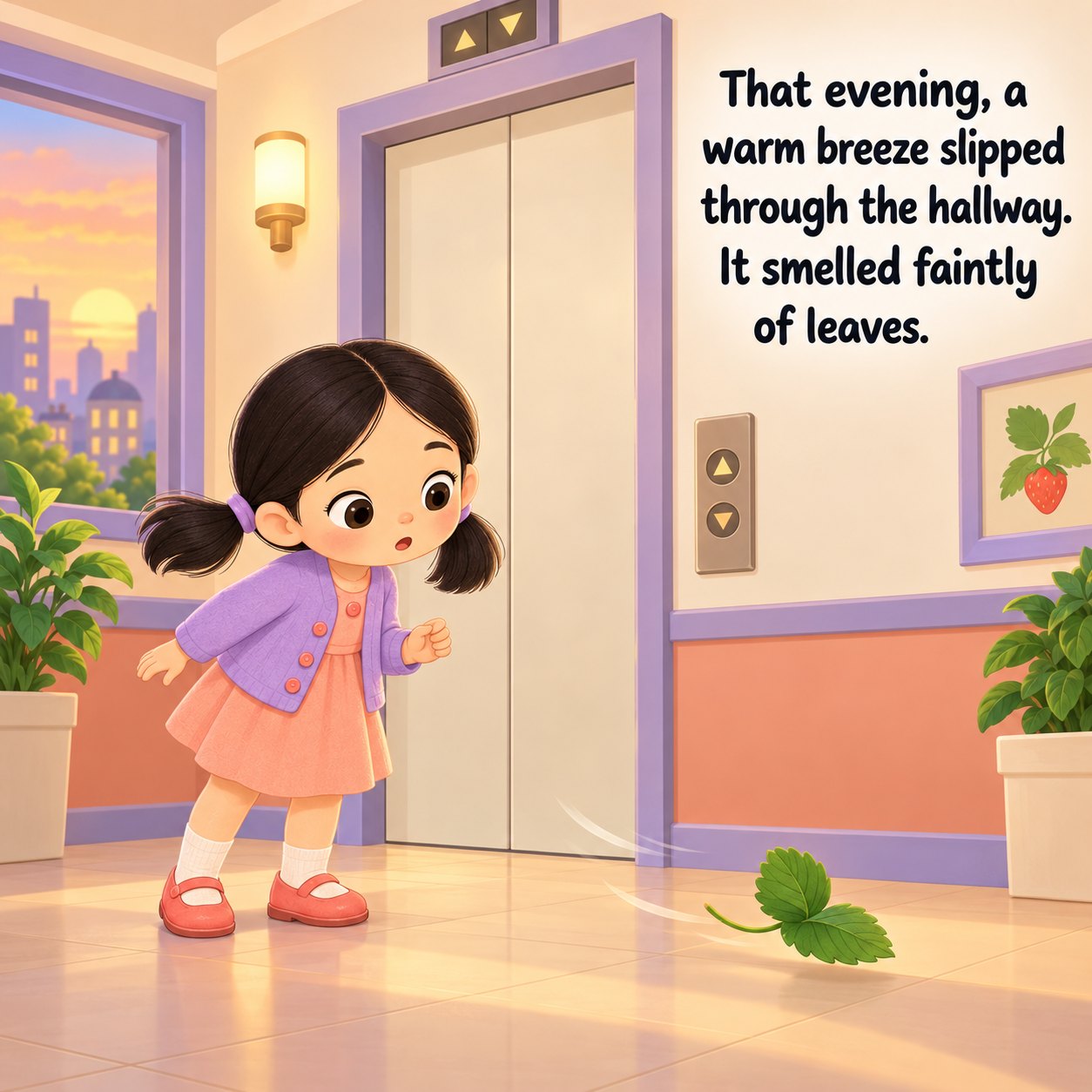
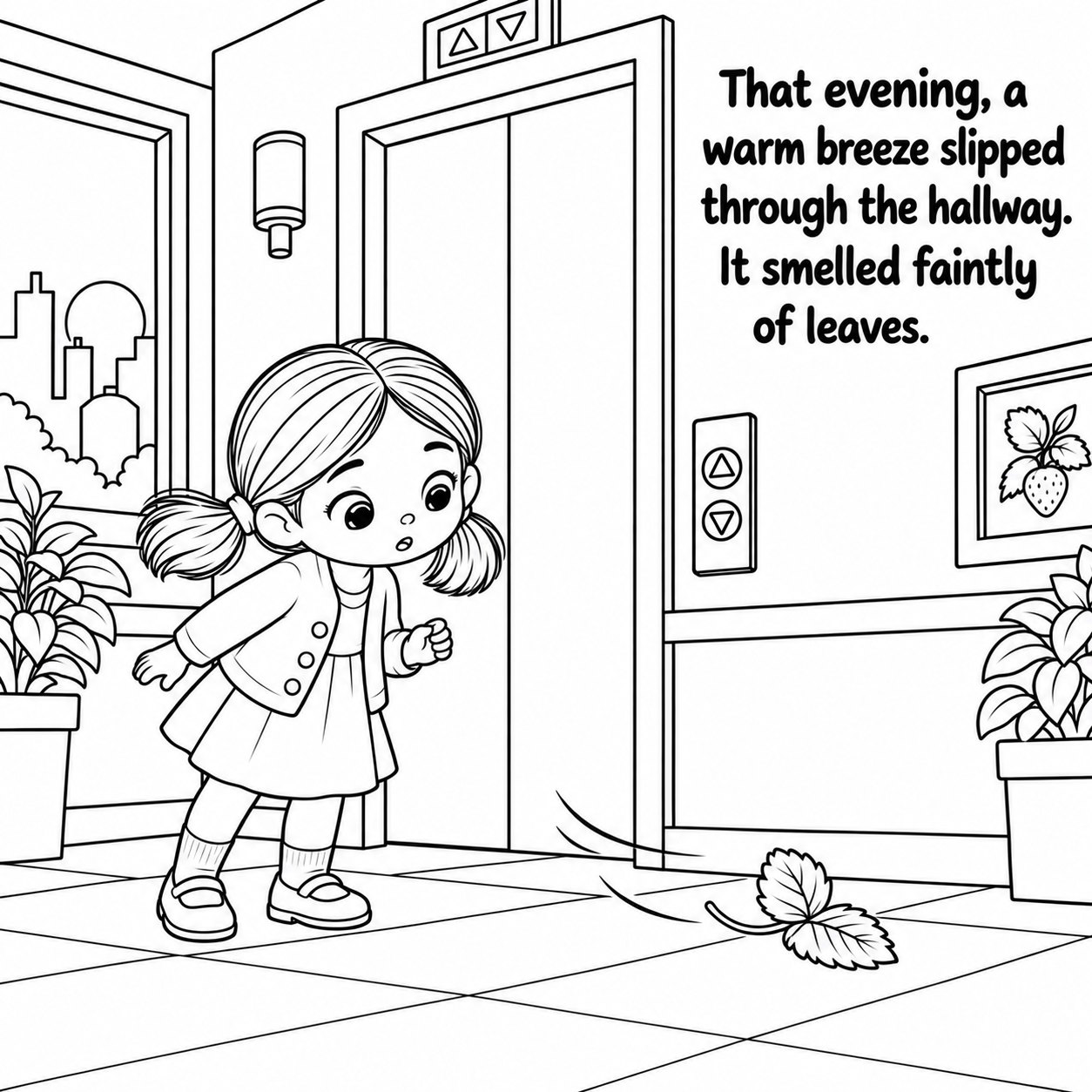
Children’s Storybooks and Coloring Books Are Two of the Longest-Selling Formats in Print — and This Product Is Both at Once
Parents, grandparents, teachers, and Sunday-school leaders have been buying picture books and coloring books for generations, and they show no sign of stopping. They buy them for bedtime, for birthdays, for road trips, for rainy afternoons, and for every child who walks through the door.
The numbers behind that habit are large. The global children’s book market was valued at roughly $11.2 billion in 2025 and is projected to pass $15.8 billion by 2034.
Inside it, activity and coloring books are the fastest-growing product category, expanding at about 5.1% a year — and picture books alone account for around 65% of all children’s books sold.
And the storefronts are wide open to you. Amazon KDP prints every square 8.5 x 8.5 paperback on demand and ships it for you, while Etsy’s digital-download market passed roughly $3.2 billion in 2024, with printable coloring books ranking among its best-selling digital products.
You don’t have to take my word for the appetite — look at what real buyers are doing in this exact niche right now:
These are not flashy products. They are simple, warm stories a child can read and then color — and that is exactly why they never stop selling.
Then Why Are the Shelves Still Full of the Same Few Names?
Because a children’s storybook is far more work than it looks from the outside — and a read-and-color storybook is that work twice.
One finished title means a real story with a beginning, a turning point, and a gentle ending, a hero who looks identical on all 24 pages, the words placed cleanly on every picture, a cover with the title set in it, and then a second version of every single page drawn as clean line art a five-year-old can color.
Try it by hand and you slam into the same six walls that stop almost everyone:
Each wall is small on its own.
Stacked together, they are why most people finish half of one book and run out of steam somewhere around page nine — before a child ever reads it.
Until now.
What if one paste wrote the story, locked the hero, painted all 24 pages with the words already in them, redrew each page as a coloring page, checked its own work, and packed both books into folders ready for Amazon and Etsy — while you went out for a coffee?
Introducing:
336 Agentic Prompts for Read-and-Color Storybook Series
Each of these is an Agentic Prompt — a complete production run written for ChatGPT Codex or ChatGPT Work, the two desktop AI agents that can plan, generate images, check them, and save real files on your computer. You paste it once. The agent does the rest, in two phases.
First it writes the full plan and shows it to you. In that plan you get:
You read the story, ask for any changes you want, and answer just two questions: the author name for the covers, and your go-ahead. That is the last decision you make.
The real magic is what happens next — automatically. The agent renders the four covers, then works through the book one page at a time: it paints the full-color page, checks it, and hands that finished page back to the image model to redraw as clean black line art.
That is why the coloring page matches its color page stroke for stroke — same composition, same hero, same words in the same place.
Every image is held to the same gate before it is saved: a true 2550 x 2550 square at 300 DPI, the character matching the Lock, the story text spelled exactly as planned, color pages fully painted, coloring pages pure black on pure white.
A page that misses is thrown out and regenerated. The agent never stops to ask whether it should continue, and it never leaves a placeholder where a page belongs.
And when the agent reports back, what’s sitting on your computer is two finished, ready-to-publish books:
Why “Agentic” Means One Paste Today and a Whole Bookshelf Later
These are Agentic Prompts, written for the newest kind of AI: agents that carry out a job instead of answering a question. Paste one into ChatGPT Codex or ChatGPT Work and it plans, renders, verifies, typesets, and files — the way a small illustration studio would, except it finishes both editions in an afternoon.
That is also why the series matters. The agent keeps the plan it wrote, and the plan holds the Locks.
Say “Volume 2” and it re-reads that plan, keeps the hero and the art style exactly as they are, invents a new adventure with a new lesson, and builds 24 brand-new pages in both editions — no page repeated from Volume 1.
Then Volume 3. Then Volume 4. Henry’s Quiet-Heart Adventures, Barnaby’s Berry Meadow Stories, Lily’s City Garden Stories — the three series on this page came from three of the 336 prompts, and each one keeps going for as long as you keep asking.
Here is what that buys you in practice:
That is what the word Agentic on the label means: every one of the 336 prompts walks in like a hired studio that already knows the brief, and walks out with a series started.
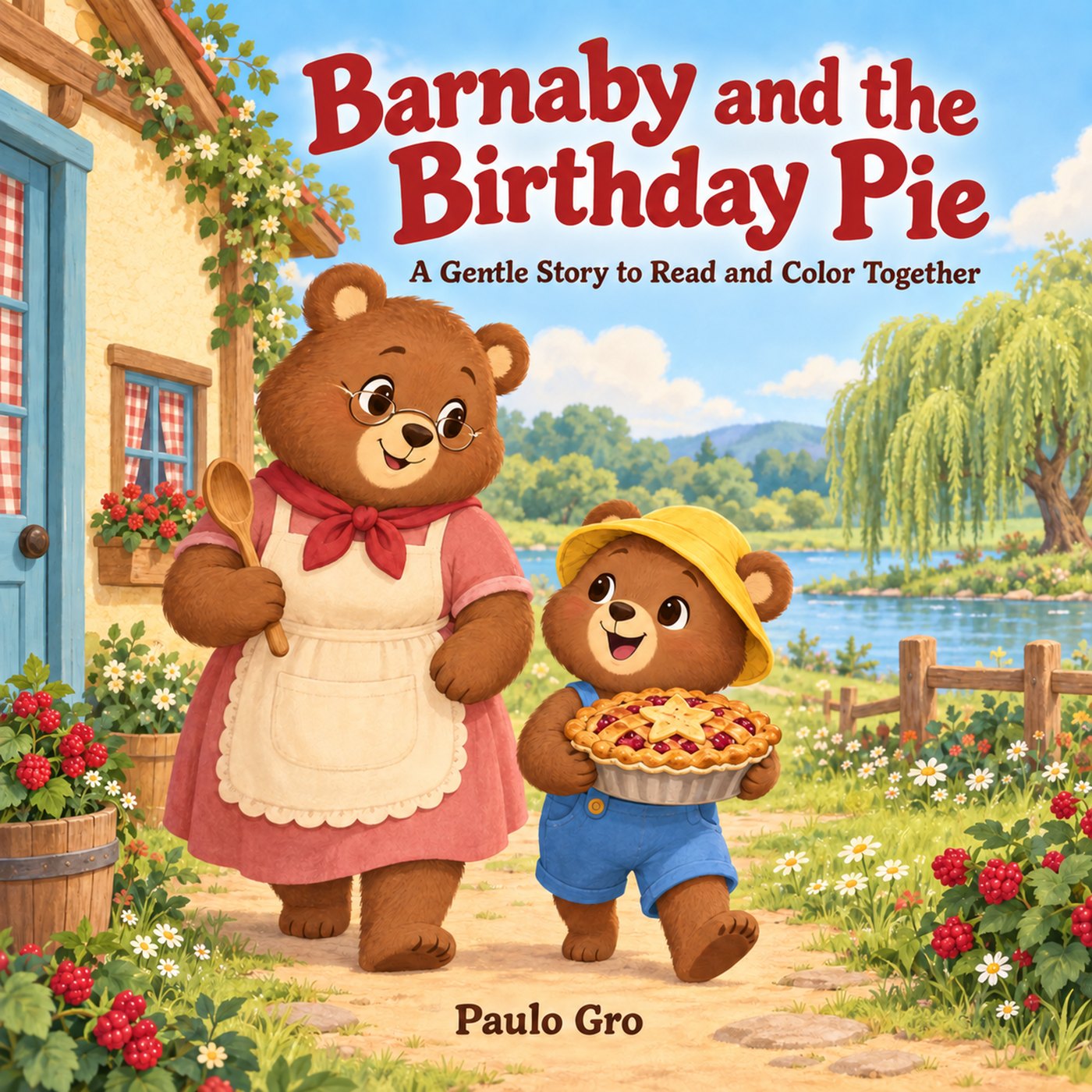
Here is that studio at work on a different prompt — Barnaby and the Birthday Pie, a bear cub helping Grandma bake — three pages in both editions, built by the same paste-and-approve routine as Henry:
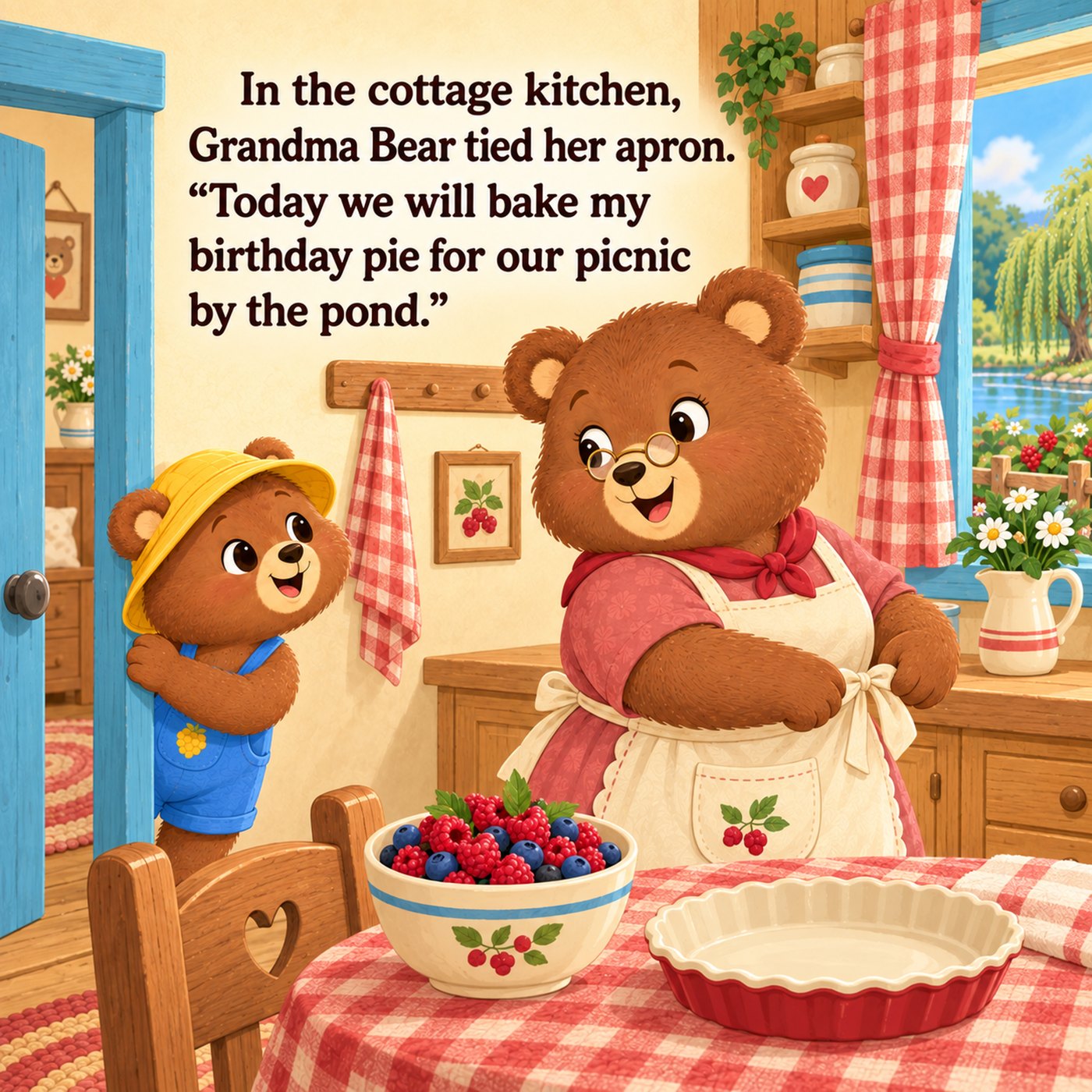
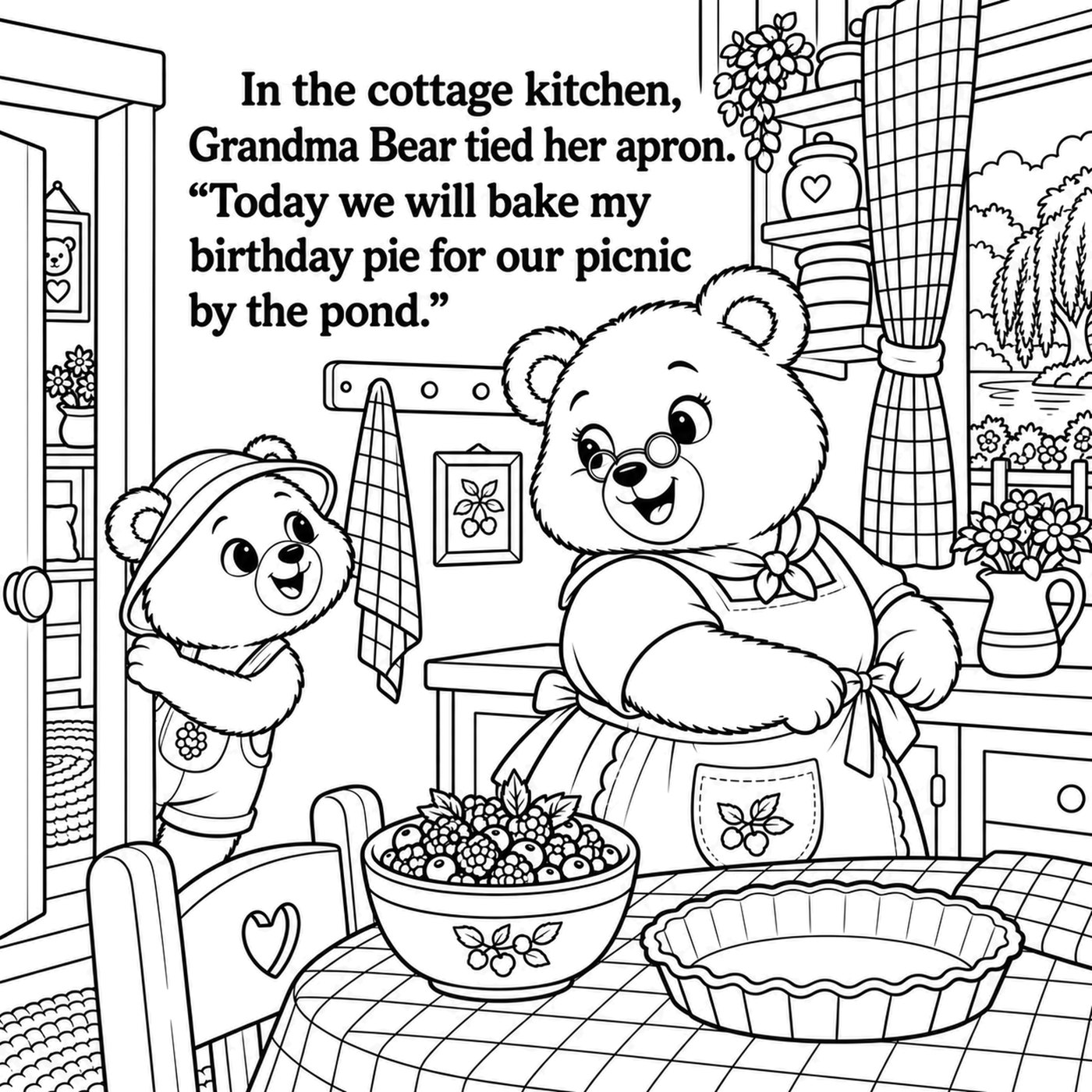
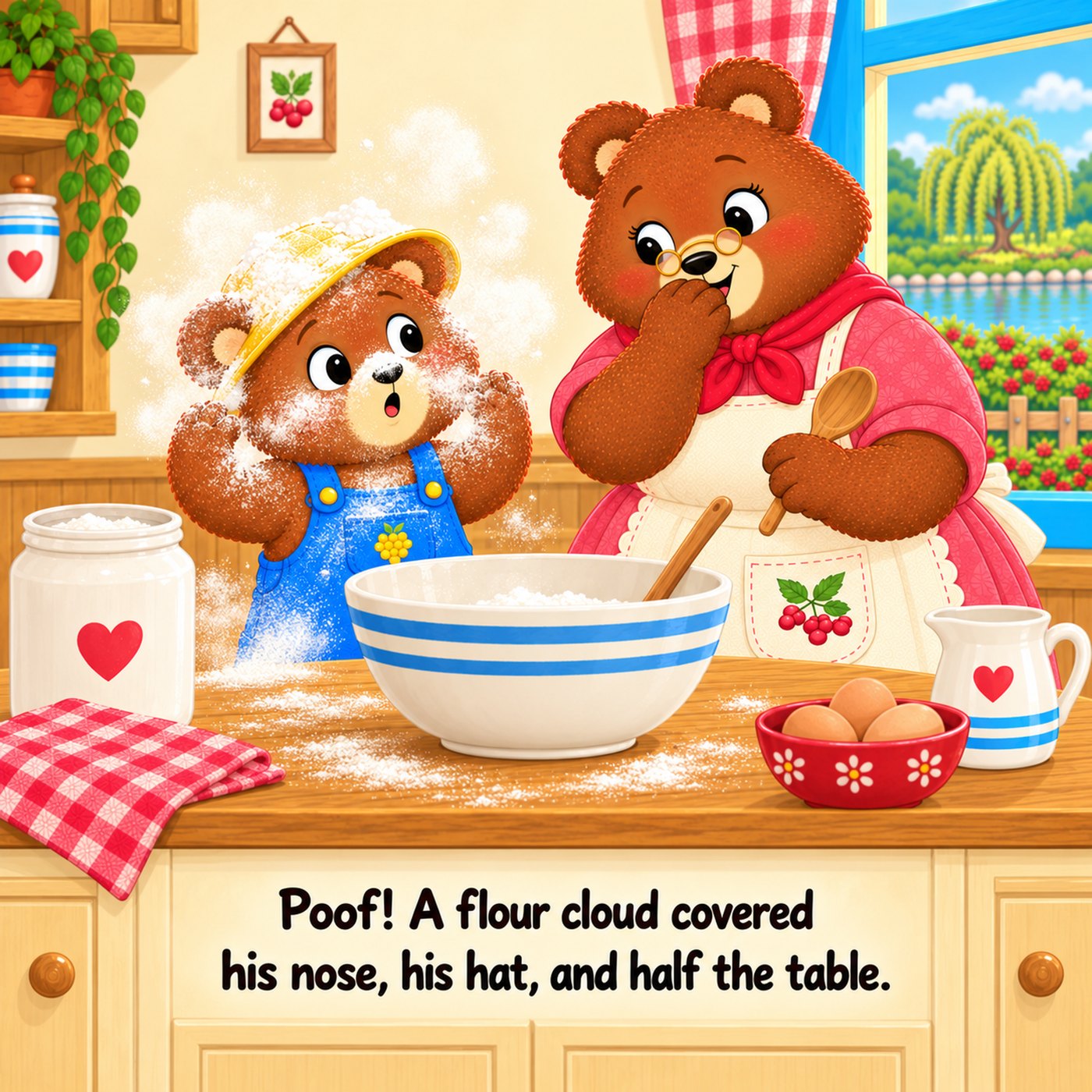
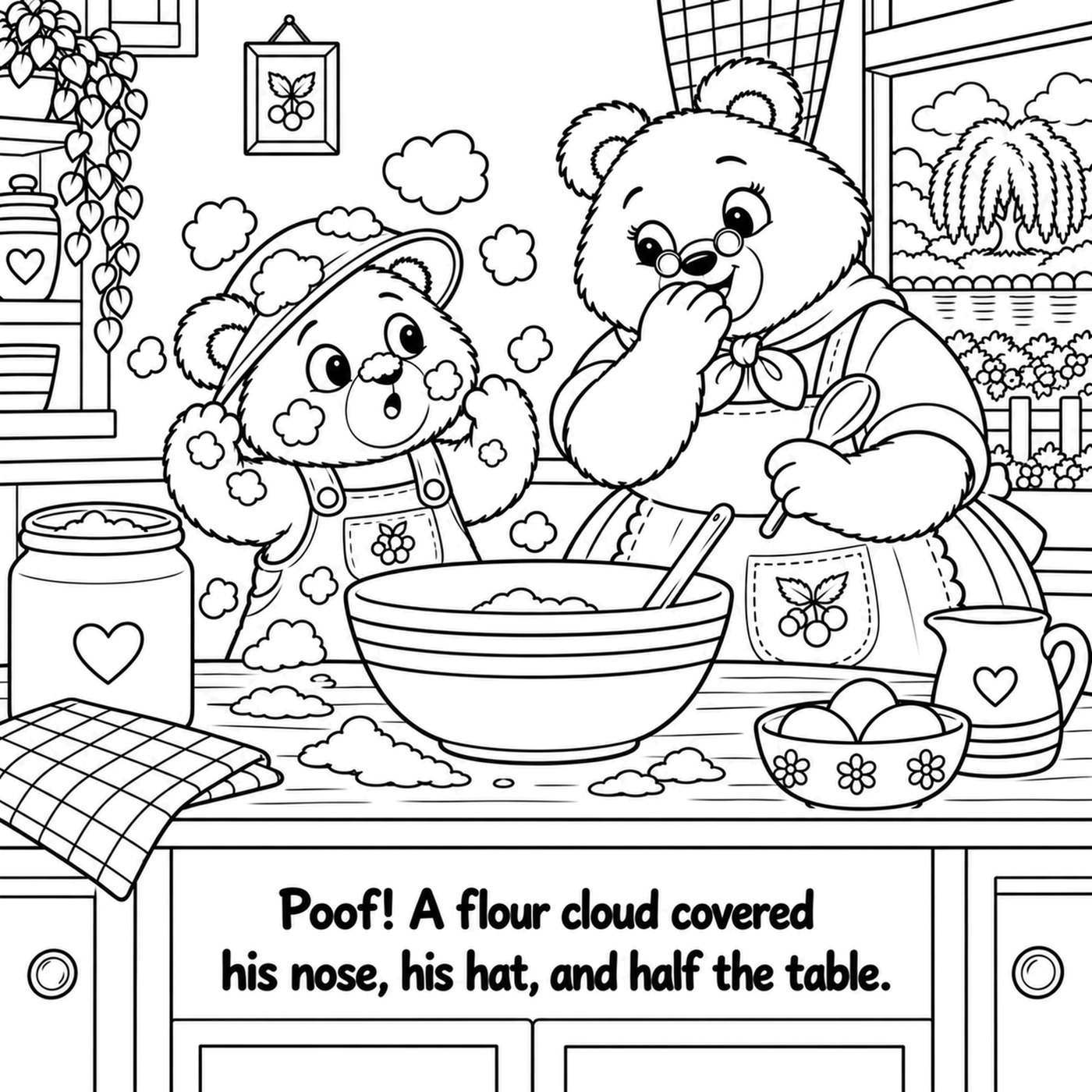
Different hero, different kitchen, different palette — the same two editions, matched page for page, because the rules travel inside the prompt, not inside the story.
Why Read-and-Color Storybooks Sell in Any Season
This format sits on advantages most publishing niches never get. Six of them work for you from the first book:
Own 48 Story Themes Parents Already Search For
These are not random kids’ topics. Every theme is a story situation families already look for by name — the first day of school, a new baby, a snow day, a first bike ride.
They are the moments a parent wants a book about because their child is living it this week.
And because each theme holds several Agentic Prompts, you can publish an entire line inside a single niche — a whole shelf of bedtime stories, or of farm stories — without any two books sharing a hero or a plot.
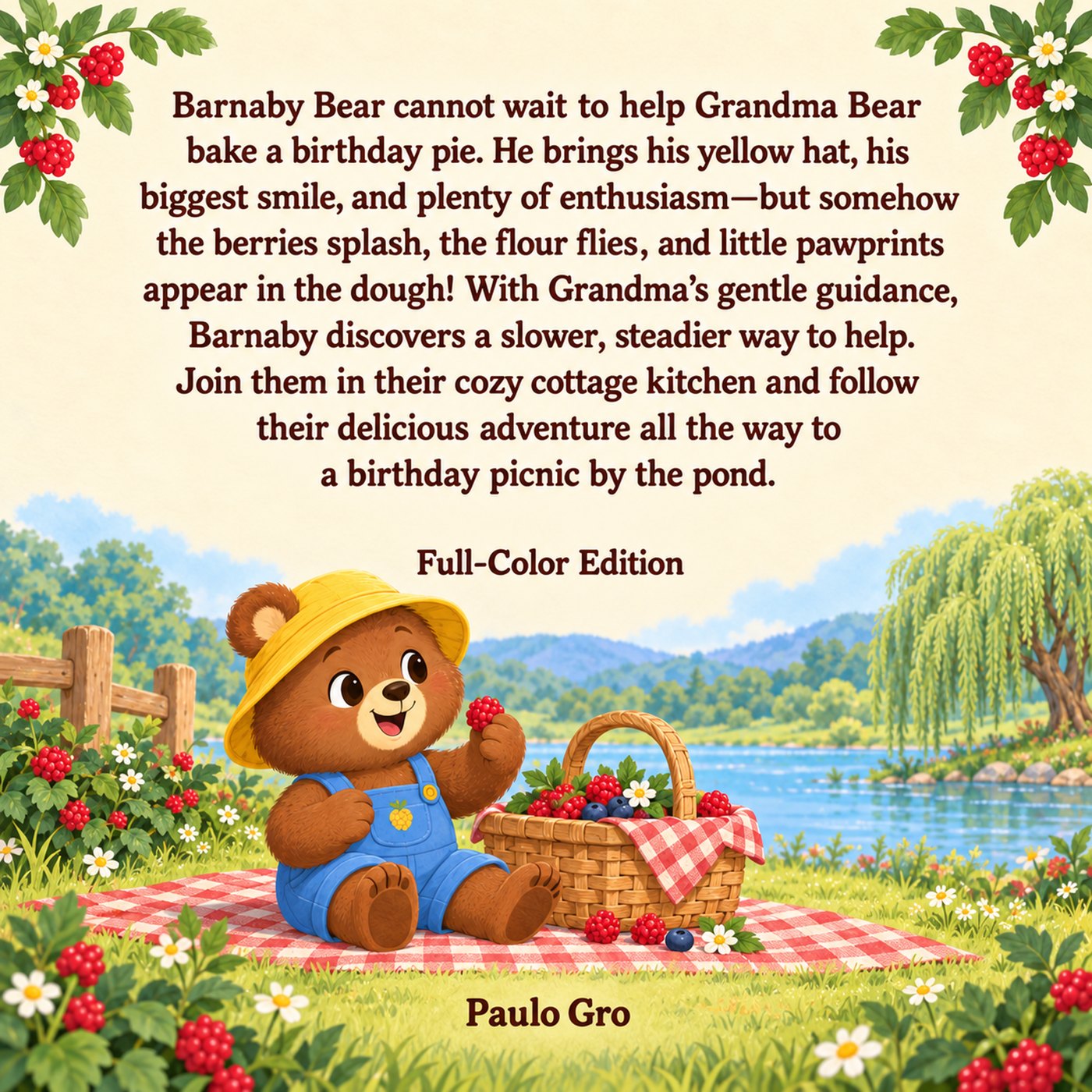
Here is the full list you get out of the gate:
From Paste to Two Finished Books in Four Easy Moves
Step 1: Drop One Prompt Into Your Agent
Open ChatGPT Codex or ChatGPT Work, paste any prompt from the collection, and press enter. Nothing to install, nothing to configure — the agent starts writing the plan immediately.
Step 2: Read the Story and Answer Two Questions
The agent lays out the whole book — series name, title, descriptions, keywords, the 24-page story with every line of text, both Locks, and all the prompts — then asks for your author name and your approval. Change anything you like; nothing renders until you say yes.
Step 3: Go Have a Coffee While It Builds Both Books
This is the part that takes a while — usually one to two hours — so step away, run an errand, or watch a movie. The agent renders the covers, paints each page, redraws it as its coloring twin, checks every image, typesets the front matter, and fills six folders.
Step 4: Upload and Sell
Each edition’s Amazon_KDP folder gives you a complete print-ready interior plus covers; each Etsy_Printable folder gives you one finished PDF to list as a download.
Before you publish, open the Publishing Best Practices Guide inside the members’ area and walk through its pre-publish checklist — then list, and say “Volume 2” whenever you want the next book.
Everything Comes Explained — Even If Tonight Is Your First Time Using an AI Agent
You do not need to know what an agent is before you buy this. Everything you need to run these prompts comes inside the members’ area, written in plain English for people who have never opened one:
Here’s the Actual Plan One Paste Produced
What follows is real, unedited output — the plan a single prompt from the Bedtime Stories for Little Ones theme produced in ChatGPT Work. Read it the way a publisher would: a named series, a titled book, two listings, a full 24-page story, and the two Locks that keep every page on-model.
Series Name, Book Title and Subtitle
Series: Henry’s Quiet-Heart Adventures
Henry and the Cabin That Sang Goodnight
A Gentle Bedtime Story to Read and Color
Target Age Range and Book Category
Ages 4–7. Bedtime story, first-experience story, and gentle life-lesson story.
Product Description — Coloring Edition
On his first night at Grandpa’s lakeside cabin, six-year-old Henry misses the familiar sounds of home and cannot fall asleep. With his moon-print pajamas, little green flashlight, and Grandpa beside him, Henry takes a quiet walk onto the porch and discovers that the lake has a bedtime song of its own.
Henry and the Cabin That Sang Goodnight combines a reassuring read-aloud story with 24 illustrated story pages of bold, child-friendly line art. Children can color Henry, the cozy cabin, humming frogs, whispering reeds, and gently creaking dock as the story unfolds.
Created for ages 4–7, this intimate bedtime adventure helps children understand that unfamiliar places can become welcoming when they slow down, listen, and discover new comforting rhythms.
Product Description — Full-Color Edition
Six-year-old Henry is spending his first night at Grandpa’s cabin beside the lake. Although the cabin is warm and safe, its nighttime sounds are unfamiliar, and Henry misses home too much to sleep.
A gentle porch walk changes everything. Beneath the moonlight, Henry hears frogs humming, reeds whispering, and the wooden dock creaking in a slow, soothing rhythm.
Presented as a finished picture book with 24 warmly illustrated story pages, Henry and the Cabin That Sang Goodnight is a comforting read-aloud for ages 4–7. Its reassuring message helps children see that a new place does not have to feel familiar immediately. With patience, companionship, and curiosity, it can gradually begin to feel welcoming.
Back-Cover Blurb
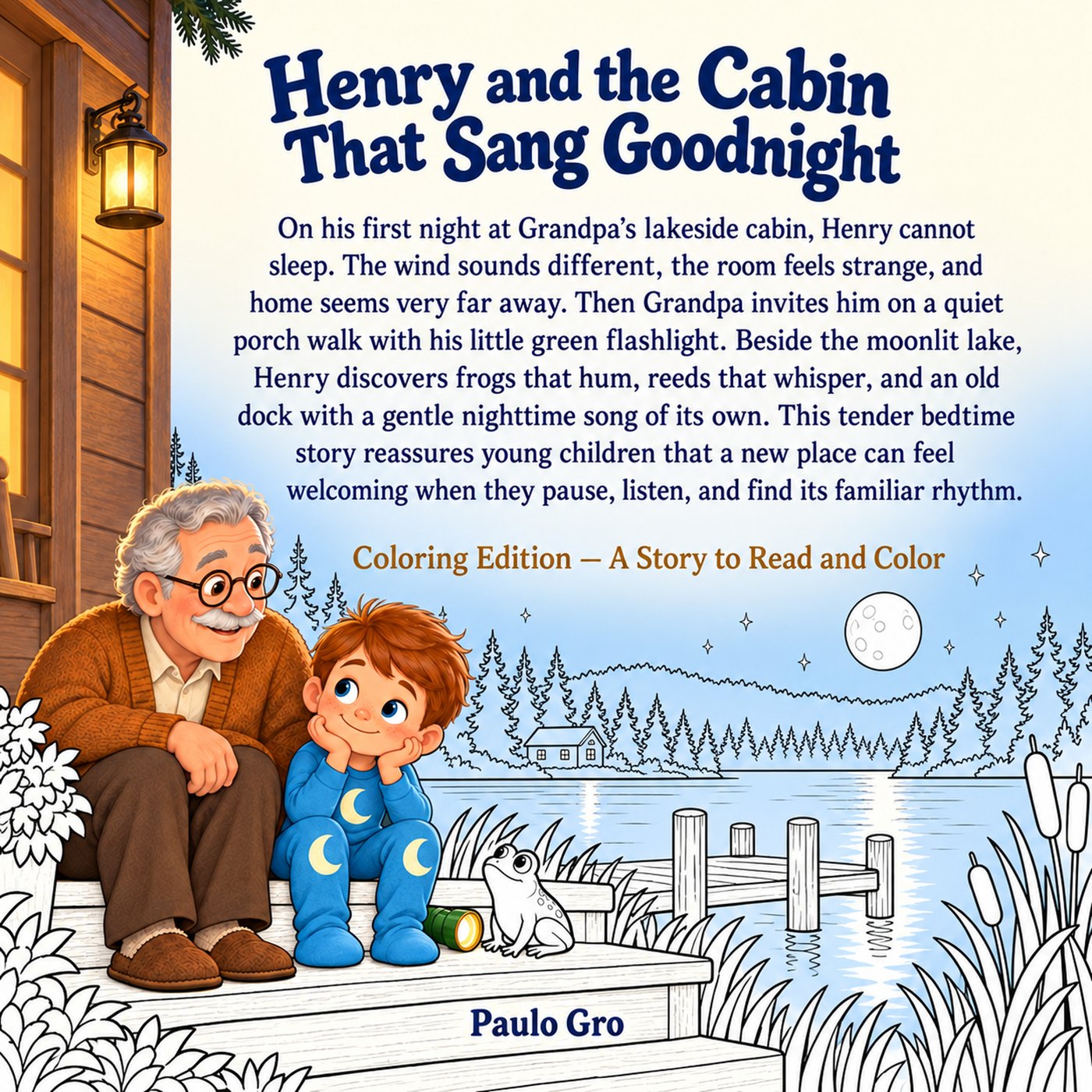
On his first night at Grandpa’s lakeside cabin, Henry cannot sleep. The wind sounds different, the room feels strange, and home seems very far away. Then Grandpa invites him on a quiet porch walk with his little green flashlight. Beside the moonlit lake, Henry discovers frogs that hum, reeds that whisper, and an old dock with a gentle nighttime song of its own. This tender bedtime story reassures young children that a new place can feel welcoming when they pause, listen, and find its familiar rhythm.
Seven SEO Keyword Phrases
Story Overview
Six-year-old Henry spends his first night at Grandpa’s lakeside cabin but finds that its unfamiliar sounds make him miss home. When Henry cannot sleep, Grandpa explains that a new place needs time to teach him its nighttime song. Carrying his small green flashlight, Henry joins Grandpa for a quiet porch walk. He discovers frogs humming, reeds whispering, and the dock creaking in a slow, restful rhythm. These separate sounds come together like a woodland lullaby, and Henry begins to feel safe and connected to the cabin. Back in bed, he understands that unfamiliar places can become welcoming when he gives himself time to notice their gentle details.
Character Consistency Lock (copied into every prompt)
CHARACTER CONSISTENCY LOCK: Henry is a human six-year-old boy with fair, light skin; a small, sturdy child body with a slightly oversized round head, short arms and legs, rounded hands, and soft childlike proportions; a gentle oval face, wide almond-shaped blue eyes, a small button nose, three faint freckles across each cheek, and short auburn hair with a smooth side sweep and one small cowlick. He always wears lake-blue pajamas with three large soft-ivory crescent-moon motifs—one centered on his pajama shirt and one on each knee—and he carries a small pine-green flashlight with an amber lens ring. Grandpa George is a human grandfather with fair, light skin; a tall, softly rounded build; a long friendly oval face, kind round hazel eyes, short wavy silver hair, a neat silver mustache, round brown spectacles, an amber cardigan over a soft-ivory shirt, warm-brown trousers, and brown house slippers. Three recurring lake frogs have small rounded olive-green bodies, pale throats, and wide-set golden-brown eyes. SETTING ANCHOR: a cozy warm-brown lakeside cabin with a soft-ivory interior, an amber porch lamp, deep pine trees, a curved bed of reeds, a calm blue lake, and a short weathered wooden dock with three posts.
Art Direction Lock (copied into every prompt)
ART DIRECTION LOCK: Use clean, cozy, classic picture-book compositions with rounded friendly shapes, sparse uncluttered backgrounds, one clear focal action, and generous breathing room. FULL-COLOR EDITION: warm, soft, bright finished illustration with gentle moonlight or amber lamplight, using only a harmonious palette led by pine green, lake blue, warm brown, amber gold, soft ivory, and muted moonlit lavender; smooth painted color, readable forms, no photorealism, no harsh contrast, and nothing dark or scary. COLORING EDITION: preserve the same composition as bold child-friendly black line art on pure white, with thick even closed contours, large simple shapes, big open coloring spaces, and only a few essential background elements, comfortable for ages 4–7.
The 24-Page Story Plan
Full-Color Front Cover Prompt (complete)
Create one single square printable page on an exact 1:1 canvas measuring 2550 x 2550 pixels at 300 DPI, corresponding to 8.5 x 8.5 inches. Keep this exact square canvas size and aspect ratio. Do not generate a portrait, landscape, vertical, horizontal, 17:22, 2:3, 3:4, 4:5, A4, US Letter, or differently proportioned image.
CHARACTER CONSISTENCY LOCK: Henry is a human six-year-old boy with fair, light skin; a small, sturdy child body with a slightly oversized round head, short arms and legs, rounded hands, and soft childlike proportions; a gentle oval face, wide almond-shaped blue eyes, a small button nose, three faint freckles across each cheek, and short auburn hair with a smooth side sweep and one small cowlick. He always wears lake-blue pajamas with three large soft-ivory crescent-moon motifs—one centered on his pajama shirt and one on each knee—and he carries a small pine-green flashlight with an amber lens ring. Grandpa George is a human grandfather with fair, light skin; a tall, softly rounded build; a long friendly oval face, kind round hazel eyes, short wavy silver hair, a neat silver mustache, round brown spectacles, an amber cardigan over a soft-ivory shirt, warm-brown trousers, and brown house slippers. Three recurring lake frogs have small rounded olive-green bodies, pale throats, and wide-set golden-brown eyes. SETTING ANCHOR: a cozy warm-brown lakeside cabin with a soft-ivory interior, an amber porch lamp, deep pine trees, a curved bed of reeds, a calm blue lake, and a short weathered wooden dock with three posts.
ART DIRECTION LOCK: Use clean, cozy, classic picture-book compositions with rounded friendly shapes, sparse uncluttered backgrounds, one clear focal action, and generous breathing room. FULL-COLOR EDITION: warm, soft, bright finished illustration with gentle moonlight or amber lamplight, using only a harmonious palette led by pine green, lake blue, warm brown, amber gold, soft ivory, and muted moonlit lavender; smooth painted color, readable forms, no photorealism, no harsh contrast, and nothing dark or scary. COLORING EDITION: preserve the same composition as bold child-friendly black line art on pure white, with thick even closed contours, large simple shapes, big open coloring spaces, and only a few essential background elements, comfortable for ages 4–7.
Use case: illustration-story. Asset type: finished square children’s picture-book front cover.
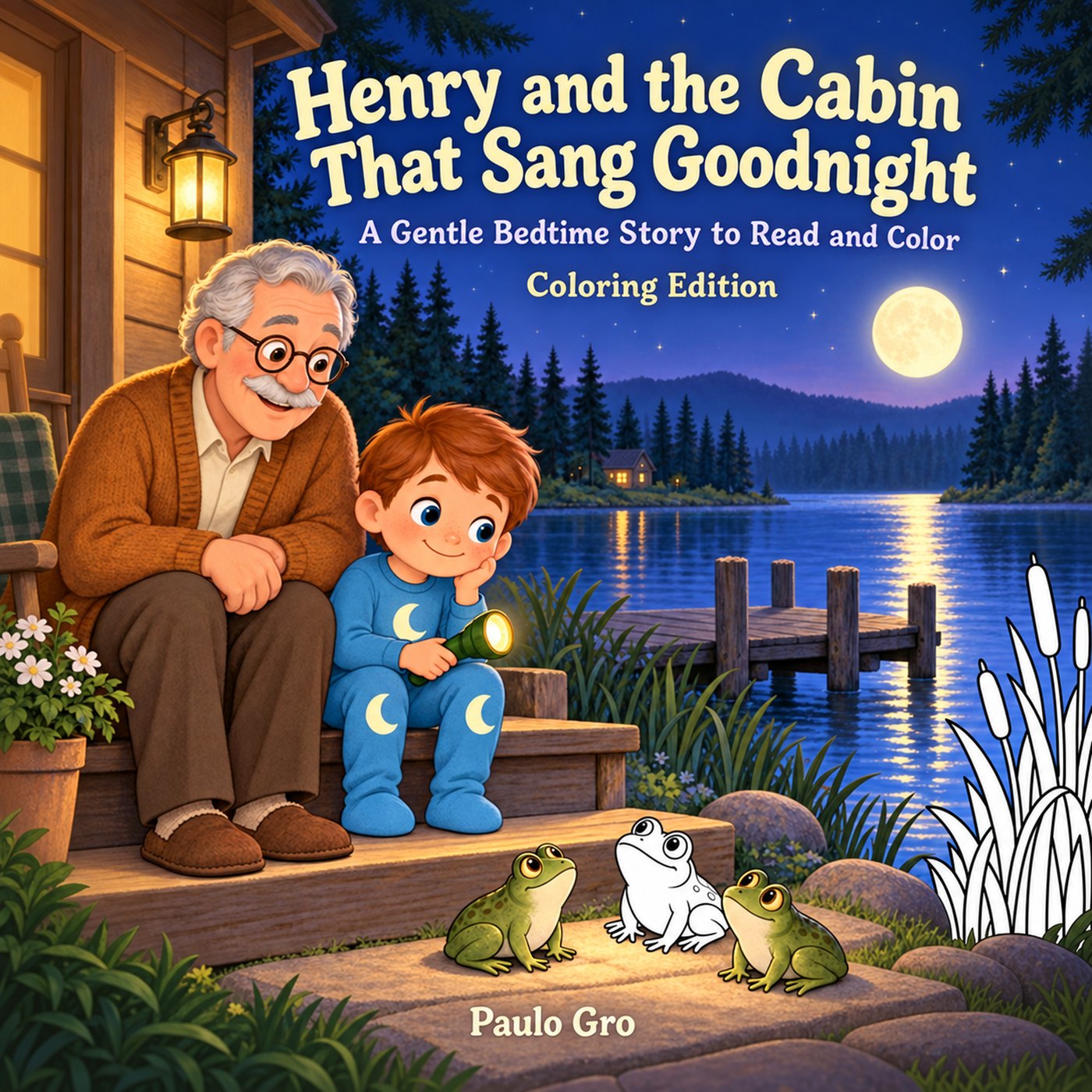
Create the fully colored front cover for the Full-Color Edition. Show Henry standing safely beside Grandpa on the warmly lit cabin porch. Henry holds his glowing green flashlight and smiles as he listens toward exactly three small frogs near the steps. Beyond them are a calm moonlit lake, a simple reed bed, pine silhouettes, and the short dock. Keep the mood intimate, reassuring, and softly luminous.
Place the exact title “Henry and the Cabin That Sang Goodnight” in large, friendly, rounded Title Case lettering across the open upper sky. Place the exact subtitle “A Gentle Bedtime Story to Read and Color” directly beneath it in smaller clear lettering. Add the small line “Full-Color Edition” below the subtitle. Place “Paulo Gro” near the bottom. Keep every letter and important element inside a safe margin of approximately 0.4 inches. Do not add any other words, labels, signatures, logos, or watermarks.
Take in how much arrived from one paste: a series with a name, a book with a title a parent would click, two listings already written, and seven keywords. Then a bedtime story that moves from a fluttery tummy to “now you know how to listen” in 24 pages — with the wordless pauses placed exactly where a read-aloud needs them.
And notice the two Locks. Henry’s three freckles, his auburn cowlick, the crescent moons on his pajamas, Grandpa’s silver mustache, the three olive-green frogs — written once, carried into all 24 page prompts and all four covers. That is why the boy on the dock is the same boy in the bed.
And Here’s How Every Page Gets Its Orders — Twice
Two of the 24 full-color page prompts from that same plan, complete and untouched, followed by the Coloring Conversion Prompt the agent runs on every finished color page. Together they are the reason both editions match:
PAGE 01 — CABIN BY THE LAKE
Create one single square printable page on an exact 1:1 canvas measuring 2550 x 2550 pixels at 300 DPI, corresponding to 8.5 x 8.5 inches. Keep this exact square canvas size and aspect ratio. Do not generate a portrait, landscape, vertical, horizontal, 17:22, 2:3, 3:4, 4:5, A4, US Letter, or differently proportioned image.
CHARACTER CONSISTENCY LOCK: Henry is a human six-year-old boy with fair, light skin; a small, sturdy child body with a slightly oversized round head, short arms and legs, rounded hands, and soft childlike proportions; a gentle oval face, wide almond-shaped blue eyes, a small button nose, three faint freckles across each cheek, and short auburn hair with a smooth side sweep and one small cowlick. He always wears lake-blue pajamas with three large soft-ivory crescent-moon motifs—one centered on his pajama shirt and one on each knee—and he carries a small pine-green flashlight with an amber lens ring. Grandpa George is a human grandfather with fair, light skin; a tall, softly rounded build; a long friendly oval face, kind round hazel eyes, short wavy silver hair, a neat silver mustache, round brown spectacles, an amber cardigan over a soft-ivory shirt, warm-brown trousers, and brown house slippers. Three recurring lake frogs have small rounded olive-green bodies, pale throats, and wide-set golden-brown eyes. SETTING ANCHOR: a cozy warm-brown lakeside cabin with a soft-ivory interior, an amber porch lamp, deep pine trees, a curved bed of reeds, a calm blue lake, and a short weathered wooden dock with three posts.
ART DIRECTION LOCK: Use clean, cozy, classic picture-book compositions with rounded friendly shapes, sparse uncluttered backgrounds, one clear focal action, and generous breathing room. FULL-COLOR EDITION: warm, soft, bright finished illustration with gentle moonlight or amber lamplight, using only a harmonious palette led by pine green, lake blue, warm brown, amber gold, soft ivory, and muted moonlit lavender; smooth painted color, readable forms, no photorealism, no harsh contrast, and nothing dark or scary. COLORING EDITION: preserve the same composition as bold child-friendly black line art on pure white, with thick even closed contours, large simple shapes, big open coloring spaces, and only a few essential background elements, comfortable for ages 4–7.
Use case: illustration-story. Asset type: finished square children’s picture-book interior page.
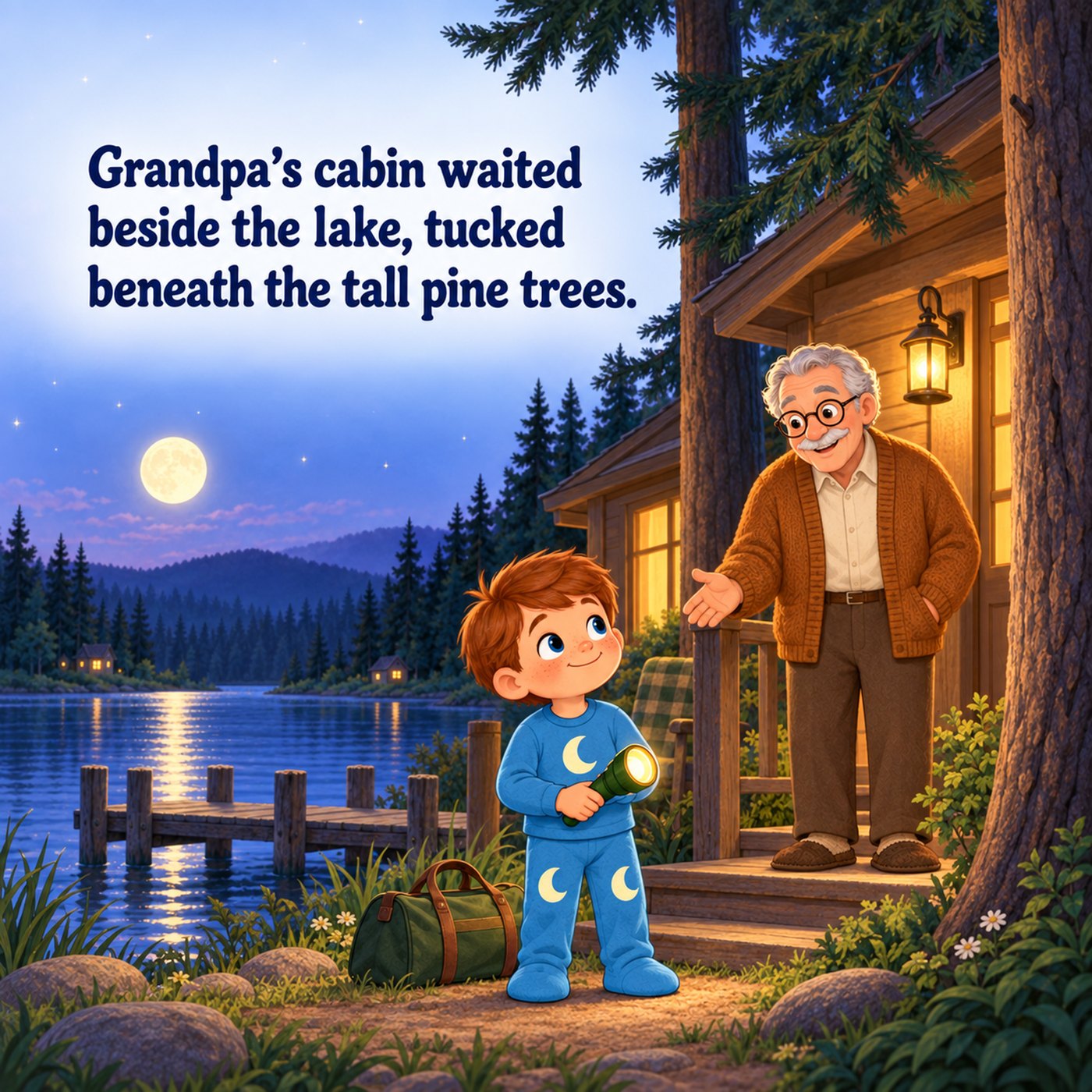
Render the Full-Color Edition page. Henry has just arrived beside Grandpa’s cabin. He stands in the lower-right foreground holding his small green flashlight and looking upward with cautious curiosity at two tall pine trees. Grandpa waits beside the warmly lit porch with an inviting smile. Show only a small overnight bag, the cabin, two pines, and a glimpse of the lake. Keep the upper-left sky pale and uncluttered.
Include only this exact story text: “Grandpa’s cabin waited beside the lake, tucked beneath the tall pine trees.” Place it in the open upper-left sky in large, rounded, evenly spaced child-friendly dark lettering with strong contrast against a clean light area. Keep all content within a safe margin of approximately 0.4 inches. Do not add, remove, paraphrase, or invent any extra text. No page number, label, signature, logo, or watermark.
PAGE 12 — THE FROG SONG
Create one single square printable page on an exact 1:1 canvas measuring 2550 x 2550 pixels at 300 DPI, corresponding to 8.5 x 8.5 inches. Keep this exact square canvas size and aspect ratio. Do not generate a portrait, landscape, vertical, horizontal, 17:22, 2:3, 3:4, 4:5, A4, US Letter, or differently proportioned image.
CHARACTER CONSISTENCY LOCK: Henry is a human six-year-old boy with fair, light skin; a small, sturdy child body with a slightly oversized round head, short arms and legs, rounded hands, and soft childlike proportions; a gentle oval face, wide almond-shaped blue eyes, a small button nose, three faint freckles across each cheek, and short auburn hair with a smooth side sweep and one small cowlick. He always wears lake-blue pajamas with three large soft-ivory crescent-moon motifs—one centered on his pajama shirt and one on each knee—and he carries a small pine-green flashlight with an amber lens ring. Grandpa George is a human grandfather with fair, light skin; a tall, softly rounded build; a long friendly oval face, kind round hazel eyes, short wavy silver hair, a neat silver mustache, round brown spectacles, an amber cardigan over a soft-ivory shirt, warm-brown trousers, and brown house slippers. Three recurring lake frogs have small rounded olive-green bodies, pale throats, and wide-set golden-brown eyes. SETTING ANCHOR: a cozy warm-brown lakeside cabin with a soft-ivory interior, an amber porch lamp, deep pine trees, a curved bed of reeds, a calm blue lake, and a short weathered wooden dock with three posts.
ART DIRECTION LOCK: Use clean, cozy, classic picture-book compositions with rounded friendly shapes, sparse uncluttered backgrounds, one clear focal action, and generous breathing room. FULL-COLOR EDITION: warm, soft, bright finished illustration with gentle moonlight or amber lamplight, using only a harmonious palette led by pine green, lake blue, warm brown, amber gold, soft ivory, and muted moonlit lavender; smooth painted color, readable forms, no photorealism, no harsh contrast, and nothing dark or scary. COLORING EDITION: preserve the same composition as bold child-friendly black line art on pure white, with thick even closed contours, large simple shapes, big open coloring spaces, and only a few essential background elements, comfortable for ages 4–7.
Use case: illustration-story. Asset type: finished square children’s picture-book interior page.
Render the Full-Color Edition page. Henry crouches beside the porch steps, smiling with new curiosity. He points the soft beam of his flashlight near, but not directly into the eyes of, exactly three recurring frogs sitting together. Grandpa’s lower figure remains nearby as a reassuring presence. Leave the upper-right sky clear and light enough for text.
Include only this exact story text: “Near the steps, three little frogs hummed. ‘Rrum, rrum, rrum.’” Place it in the open upper-right sky in large, rounded, evenly spaced child-friendly dark lettering with strong contrast against a clean light area. Keep all content within a safe margin of approximately 0.4 inches. Do not add, remove, paraphrase, or invent any extra text. No page number, label, signature, logo, or watermark.
COLORING CONVERSION PROMPT (run on every finished color page)
Create one single square printable page on an exact 1:1 canvas measuring 2550 x 2550 pixels at 300 DPI, corresponding to 8.5 x 8.5 inches. Keep this exact square canvas size and aspect ratio. Do not generate a portrait, landscape, vertical, horizontal, 17:22, 2:3, 3:4, 4:5, A4, US Letter, or differently proportioned image.
CHARACTER CONSISTENCY LOCK: Henry is a human six-year-old boy with fair, light skin; a small, sturdy child body with a slightly oversized round head, short arms and legs, rounded hands, and soft childlike proportions; a gentle oval face, wide almond-shaped blue eyes, a small button nose, three faint freckles across each cheek, and short auburn hair with a smooth side sweep and one small cowlick. He always wears lake-blue pajamas with three large soft-ivory crescent-moon motifs—one centered on his pajama shirt and one on each knee—and he carries a small pine-green flashlight with an amber lens ring. Grandpa George is a human grandfather with fair, light skin; a tall, softly rounded build; a long friendly oval face, kind round hazel eyes, short wavy silver hair, a neat silver mustache, round brown spectacles, an amber cardigan over a soft-ivory shirt, warm-brown trousers, and brown house slippers. Three recurring lake frogs have small rounded olive-green bodies, pale throats, and wide-set golden-brown eyes. SETTING ANCHOR: a cozy warm-brown lakeside cabin with a soft-ivory interior, an amber porch lamp, deep pine trees, a curved bed of reeds, a calm blue lake, and a short weathered wooden dock with three posts.
ART DIRECTION LOCK: Use clean, cozy, classic picture-book compositions with rounded friendly shapes, sparse uncluttered backgrounds, one clear focal action, and generous breathing room. FULL-COLOR EDITION: warm, soft, bright finished illustration with gentle moonlight or amber lamplight, using only a harmonious palette led by pine green, lake blue, warm brown, amber gold, soft ivory, and muted moonlit lavender; smooth painted color, readable forms, no photorealism, no harsh contrast, and nothing dark or scary. COLORING EDITION: preserve the same composition as bold child-friendly black line art on pure white, with thick even closed contours, large simple shapes, big open coloring spaces, and only a few essential background elements, comfortable for ages 4–7.
Use case: illustration-story. Asset type: matching square children’s coloring-book interior page.
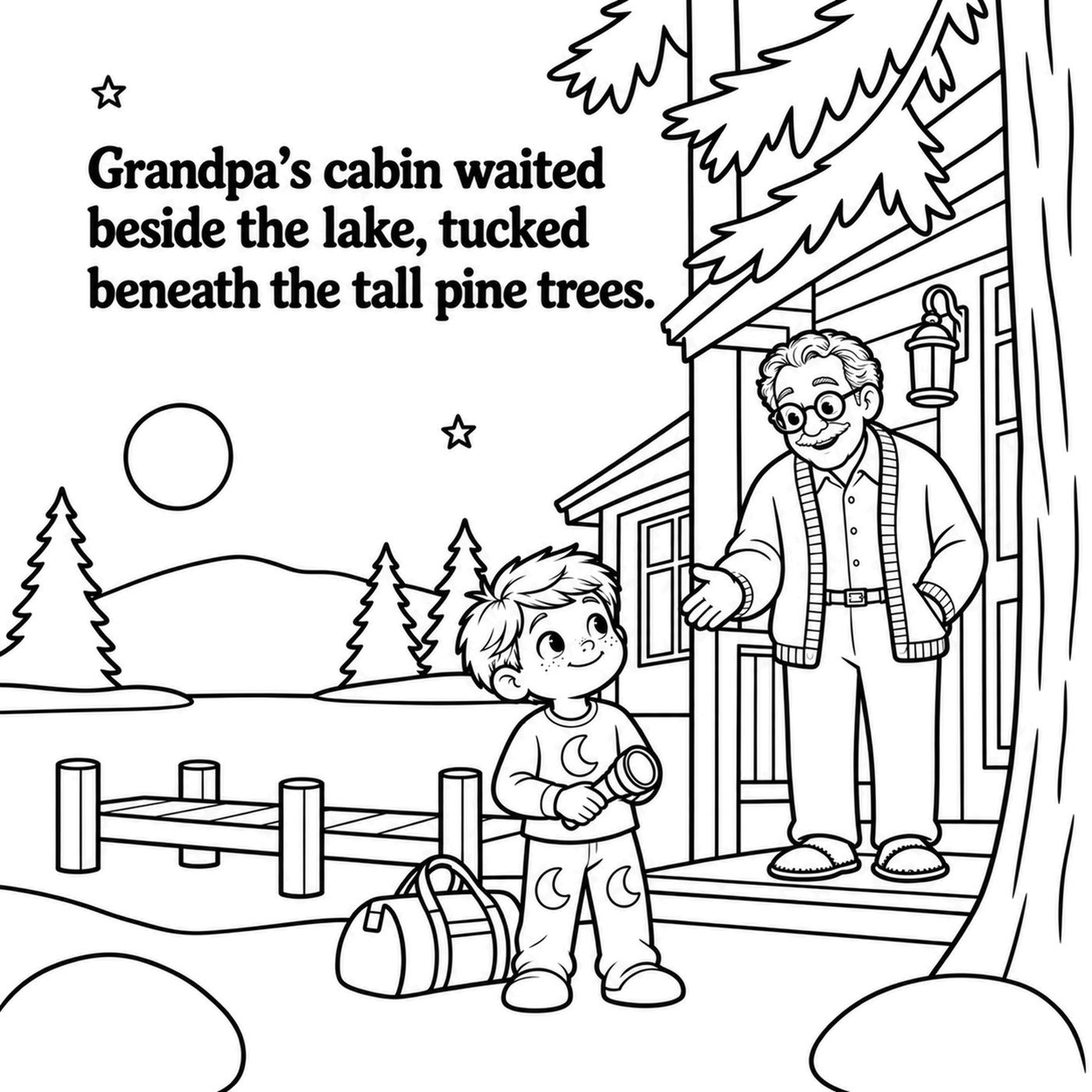
Use the supplied finished Full-Color Edition page as the sole reference image. Redraw it as the matching Coloring Edition page while preserving the exact square framing, camera angle, character identity, character pose, facial expression, relative scale, focal action, object positions, open text area, story text, text spelling, line breaks, and text placement.
Apply the CHILD-FRIENDLY LINE ART RULES: create purely black-and-white children’s coloring-page artwork with pure black outlines on a pure white background; thick, bold, even, closed contour lines; large simple shapes; big open coloring spaces; one clear focal subject; and a simplified background comfortable for ages 4–7 using crayons or markers. Preserve smooth anti-aliased line edges. Do not convert the file to 1-bit or apply binary thresholding.
Simplify while converting. Remove wood grain, fabric texture, wallpaper, tiny plants, tiny reflections, decorative marks, repeating patterns, and nonessential background objects. Merge small adjacent shapes into larger colorable regions. Keep only the major character features, Henry’s three large crescent-moon motifs, essential furniture, and the few setting elements necessary to preserve the approved composition. Never simplify or change the characters’ locked facial features, proportions, clothing, accessories, or pose.
Do not use color, grayscale fills, shading, shadows, gradients, halftones, hatching, crosshatching, sketch effects, texture patterns, thin fragile lines, broken contours, ornamental borders, or solid black masses. Near-white background pixels may be lifted to pure white, but the soft gray anti-aliased pixels along line edges must remain intact.
For a text page, preserve only the exact story text already printed in the reference image. Reproduce it in the identical position as crisp solid black, large, rounded, evenly spaced child-friendly lettering on a clean pure-white area. Do not turn the story text into outlined bubble letters and do not add, remove, paraphrase, respell, or invent words. For a wordless page, preserve it as wordless: no story text should appear.
Maintain a safe margin of approximately 0.4 inches. No additional words, labels, page numbers, signatures, logos, or watermarks are allowed.
STANDALONE FALLBACK FOR ENVIRONMENTS WITHOUT REFERENCE-IMAGE EDITING: derive one standalone Coloring Edition prompt for the page by retaining its approved Full-Color Page Prompt word for word, including the mandatory square-canvas sentence, Character Consistency Lock, exact focal action, exact story text or wordless instruction, text placement, and safe margins. Replace only the Full-Color rendering instruction with the CHILD-FRIENDLY LINE ART RULES above. Do not change the composition, character, objects, story text, or text position.
The child-friendly rules are not a suggestion in there — they are hard-coded into every page’s orders: the exact story text in quotation marks with its placement, the safe margin, the square canvas.
And for the coloring twin: thick closed contours, big open spaces, and the instruction to keep every word in the identical position while dropping the textures and clutter a small hand does not want to color.
Now multiply this by 48 themes and 336 prompts — every one of them producing a plan this complete for its own hero, its own setting, and its own gentle lesson.
Here Are the Full-Color Covers That Came Out of That Plan
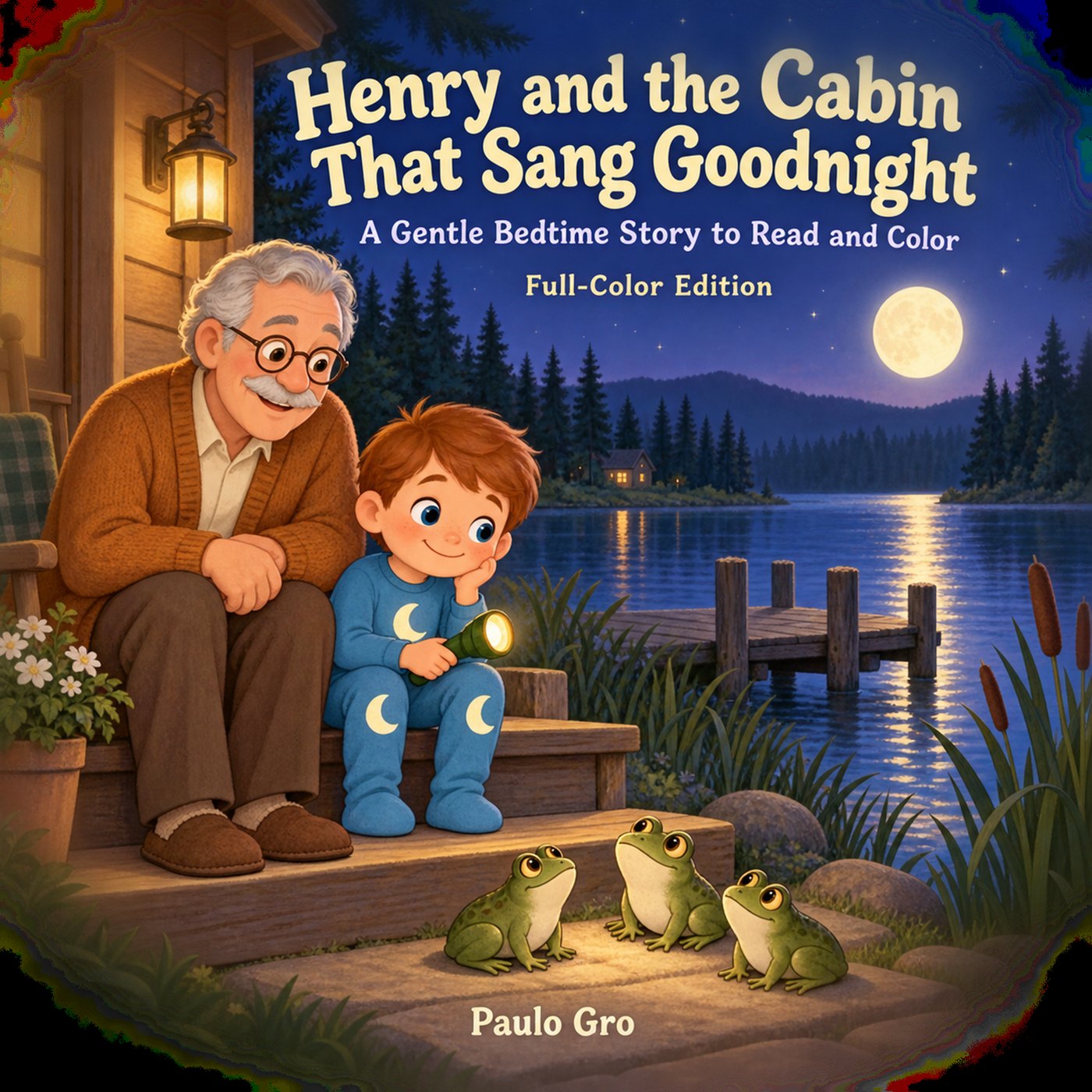
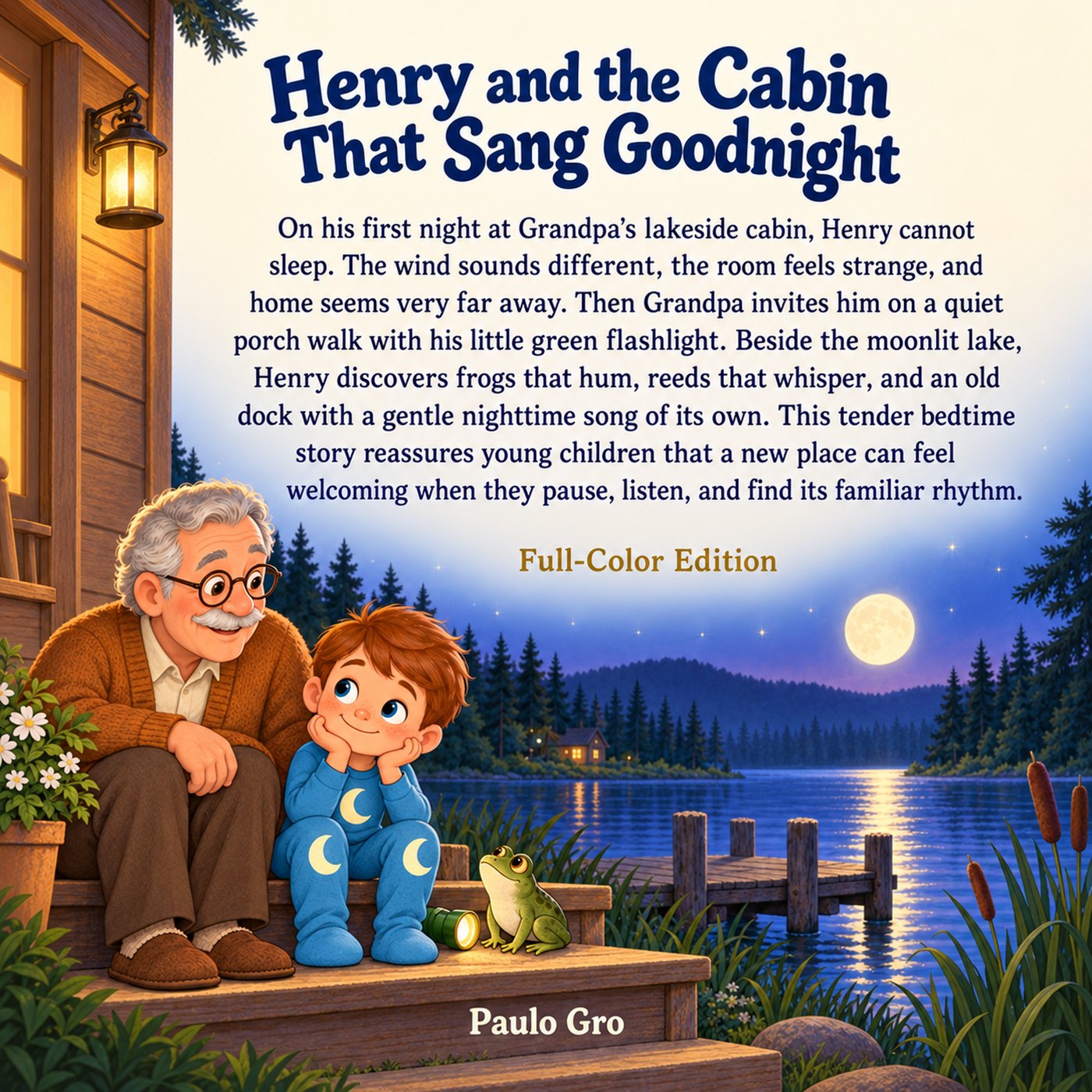
Rendered straight from the cover prompts above — title, subtitle, edition line, and author name already placed and readable at thumbnail size.
The Coloring Edition covers you saw at the top of this page stay in full color on purpose: that is how coloring books sell on a shelf, with a small line telling parents it is a story to read and color.
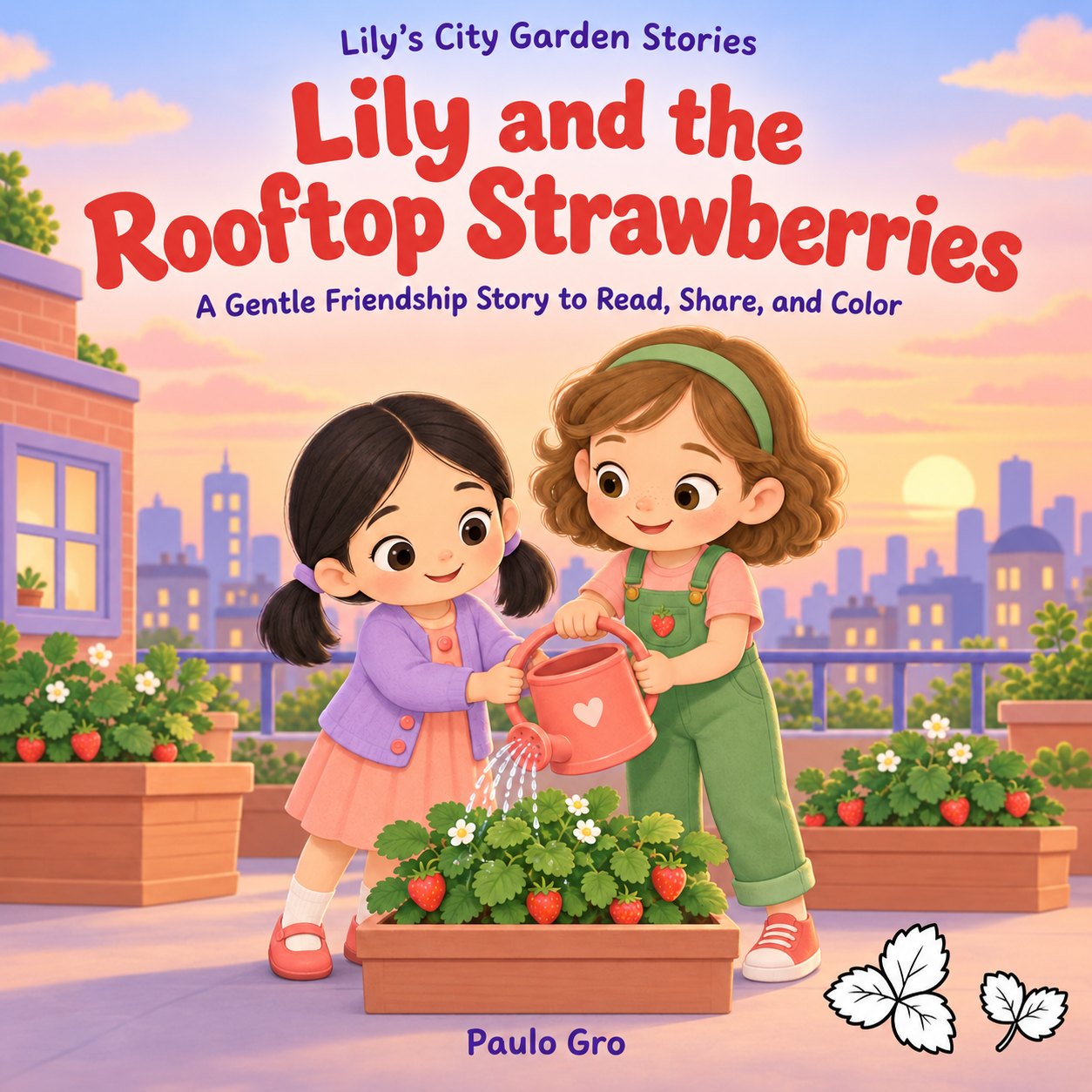
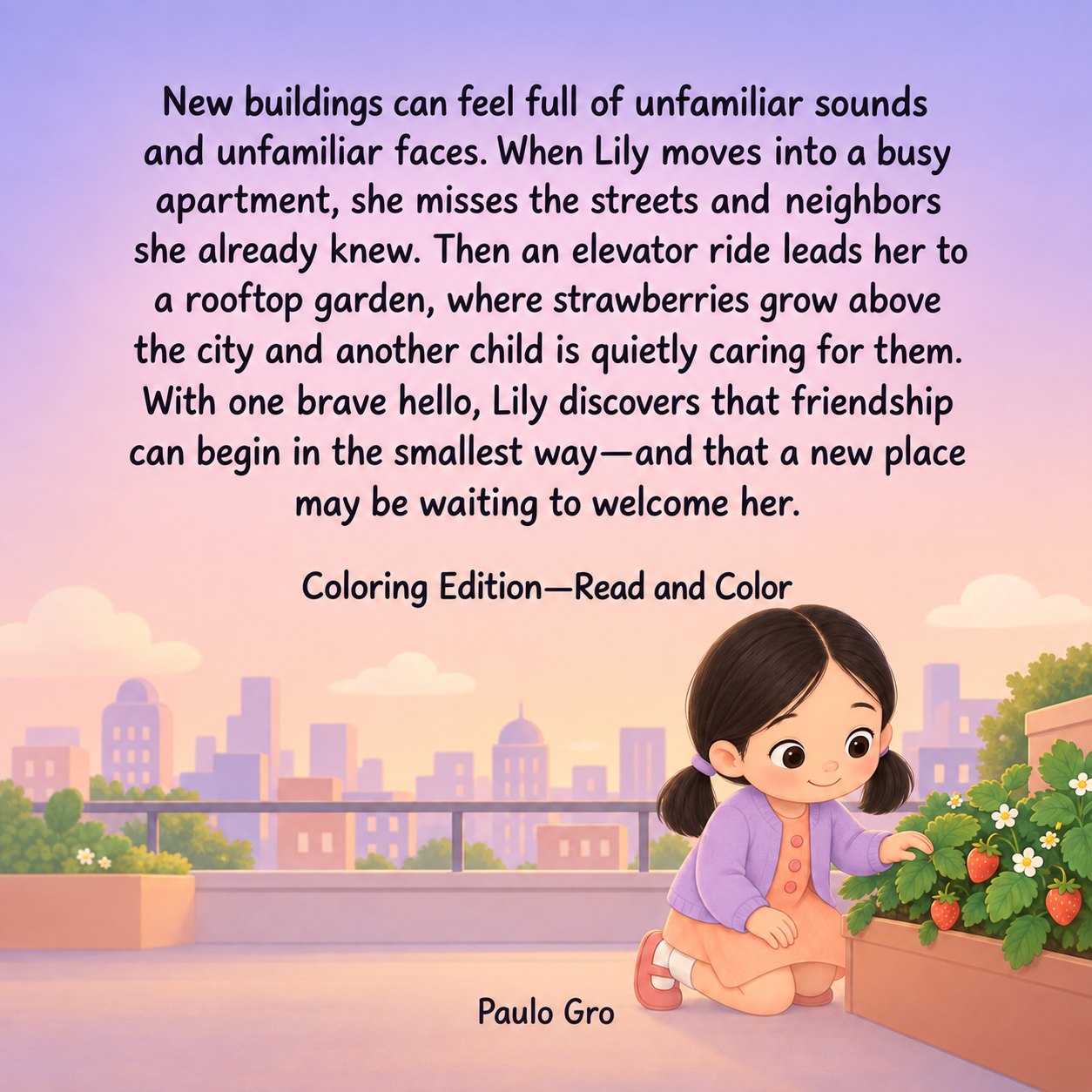
The Barnaby and Lily covers you saw higher on this page came from two other prompts in the collection — a bear cub in a berry-meadow kitchen and a girl who just moved into a city apartment — each with its own series name and its own palette.
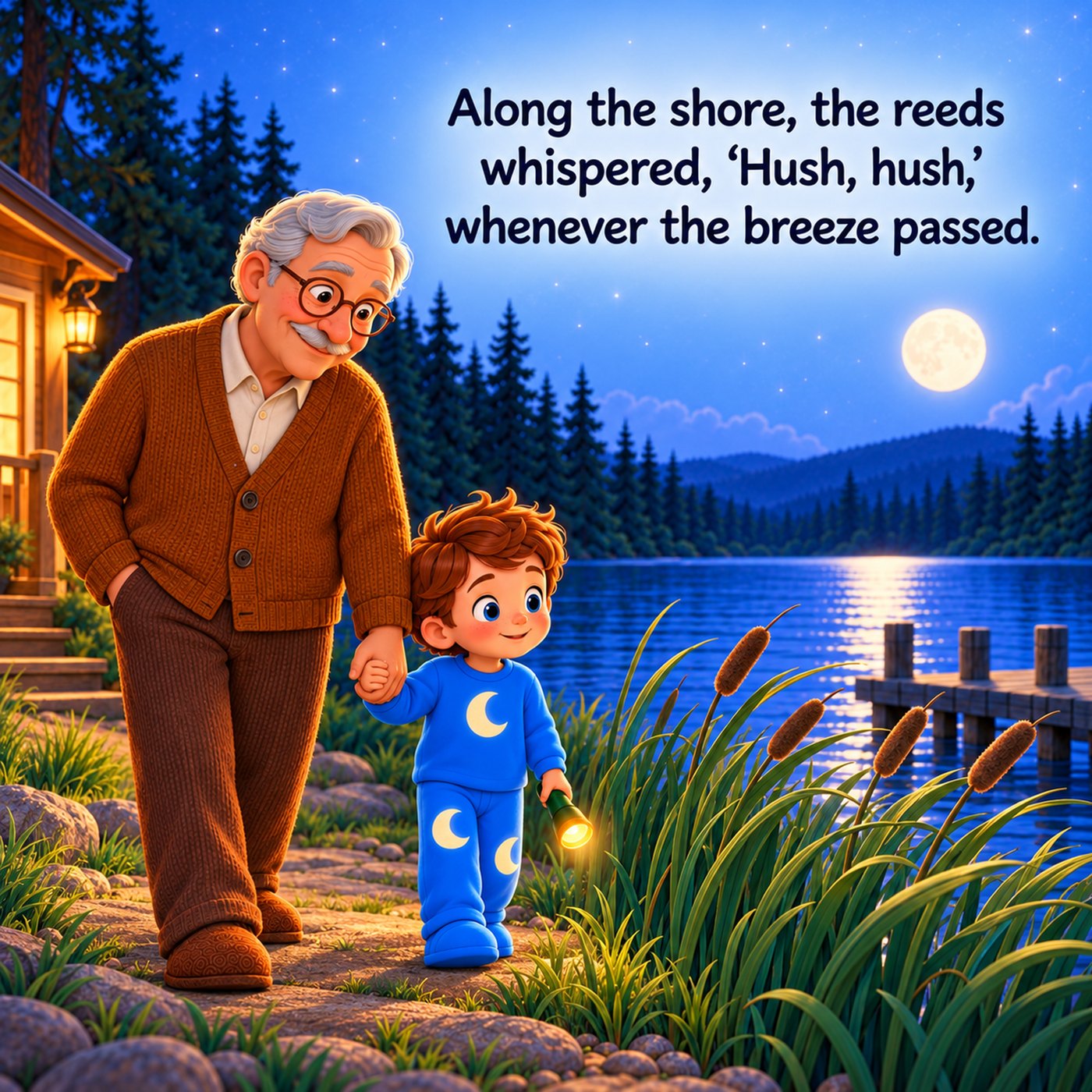
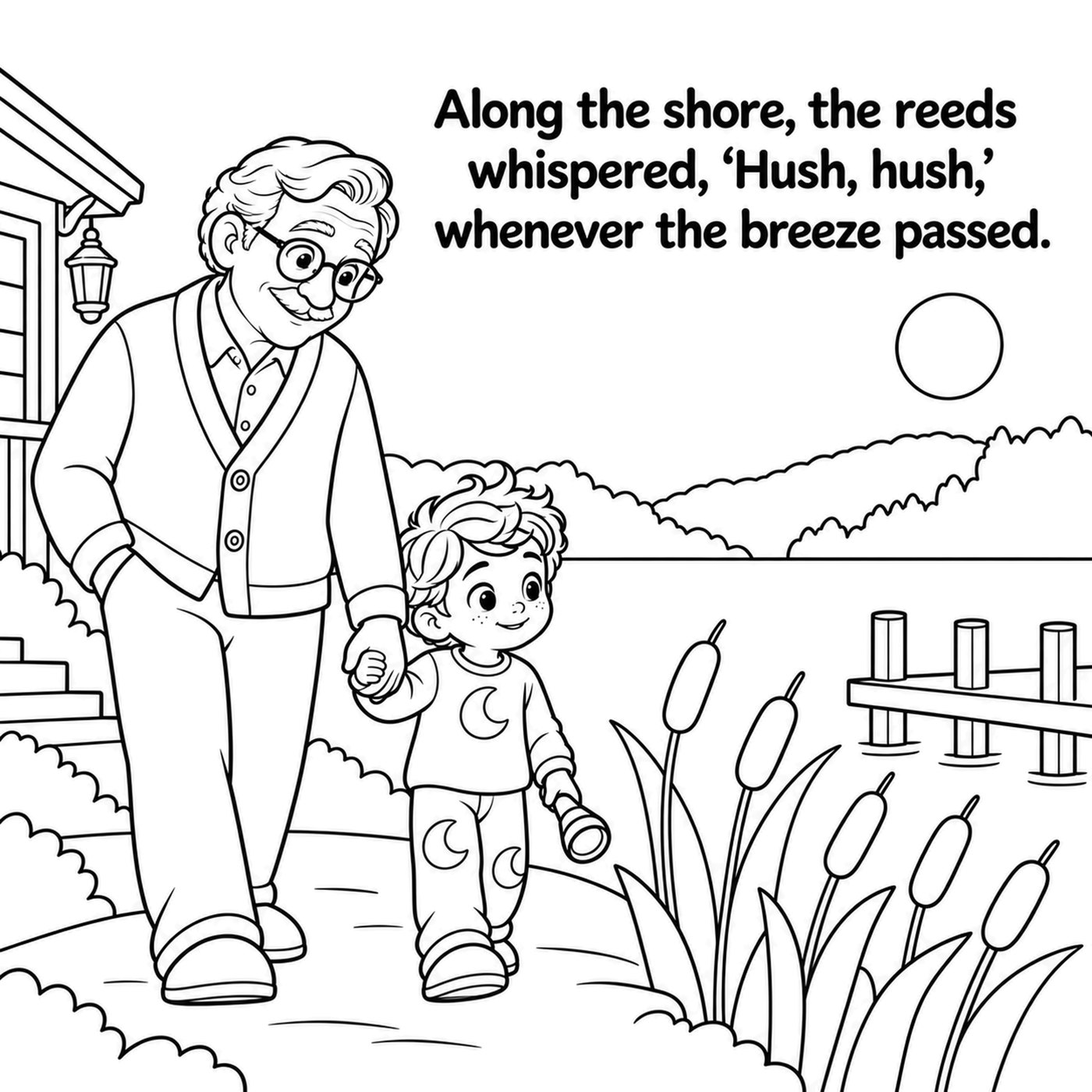
Here’s What the Interior Pages Look Like — Both Editions, Side by Side
Eight more spreads from Henry and the Cabin That Sang Goodnight, rendered by the agent from the plan you just read — the full-color page on the left, its coloring twin on the right, every one of them a 2550 x 2550 square at 300 DPI:
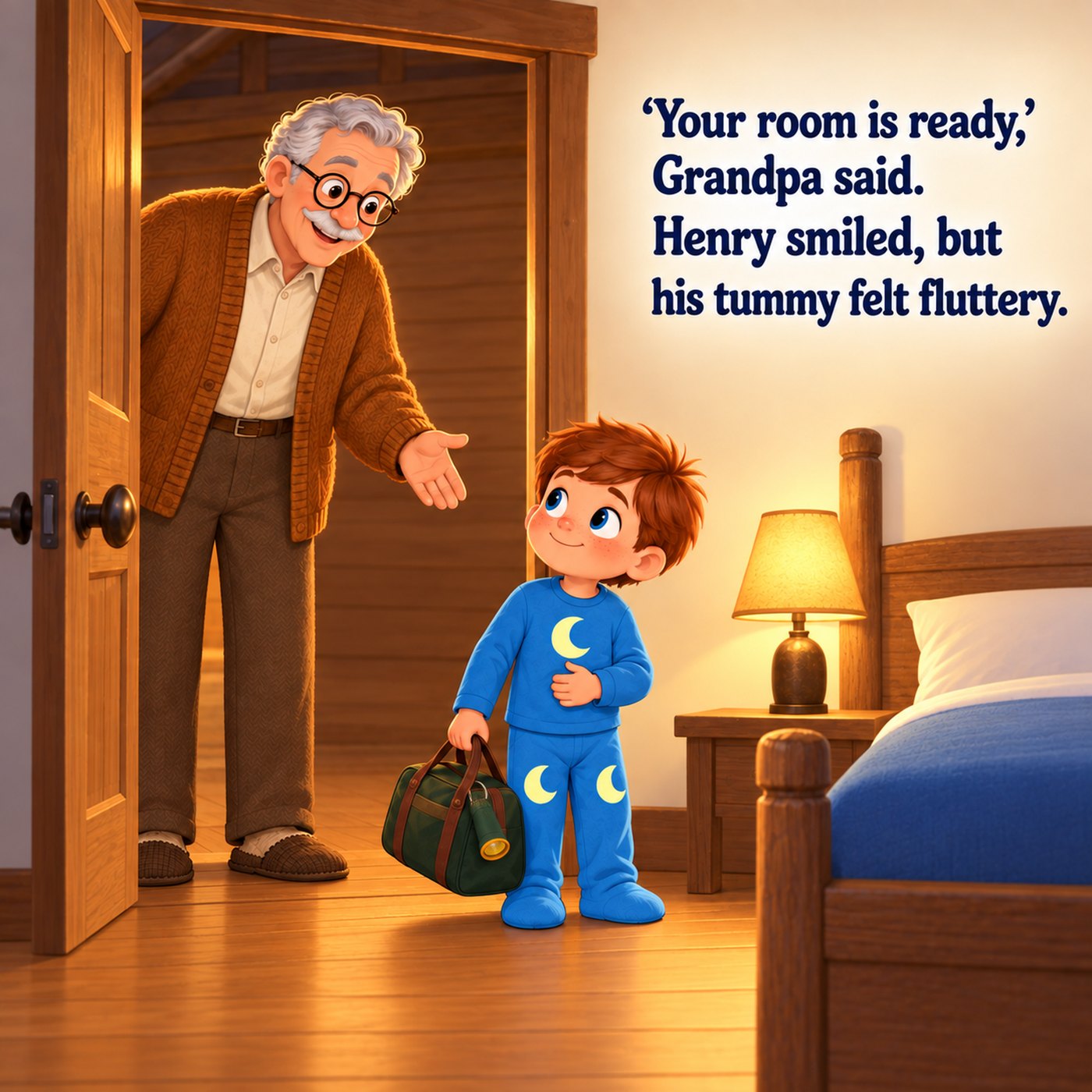
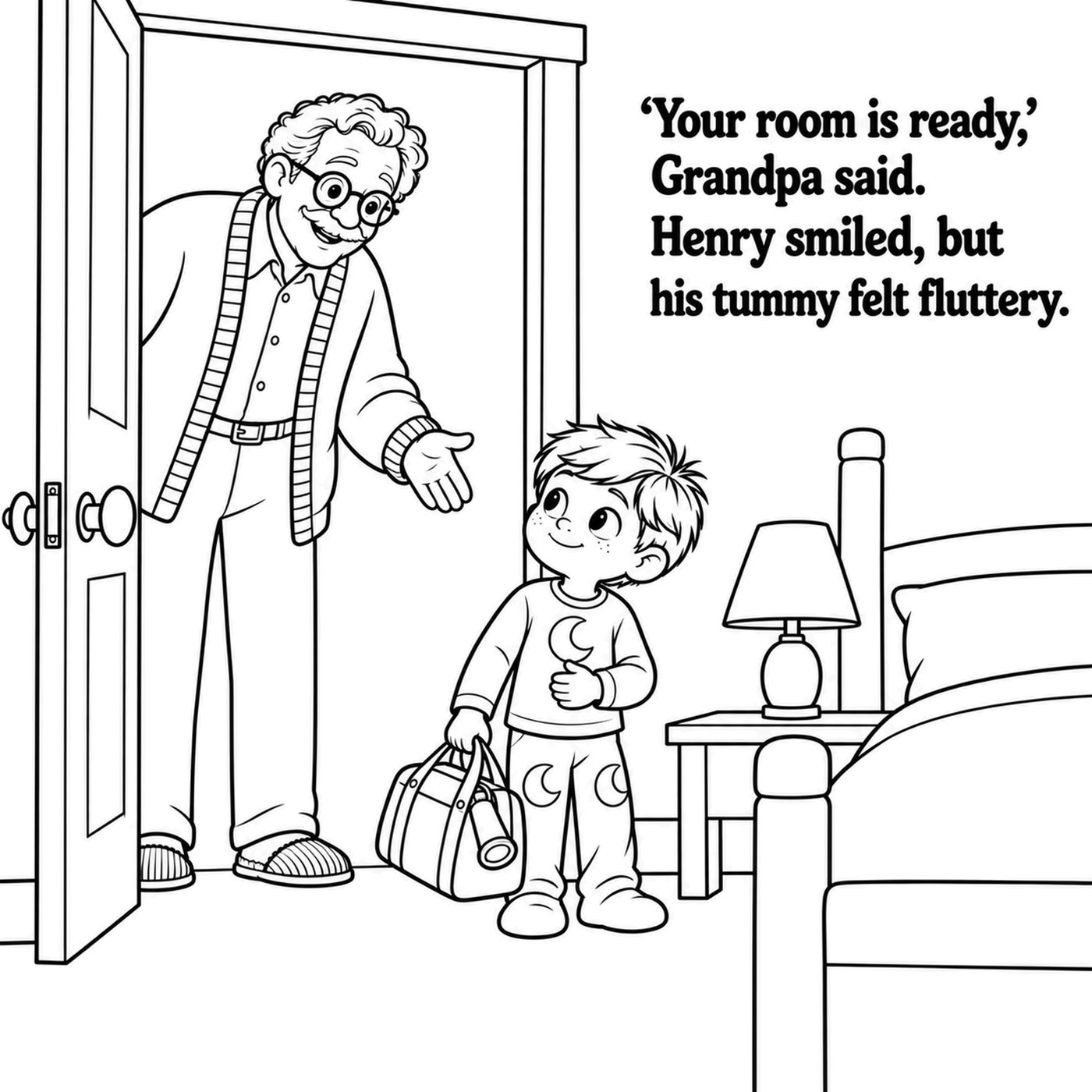
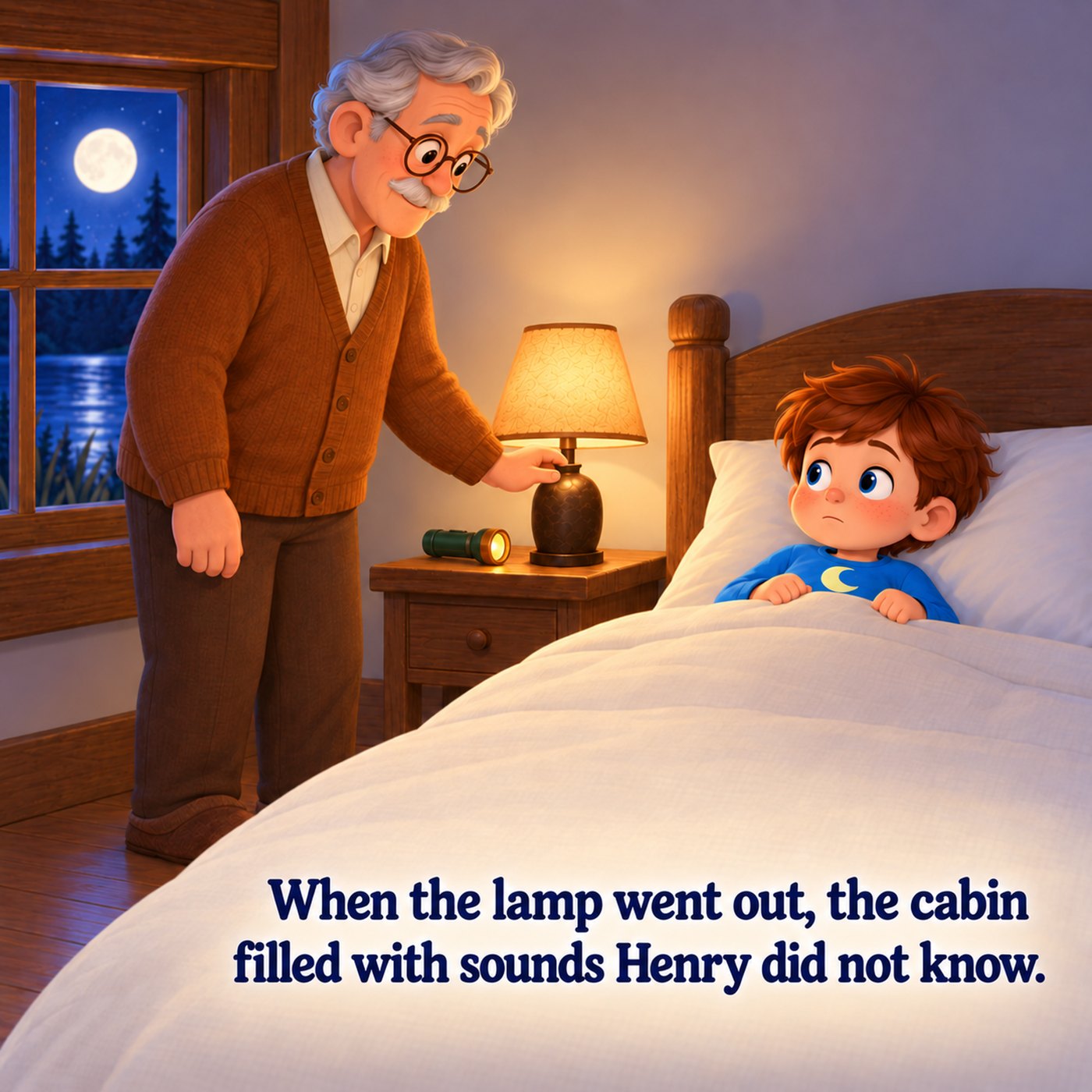
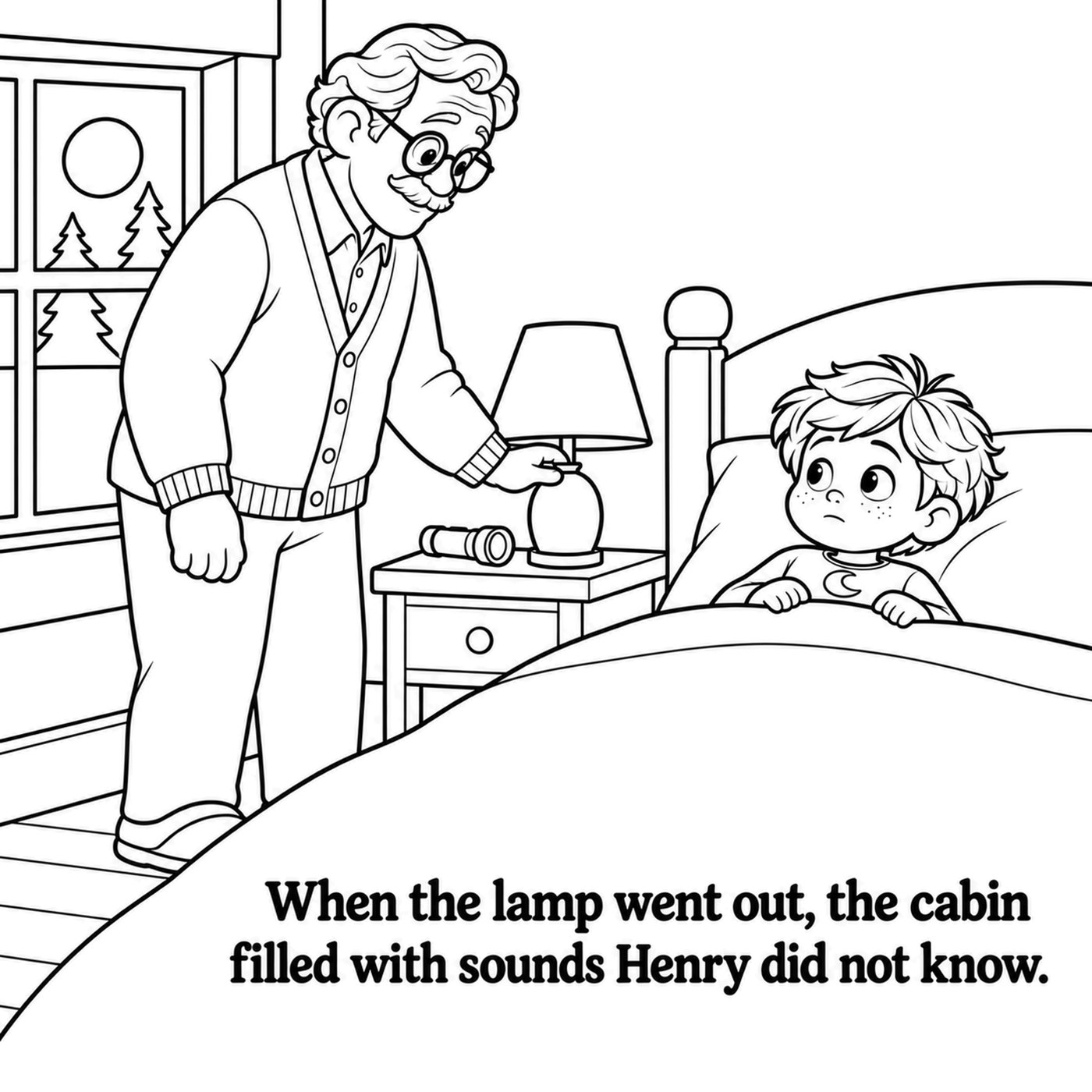
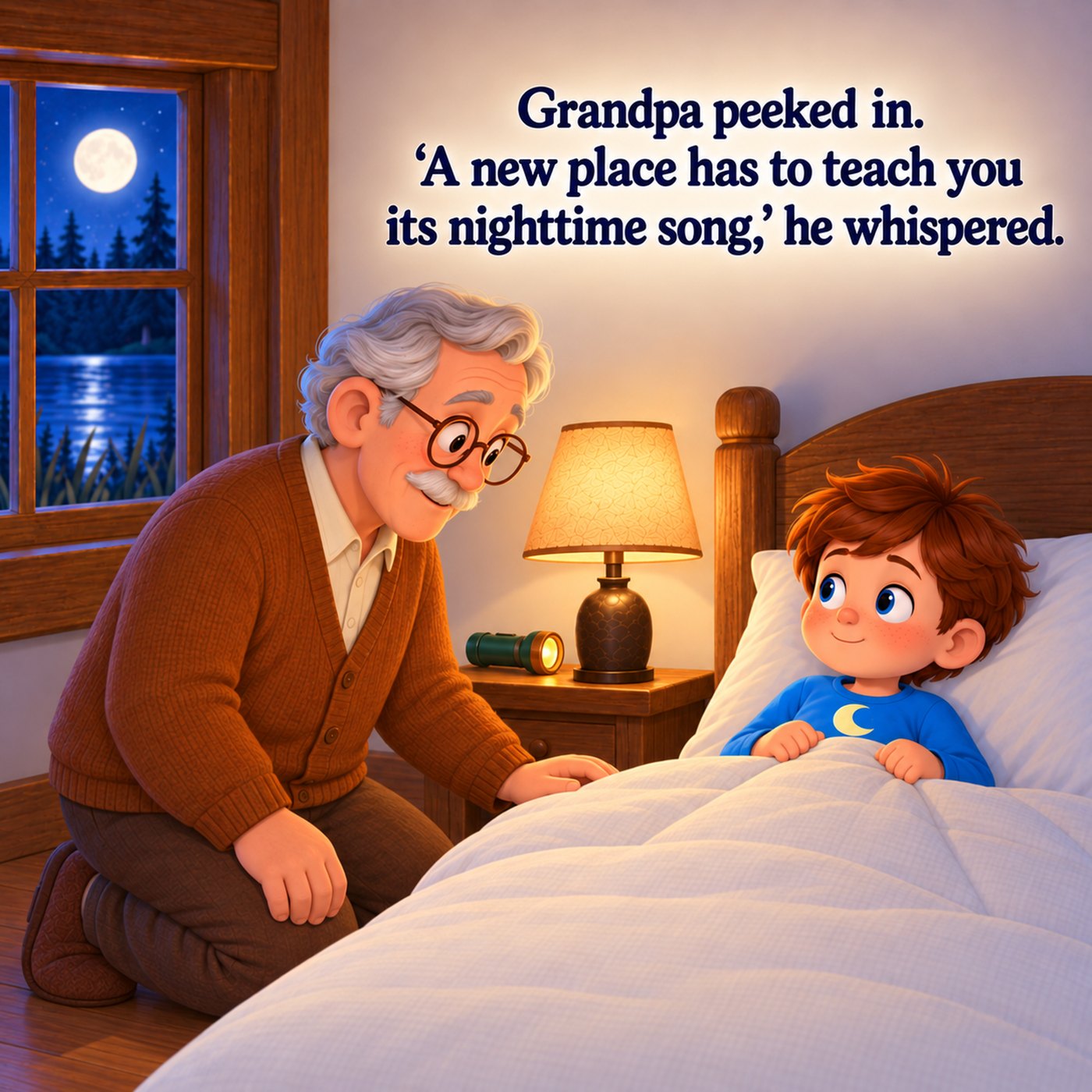
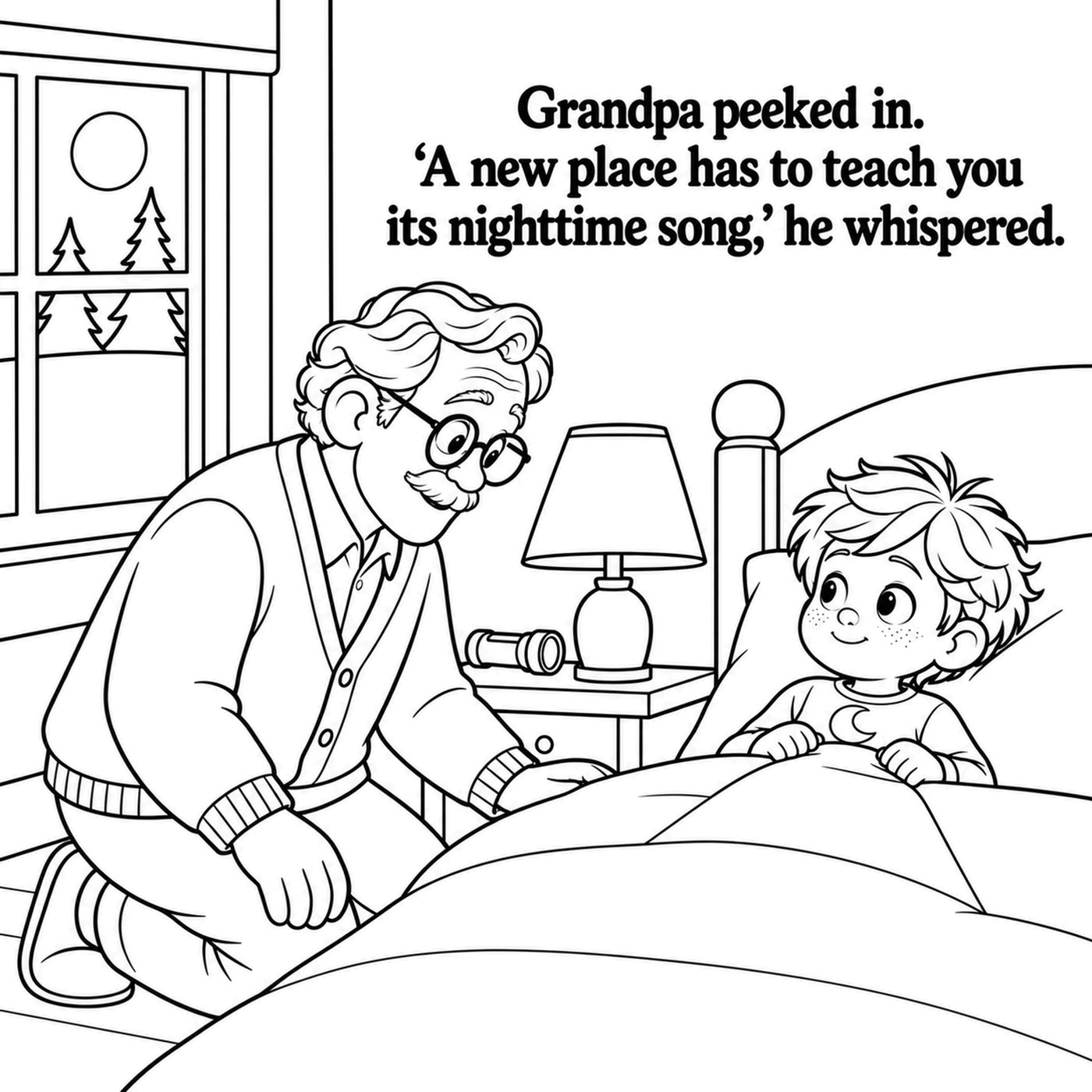
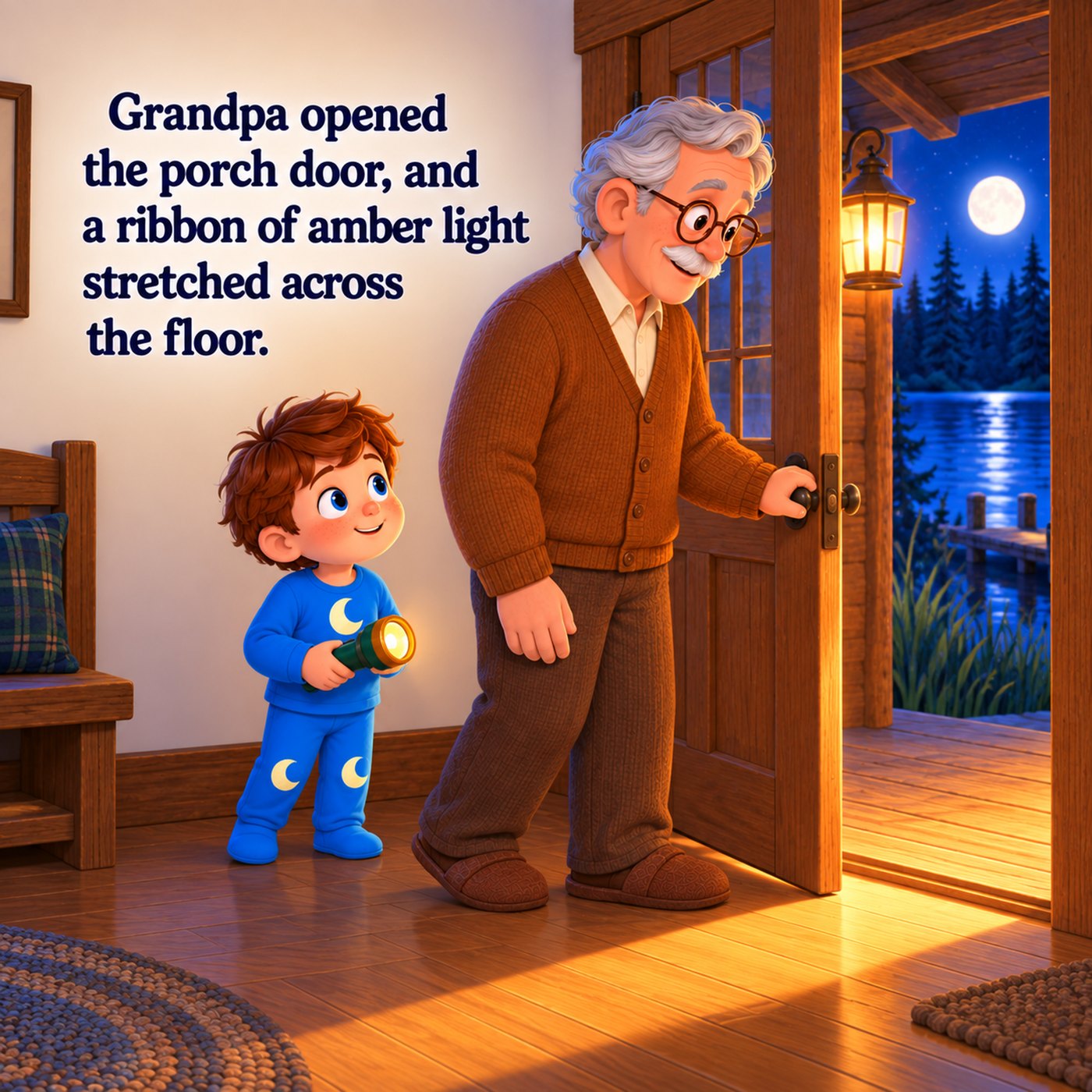
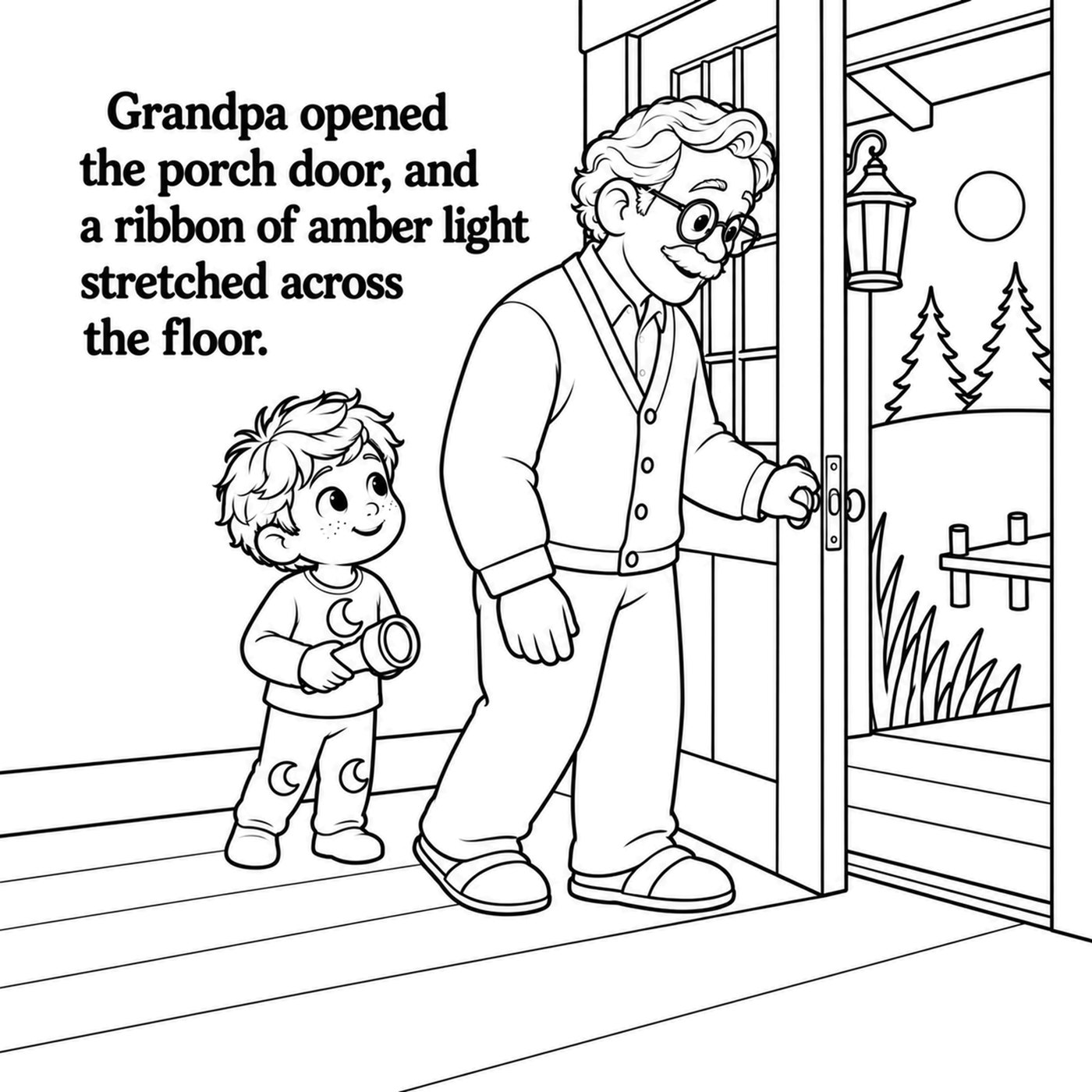
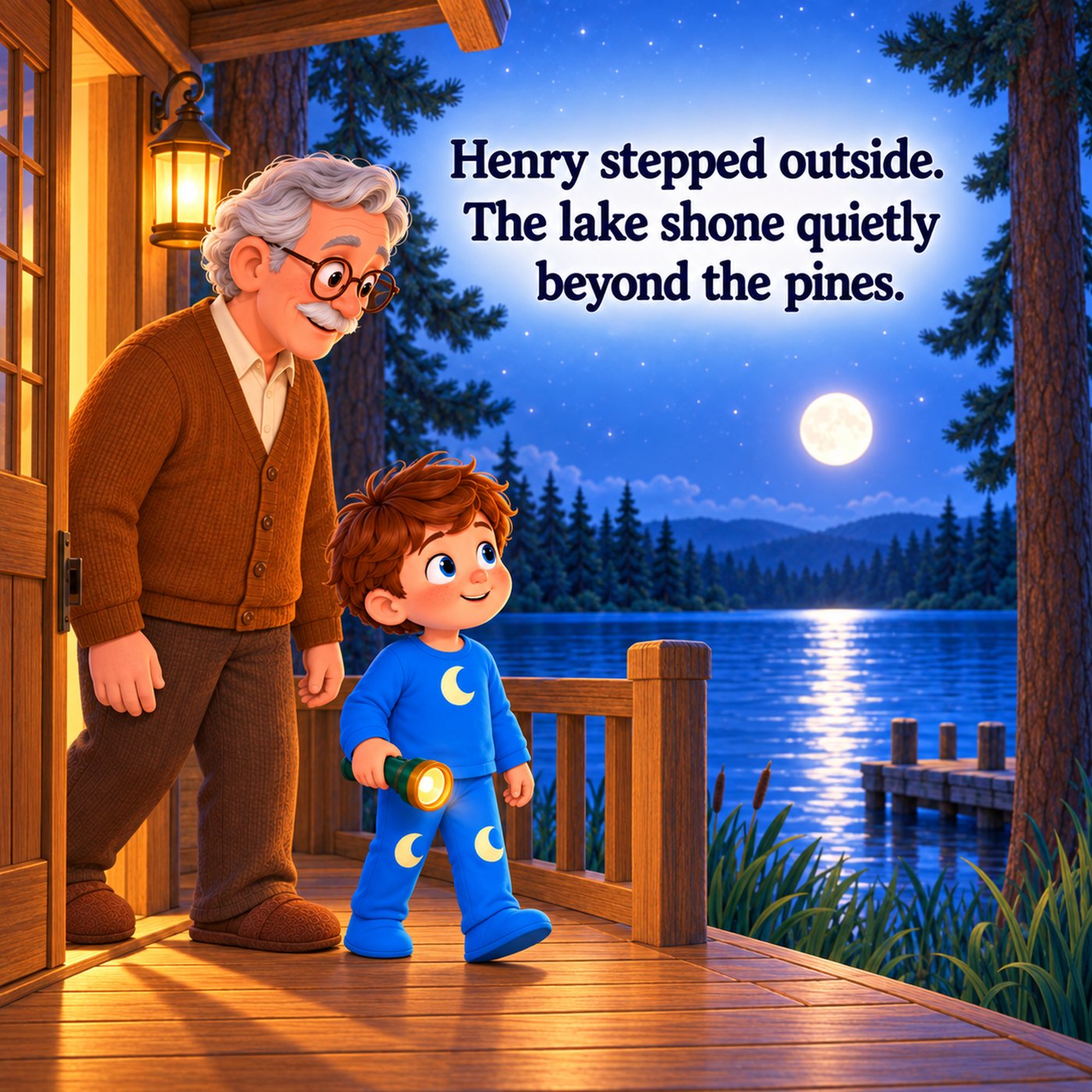
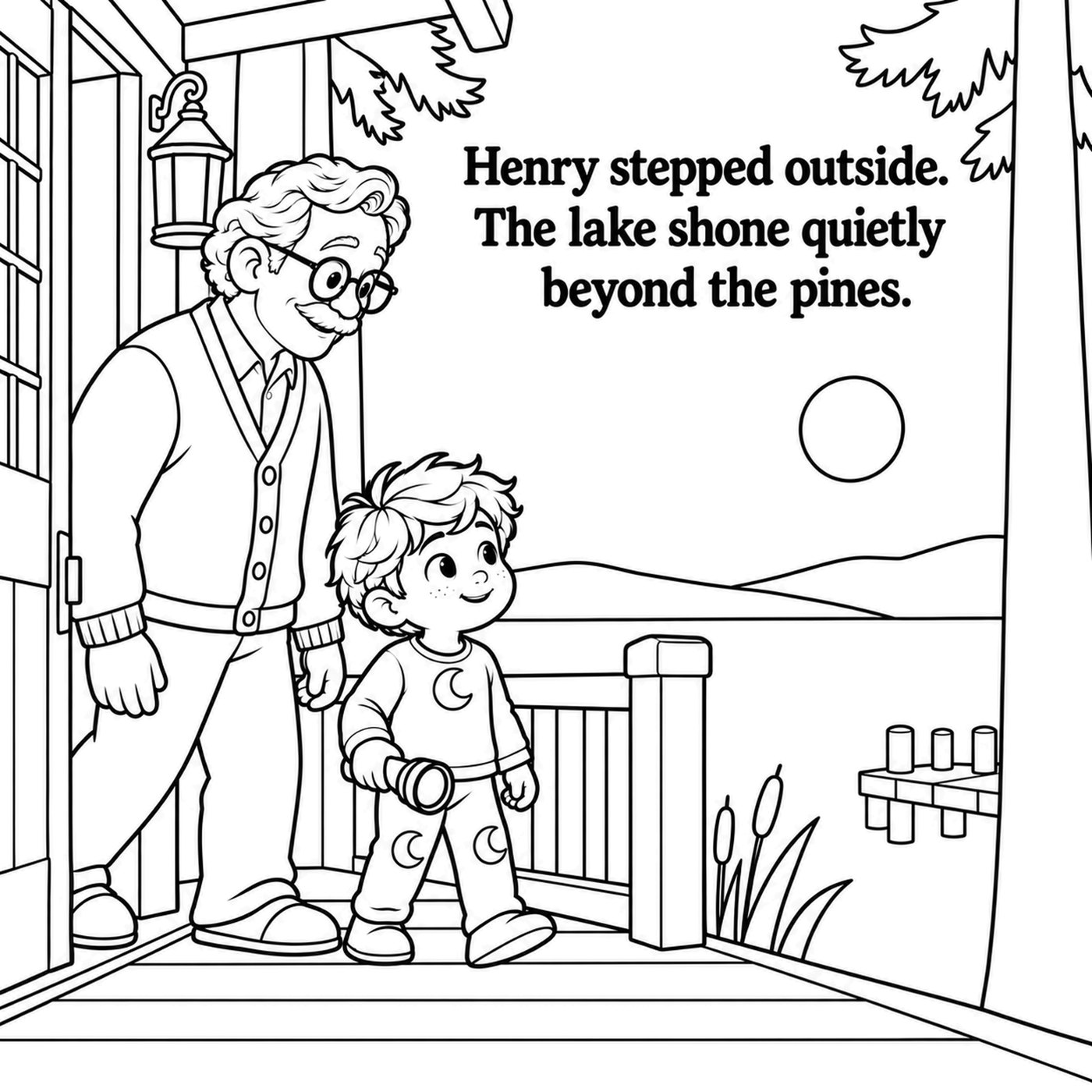
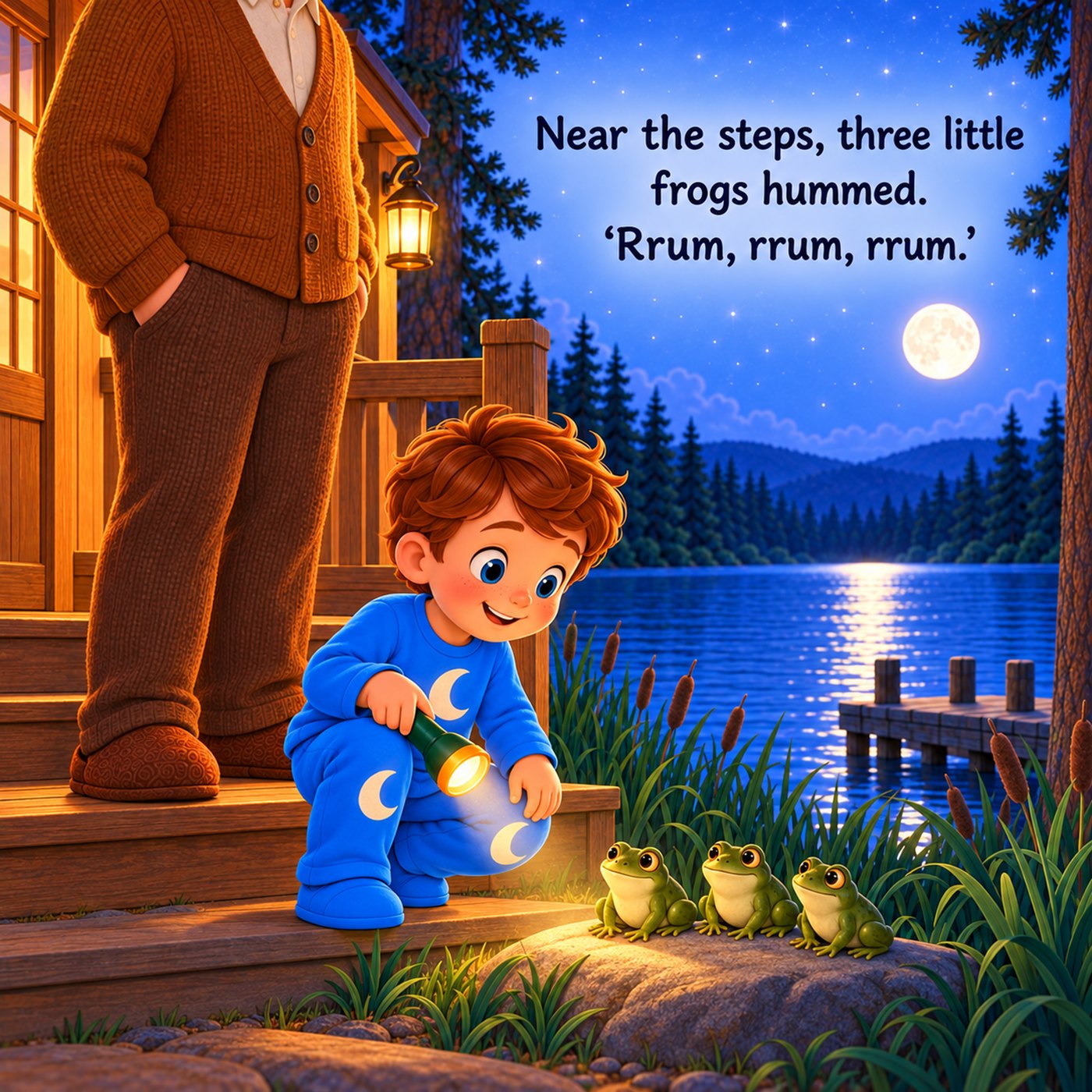
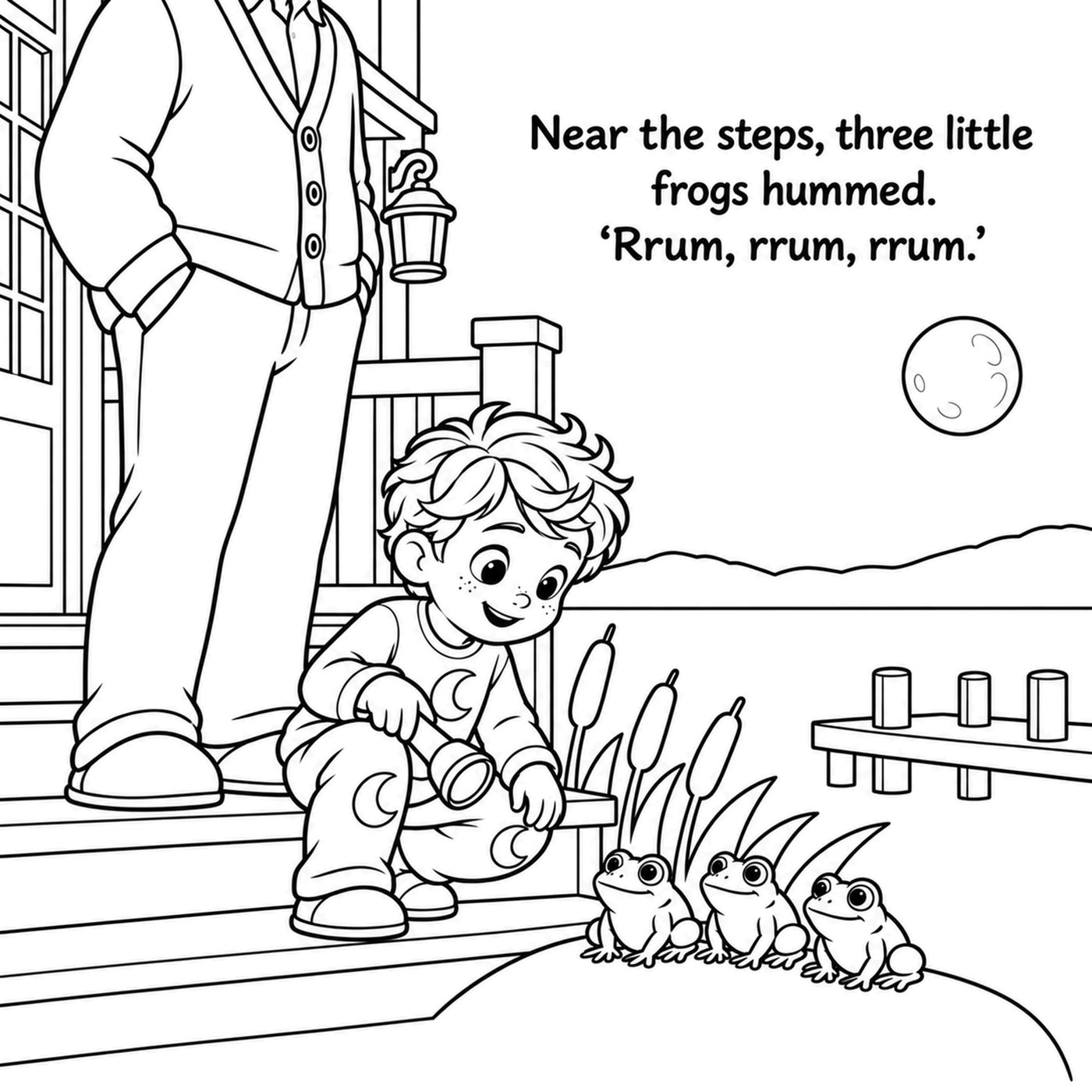
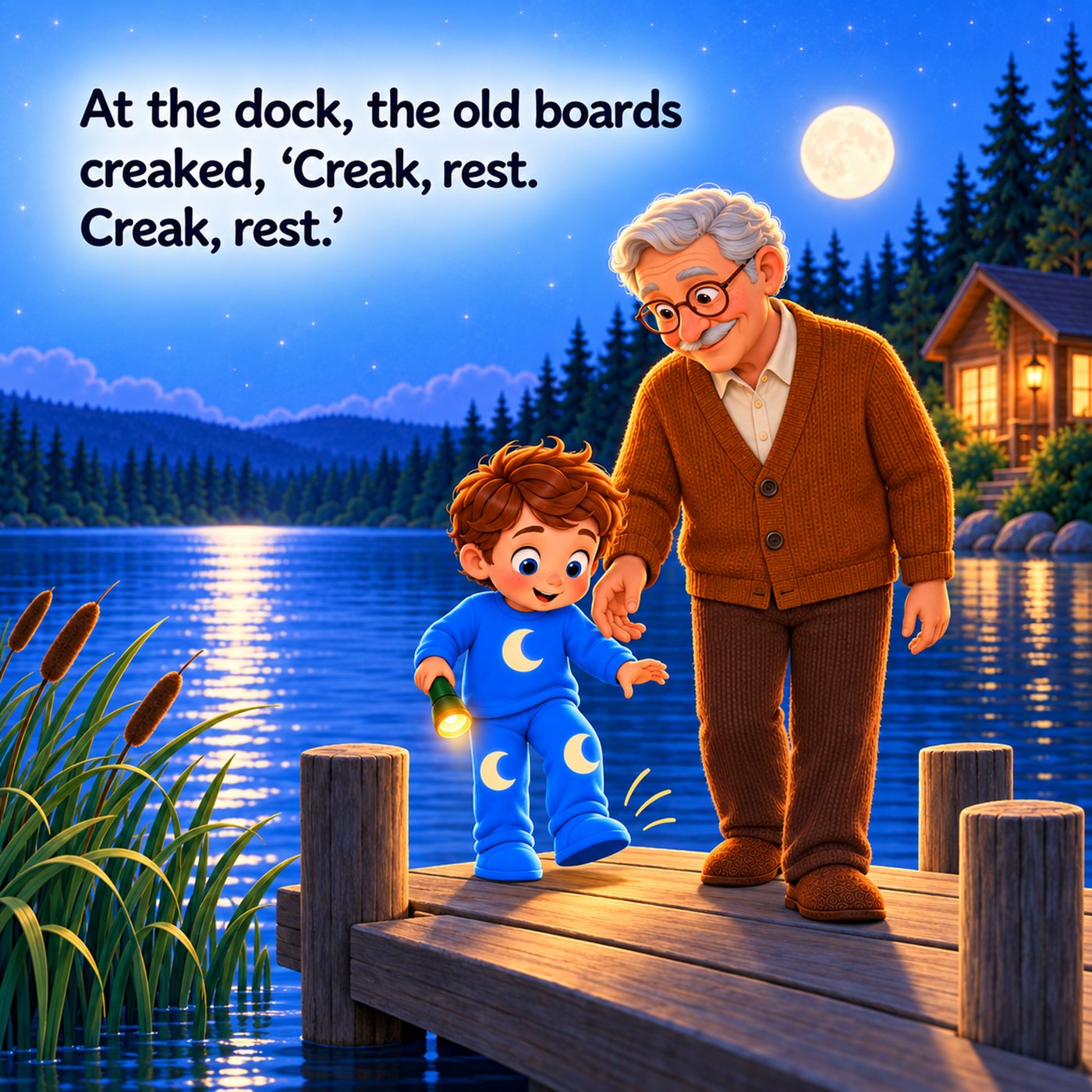
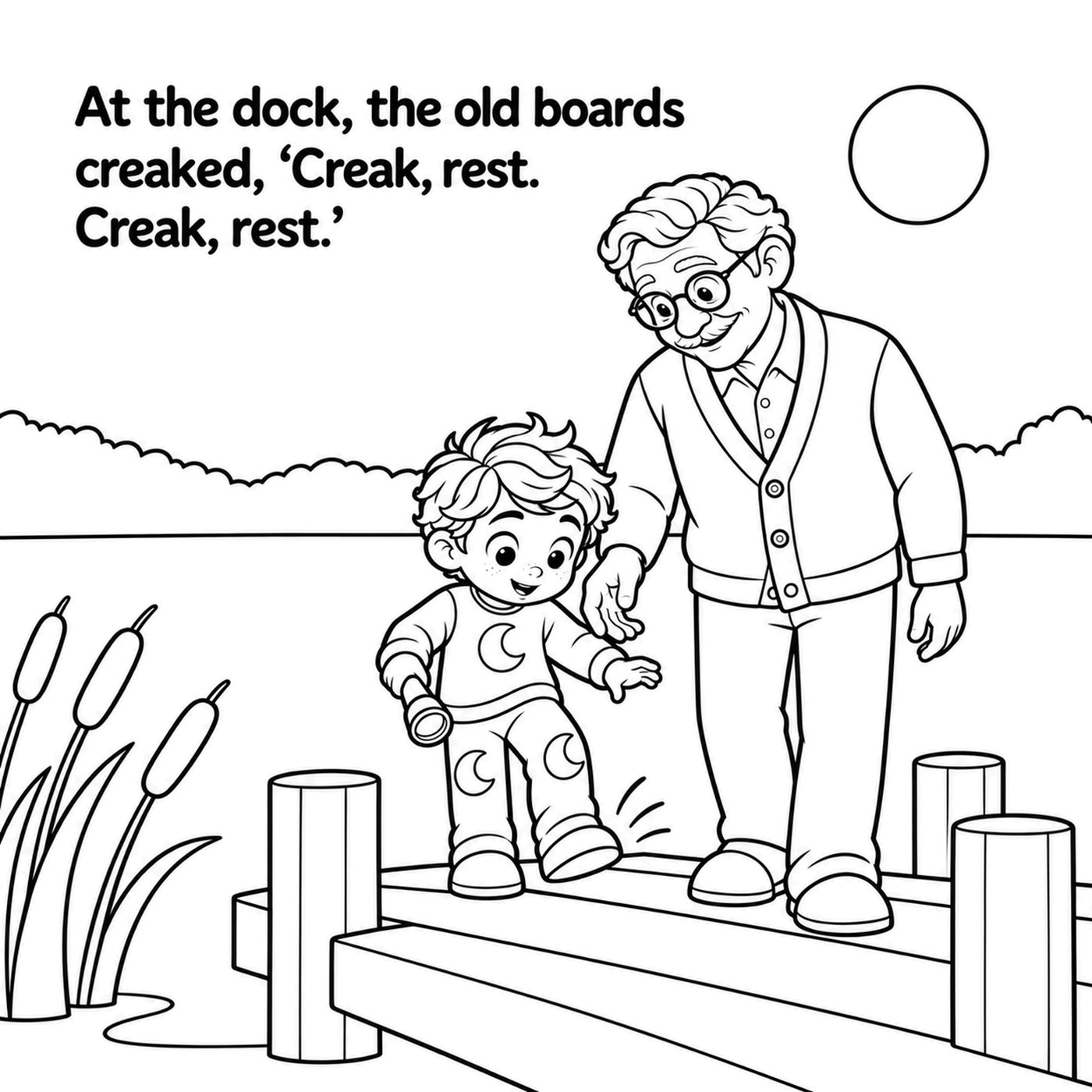
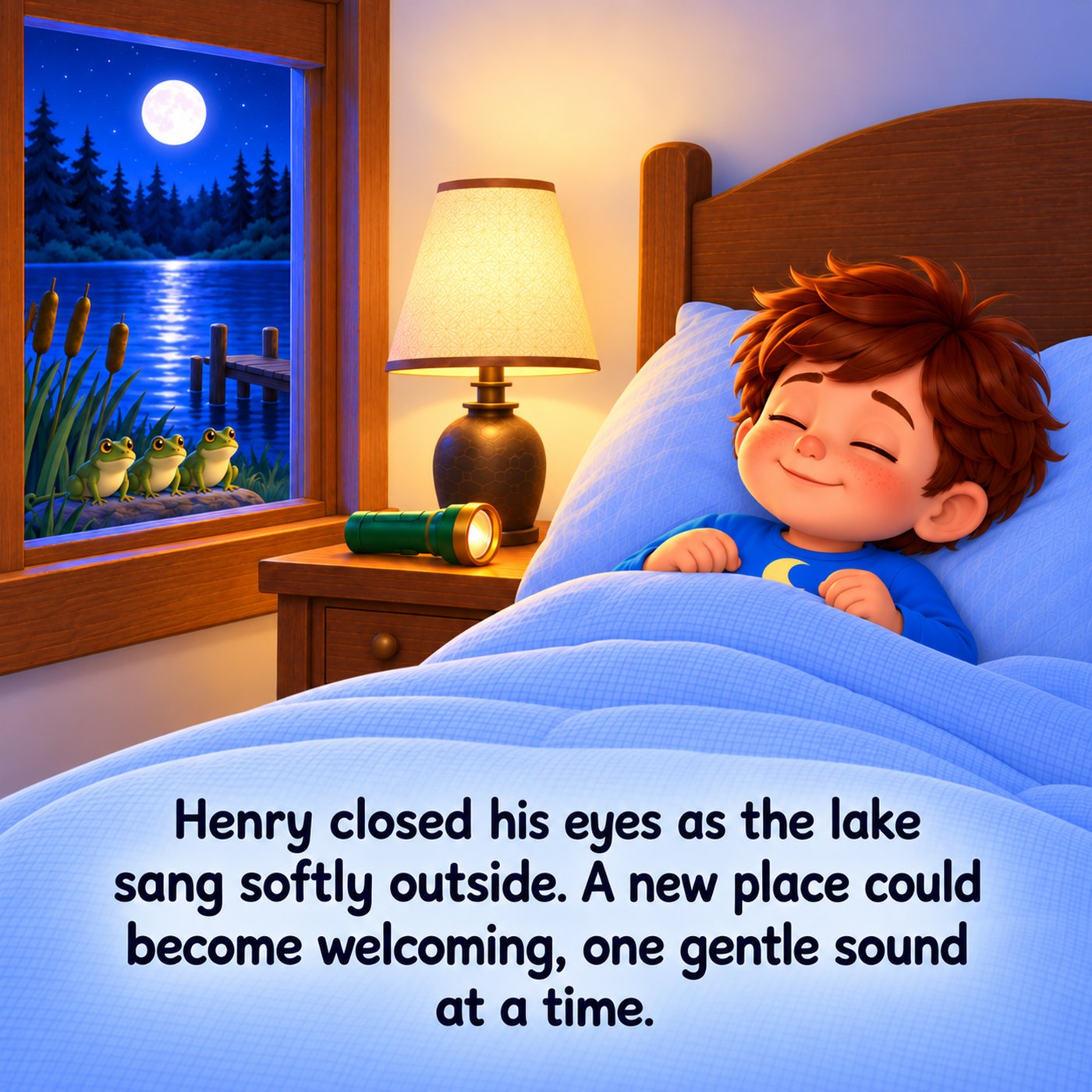
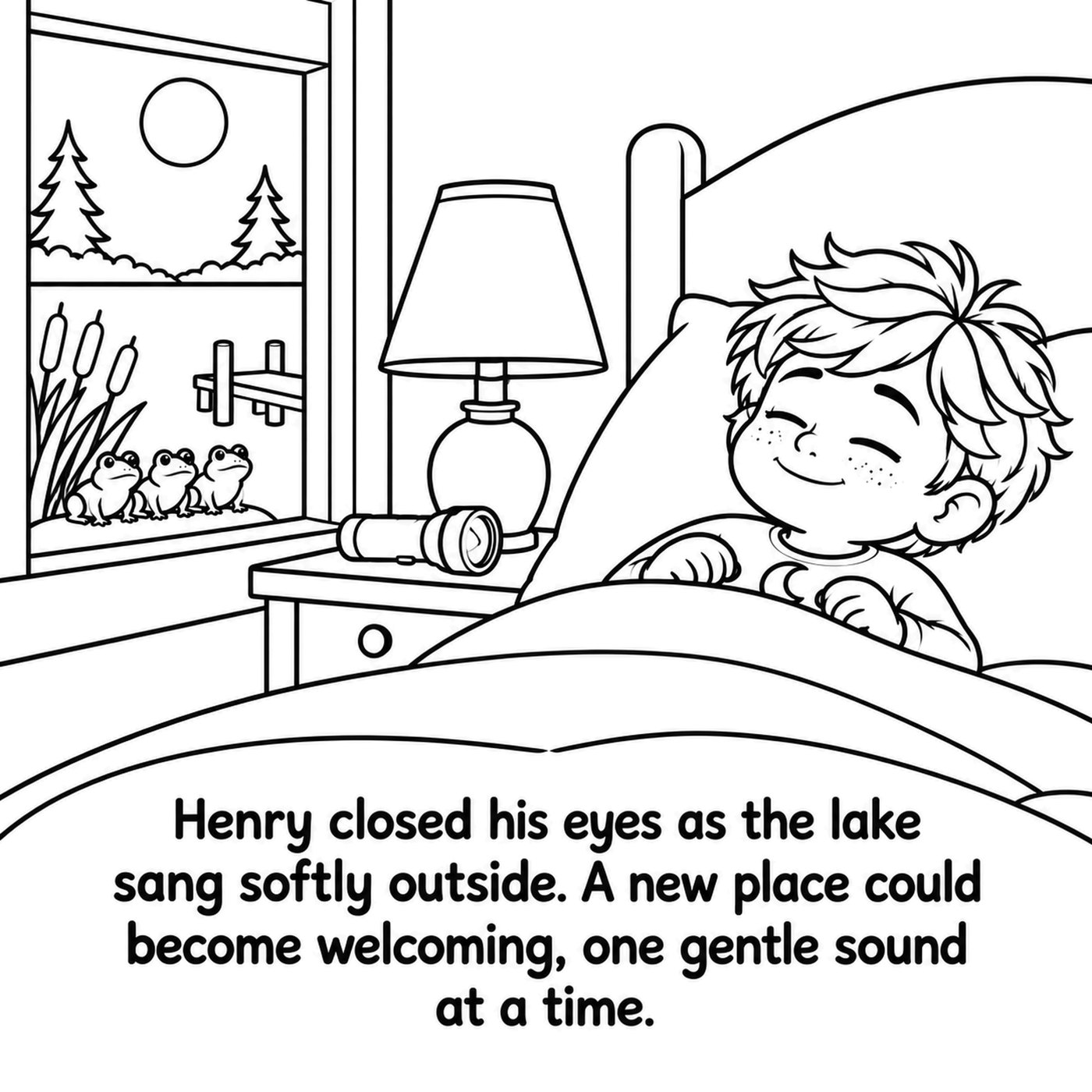
Study what the Locks held in place: the flashlight in the same hand, the moons on the same knees, Grandpa’s spectacles on every page, and the story text sitting exactly where the plan reserved it — in the painted page and in the line-art page alike.
And note what the coloring pages leave out: no wood grain, no fabric texture, no gray fills, no tiny reflections. Every one of them passed the agent’s own gate — pure black on pure white, closed contours, room to color — before it was allowed into the PDF.
Read Both Finished Books Right Here — Exactly as the Agent Delivered Them
This is the complete Coloring Edition Etsy printable from that build, untouched except for a web-friendly file size: front cover, title page, copyright page, welcome note, all 24 story pages, and back cover. Turn the pages the way a buyer would:
Every page you just scrolled is pure black on pure white with the story text set on the picture — the file a parent prints at the kitchen table. Now the same book, painted:
Same 29 pages, same words in the same places, now a finished picture book. The Amazon_KDP folders hold these pages as 8.5 x 8.5 interior PDFs plus the cover files and a notes sheet with the trim size, page count, and paper choice.
And When You Say “Volume 2,” Henry Goes Somewhere New
The plan above is filed as Volume 1 of Henry’s Quiet-Heart Adventures. We typed “Volume 2” and the agent re-read that plan, kept Henry, Grandpa, the pajamas, the flashlight, and the palette exactly as they were, and wrote a brand-new adventure: a sunrise picnic swallowed by morning mist.
Here is its own cover — Henry and the Morning Behind the Mist — and the first four pages in both editions, none of them a repeat of Volume 1:
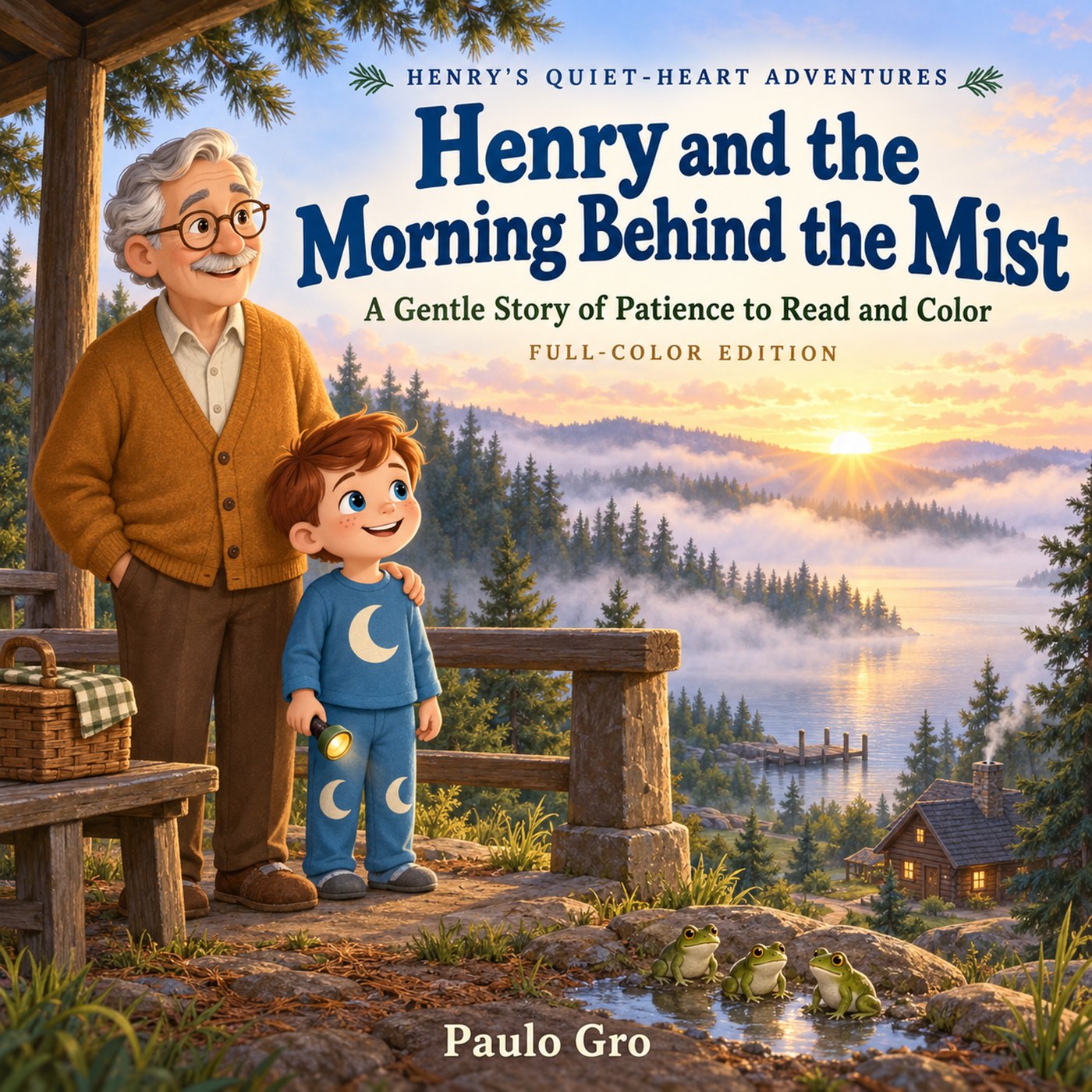
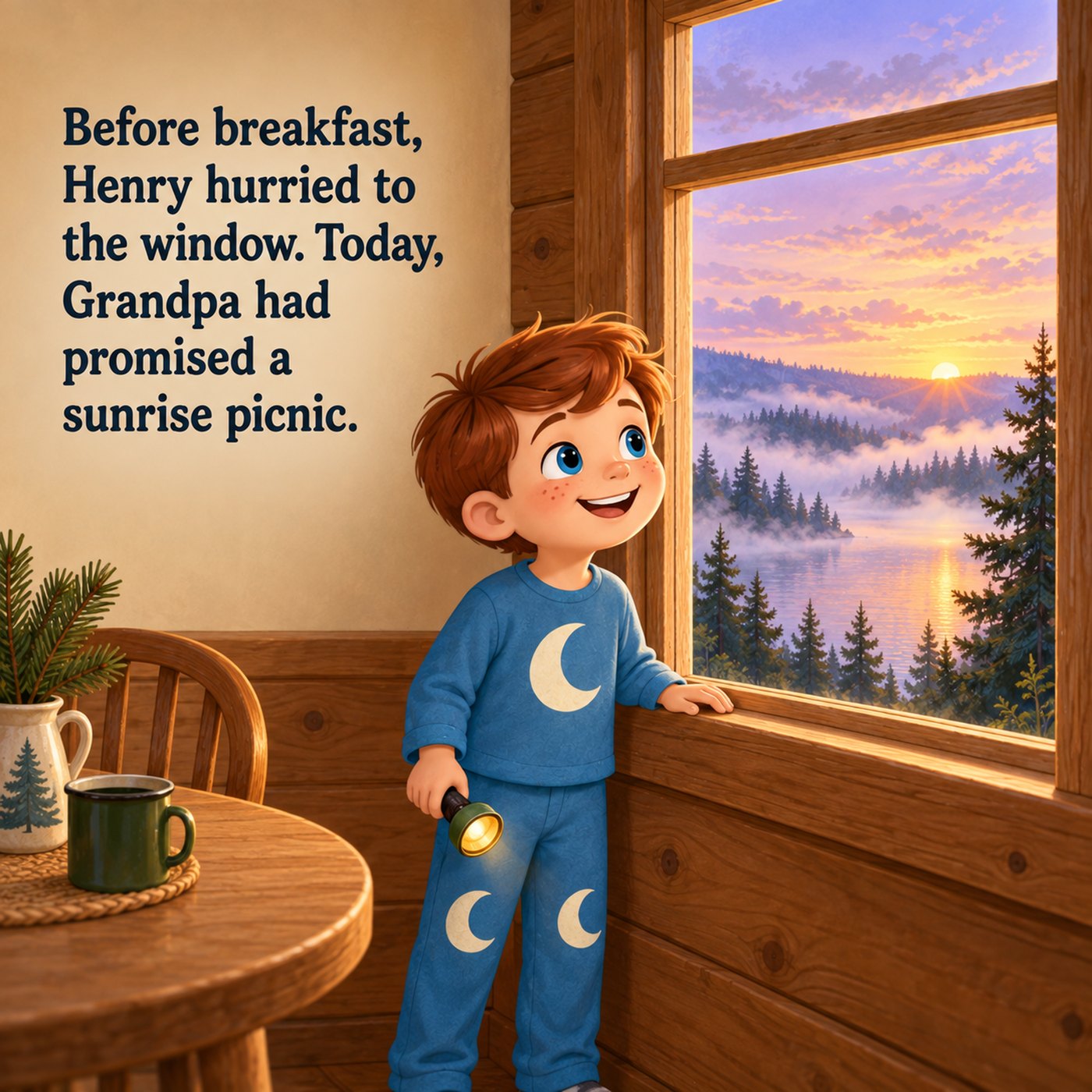
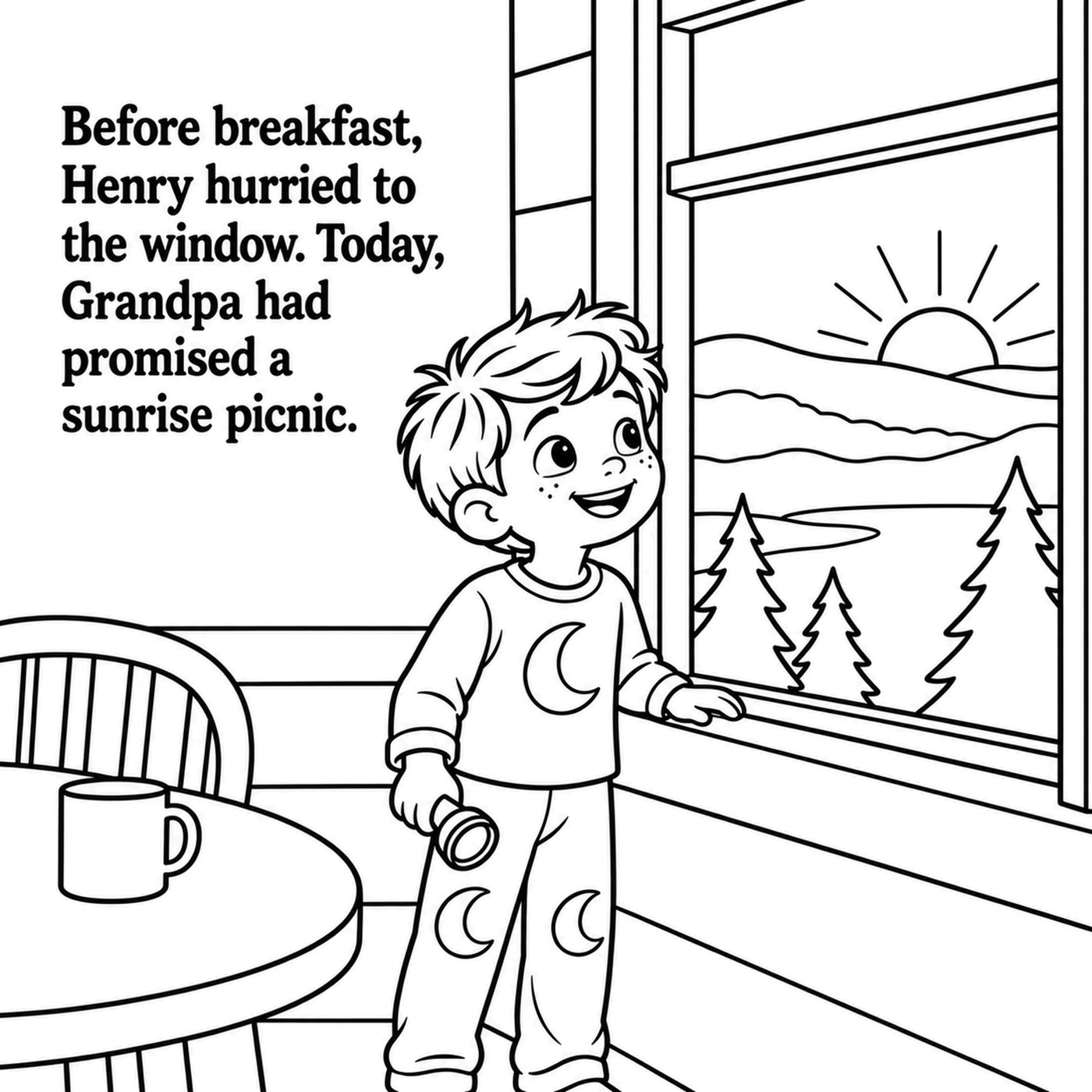
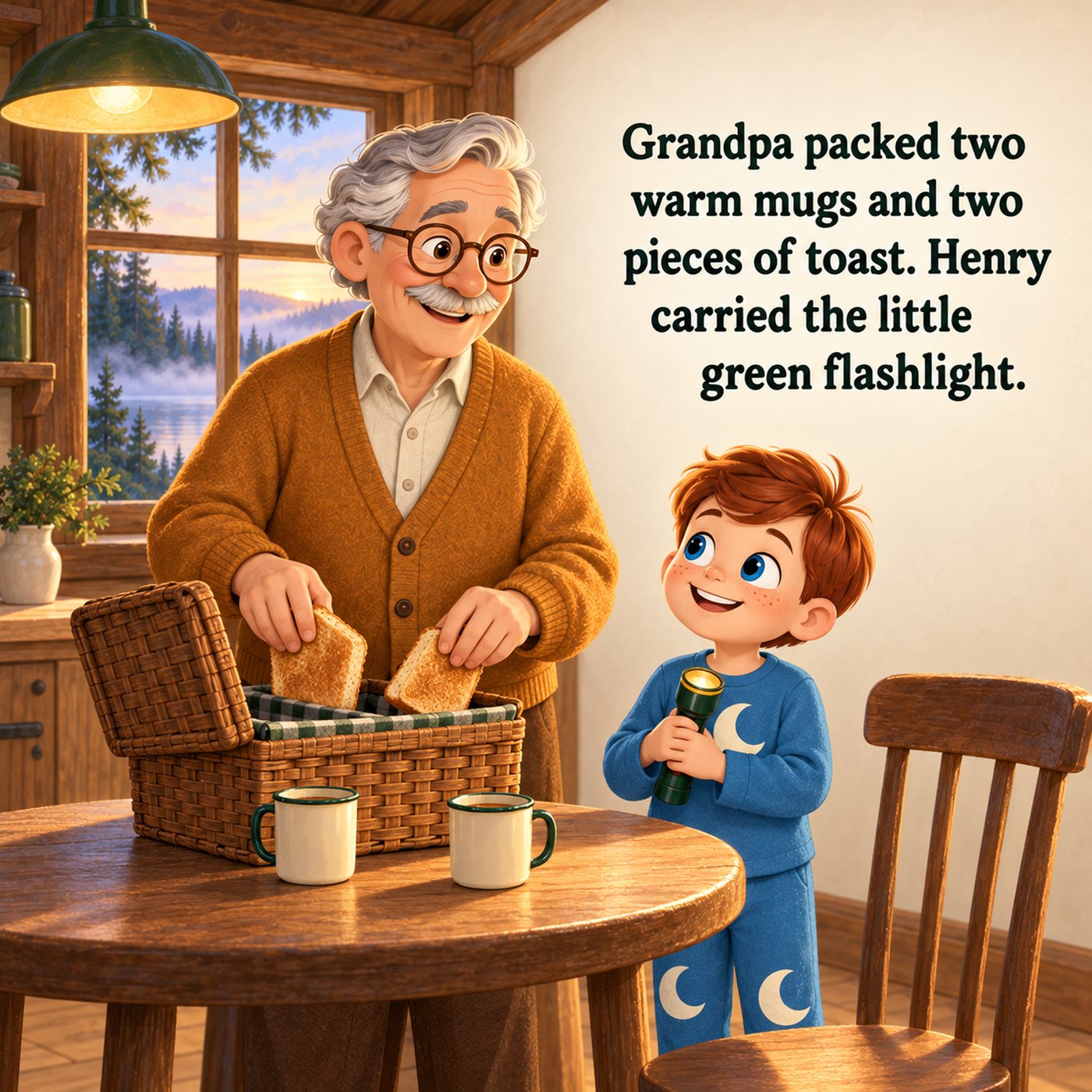
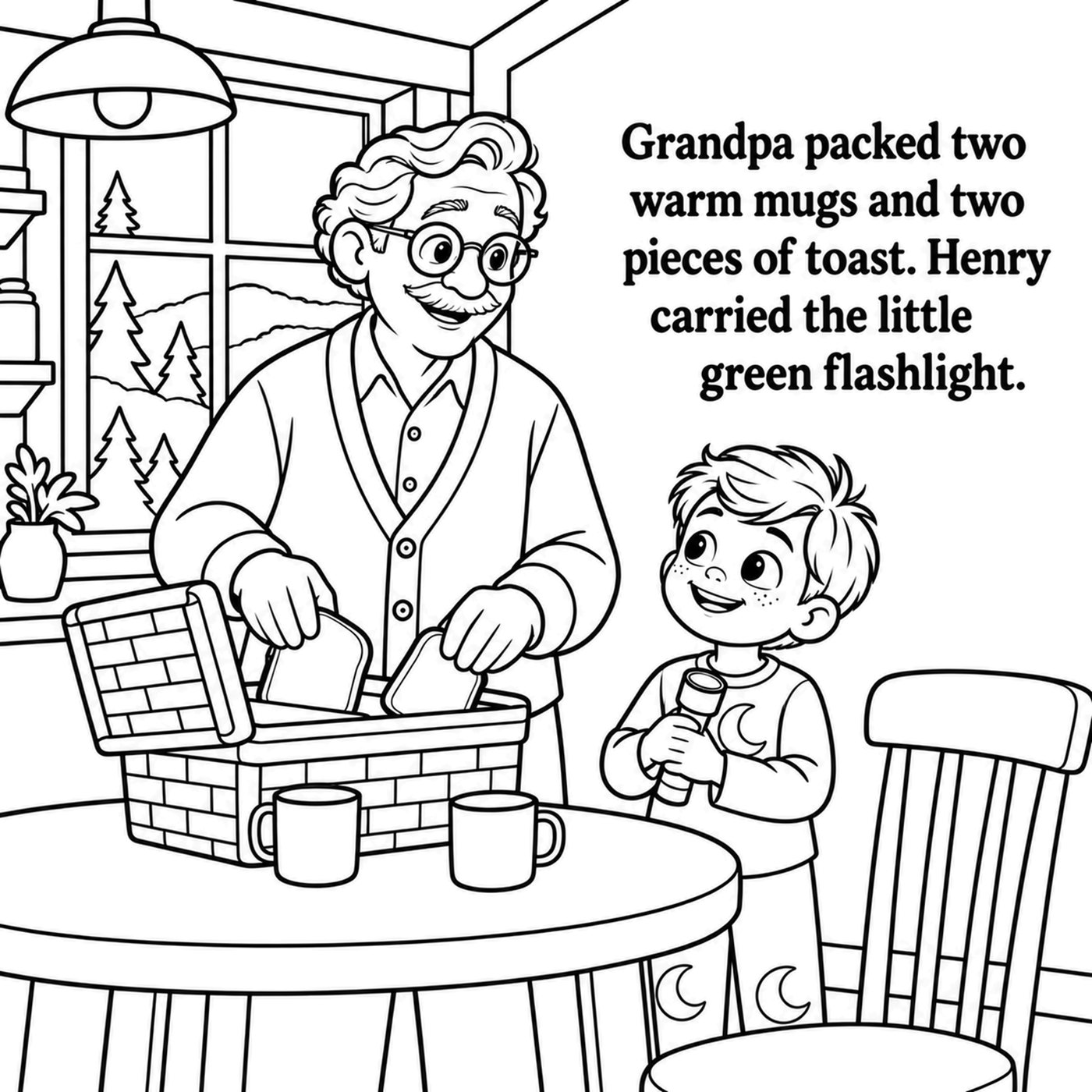
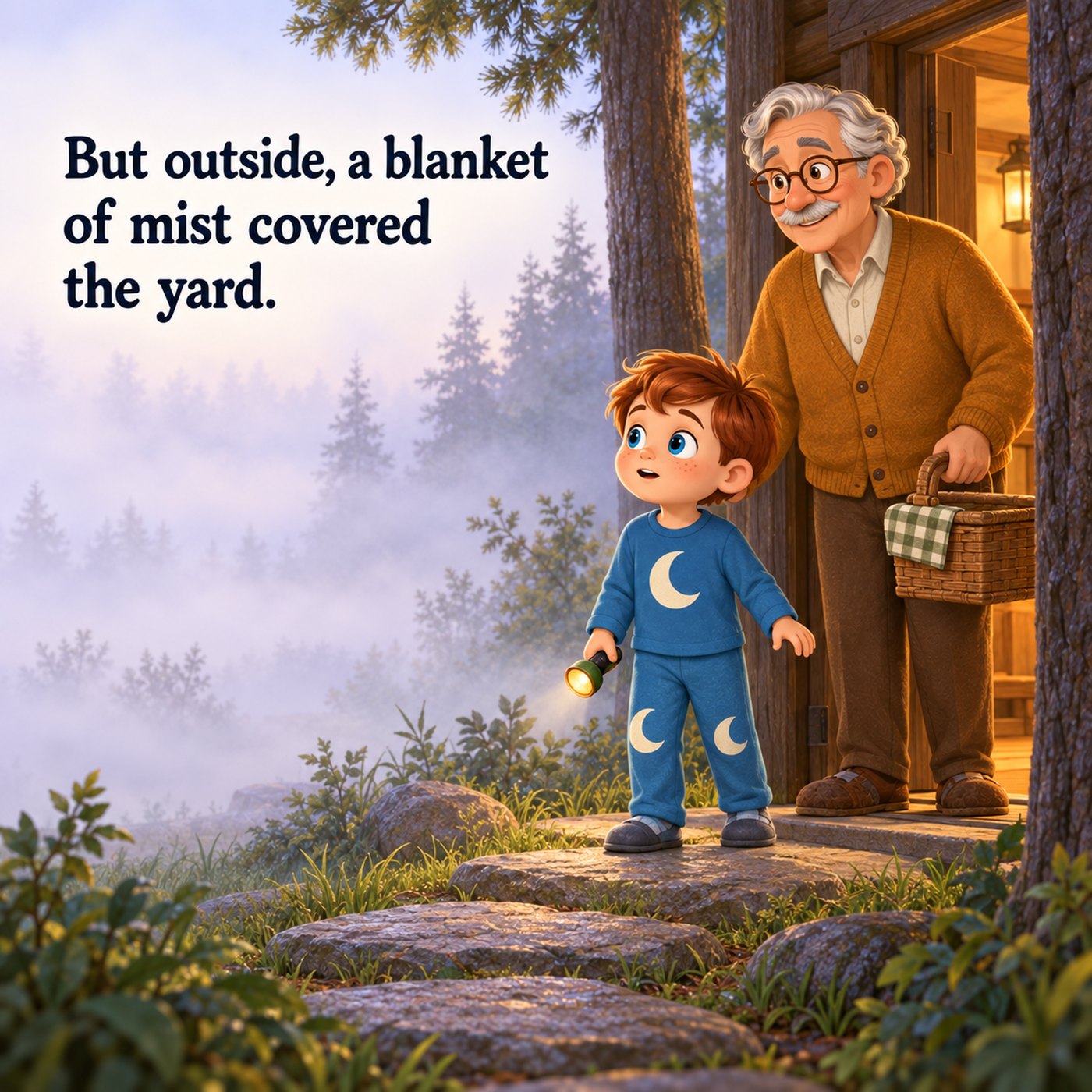
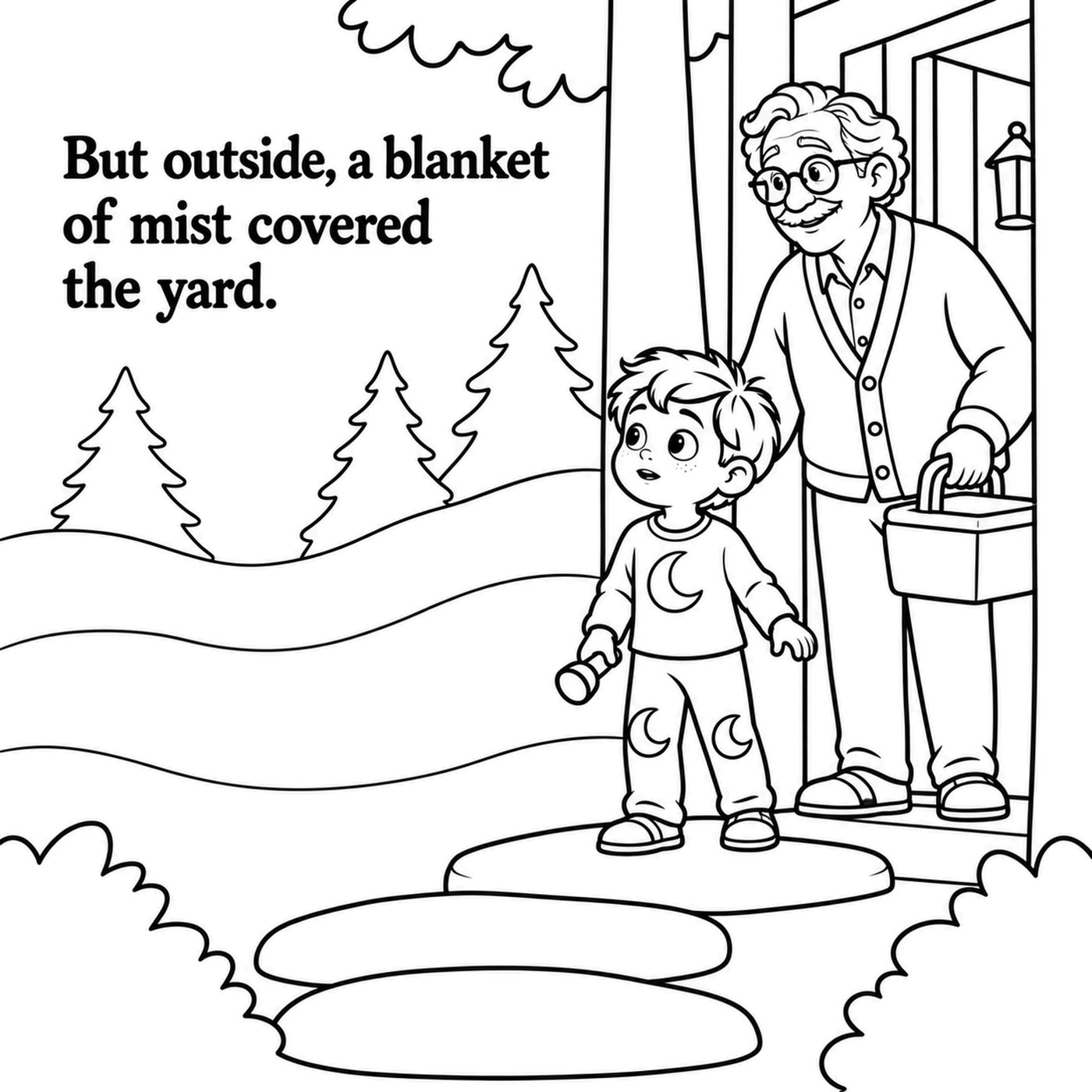
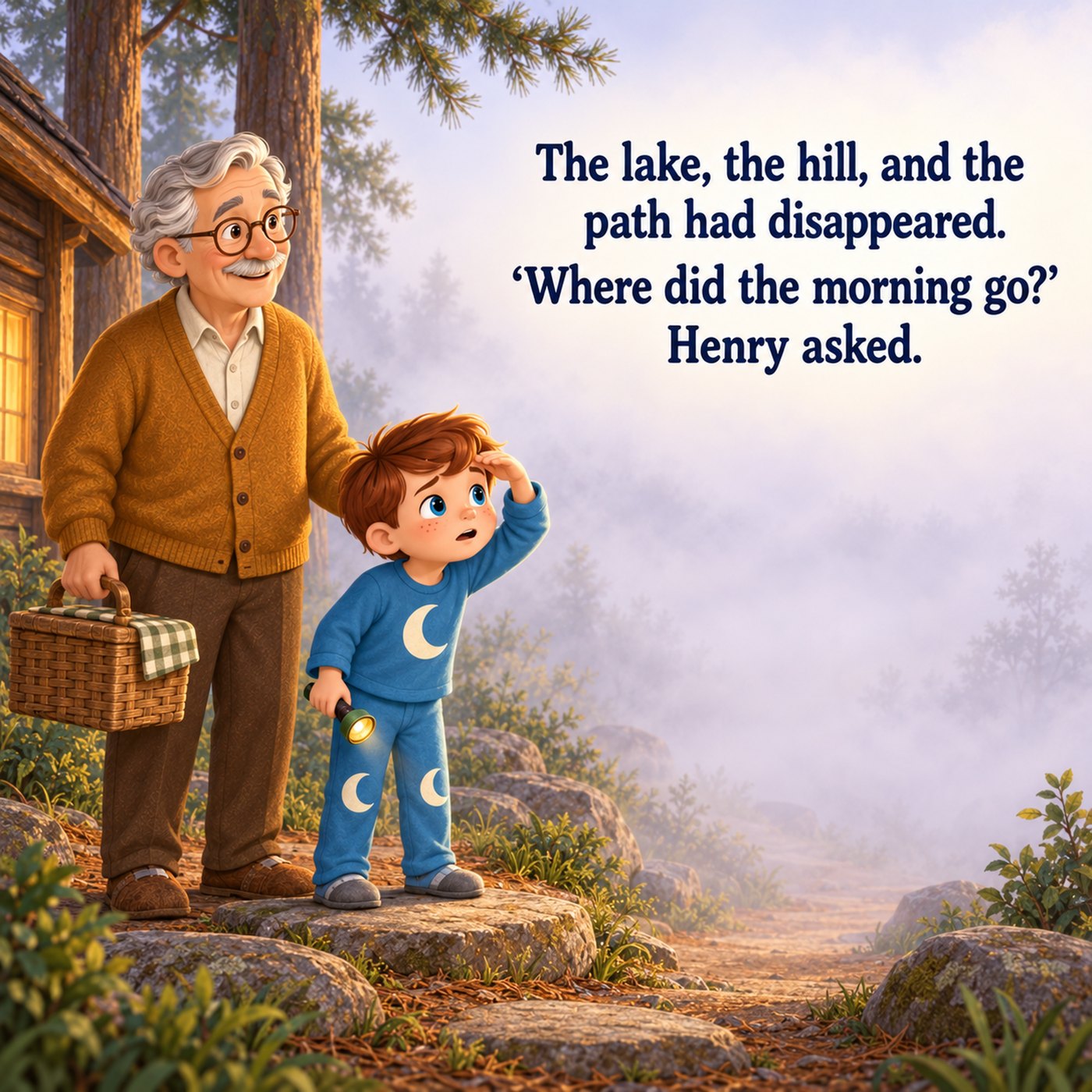
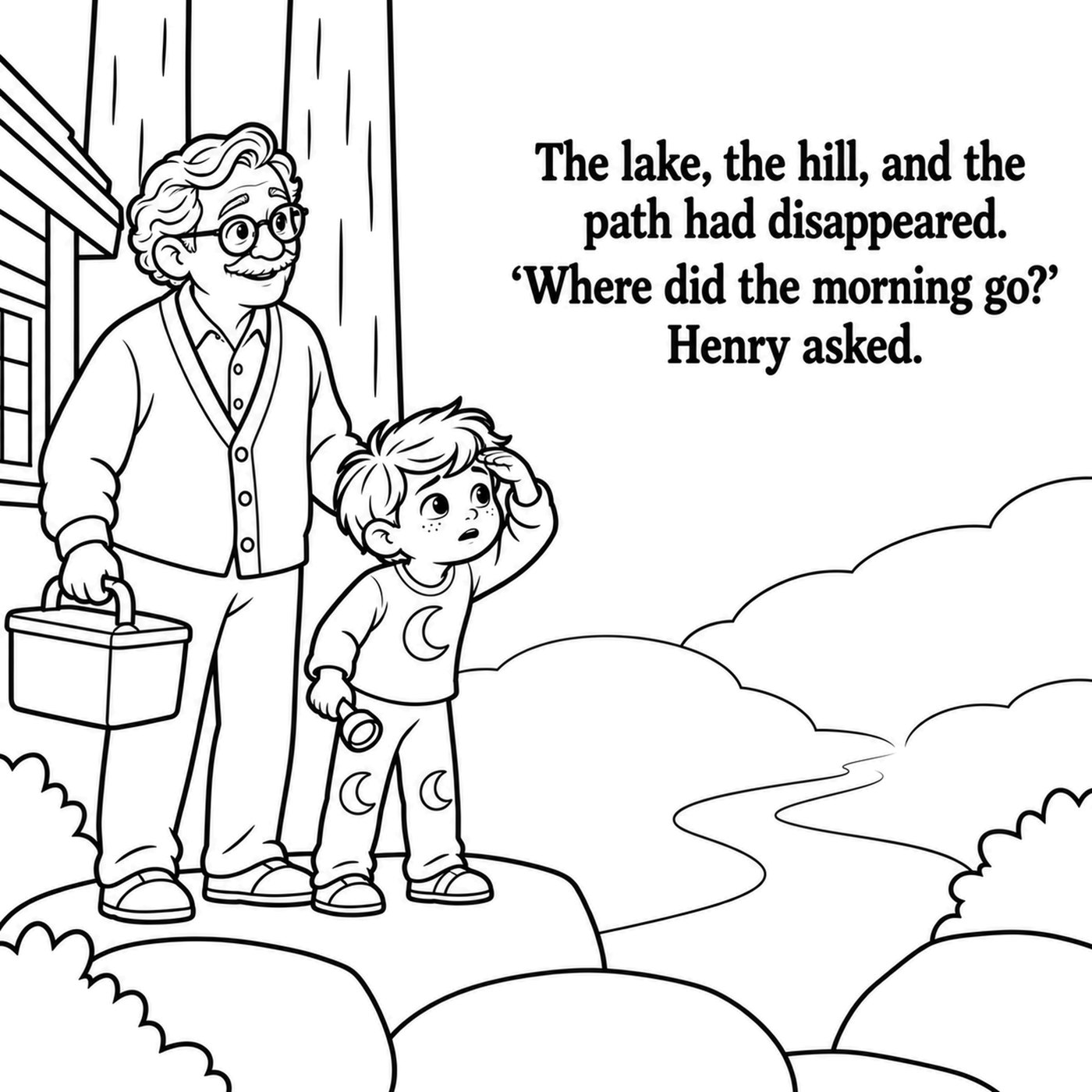
Same boy, same freckles, same three moons, same Grandpa — a different morning. This is the moment a single book quietly becomes a series a parent can collect, and every one of the 336 prompts can do it.
Twelve Places the Same Two Books Can Go to Work
Everything below feeds from the six folders the agent hands you. Nothing has to be redrawn, retyped, or reformatted:
Every channel on that list starts from files that already exist. The agent rendered the book once; the listings are where you multiply it.
And the second book costs you a sentence. “Volume 2” is all it takes to put the next title into the same twelve places.
The Story Is Written, Both Editions Are Painted — the Author Line Is Waiting for Your Name
A children’s book market past $11 billion and still growing, coloring and activity books as its fastest-moving corner, and two storefronts that print and deliver for you. The demand was never the problem.
Until today, the barrier was the work: writing for children, illustrating 24 pages, keeping one hero consistent, lettering the words into the art, redrawing everything as a coloring book. That is the part that has now been done for you, inside every prompt.
Now, you have that technology. Paste once into ChatGPT Codex or ChatGPT Work, and you get the full arsenal:
You are standing at a crossroads.
You can keep telling yourself you will publish a children’s book “someday” — and watch another season of new titles arrive on the shelf without yours.
Or...
You can click the button below, paste one prompt this evening, and read a finished book to a child tomorrow night.
Somebody’s child is going to color this story. Let it be one with your name on the cover.
Click the Buy Now Button and Secure Your Copy of 336 Agentic Prompts for Read-and-Color Storybook Series Today!
Questions? [email protected]
All the best,

Paulo Gro
P.S. — What you are really buying is a children’s book studio that runs on one sentence: 336 Agentic Prompts, each holding a complete story in two editions — and every “Volume 2” behind it — that ChatGPT Codex or ChatGPT Work renders and packages for Amazon and Etsy without you drawing a line.
Remember the numbers: an $11.2 billion children’s book market heading past $15.8 billion, coloring and activity books growing faster than any other category inside it, and two platforms that print, deliver, or download every copy for you.
Some child is going to fall asleep tonight to a story a stranger published this year — and next year it could be one of yours. Decide which side of that sentence you are on before you close this page.
Click here and secure your copy of ‘336 Agentic Prompts for Read-and-Color Storybook Series’ NOW!