Every Prompt Holds an Entire Coloring Book Series — Volume After Volume.
336 Agentic Prompts That Each Deliver a Complete, Ready-to-Sell Good Old Days Coloring Book
Each Prompt Hands Your AI Agent a Full Book — a Color Cover, 30 Bold-Line Interior Pages, the Listing Copy, and Three Print-Ready Folders for Amazon and Etsy
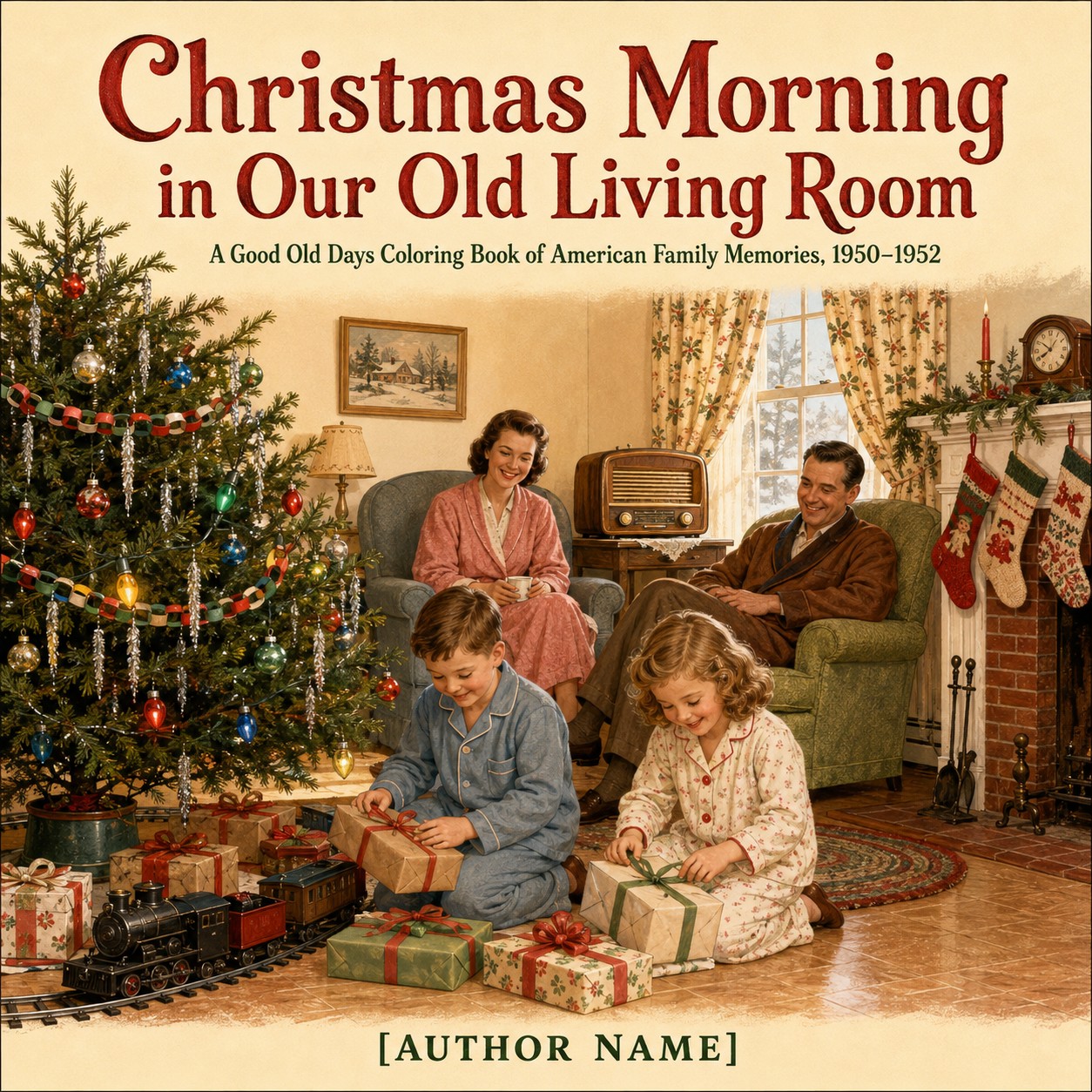
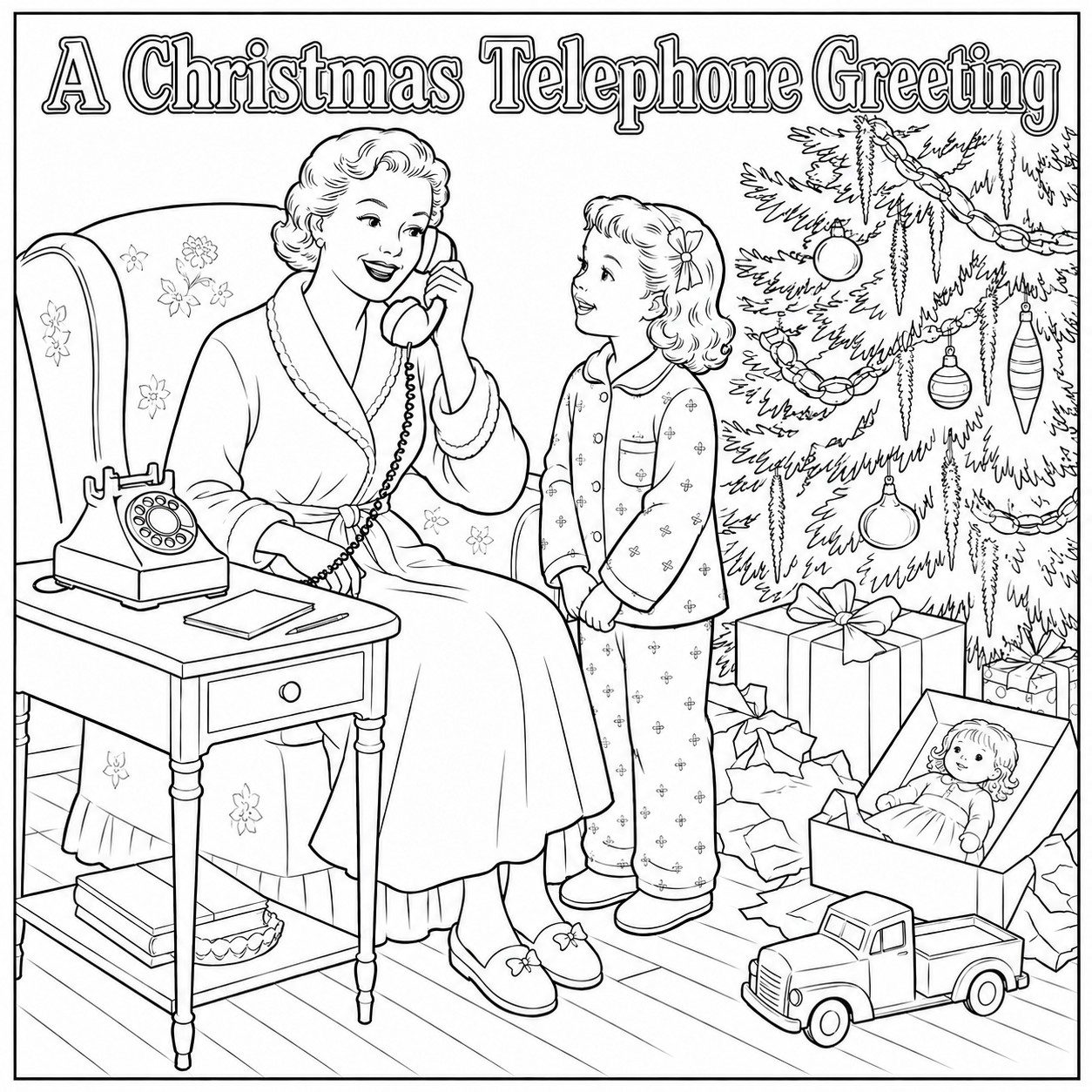
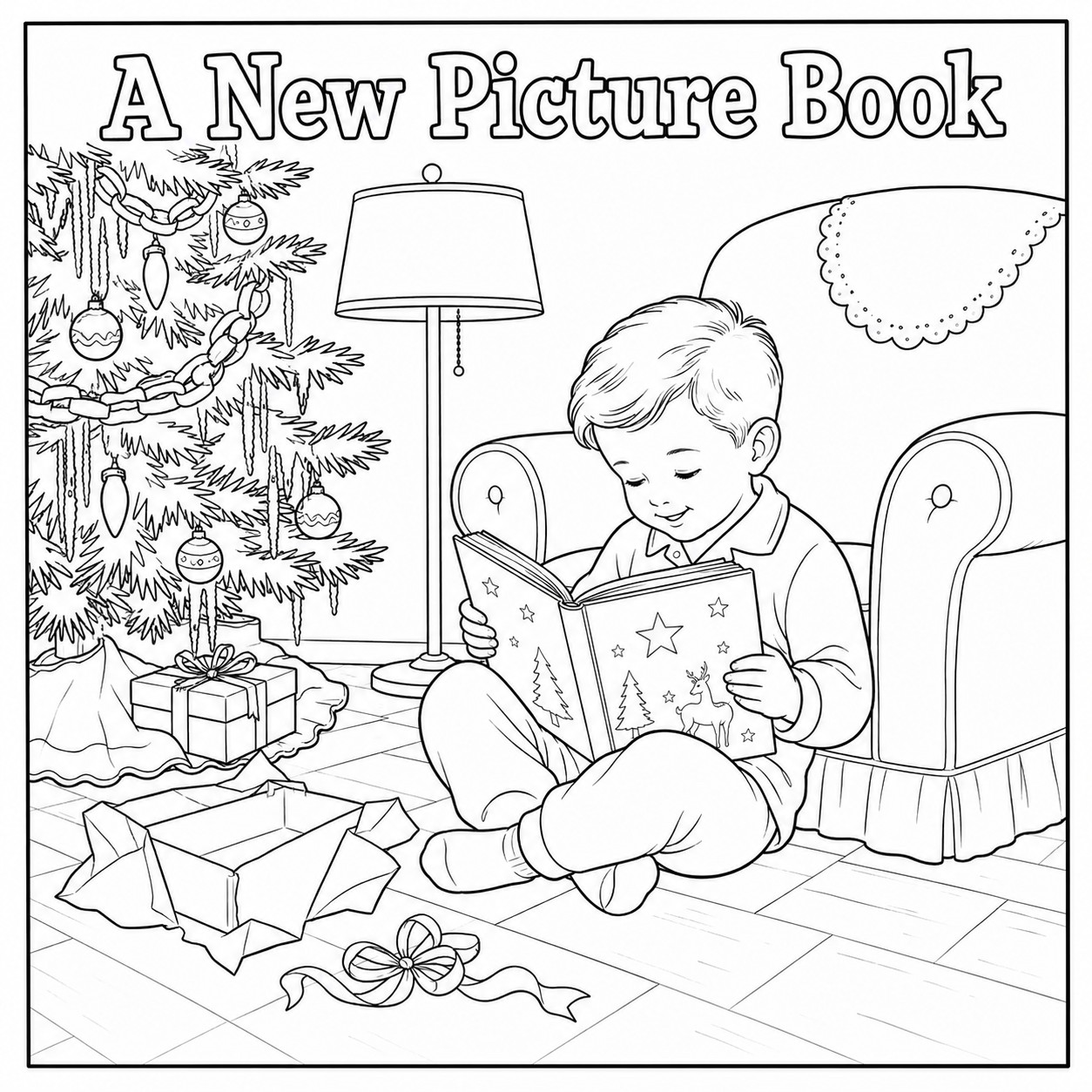
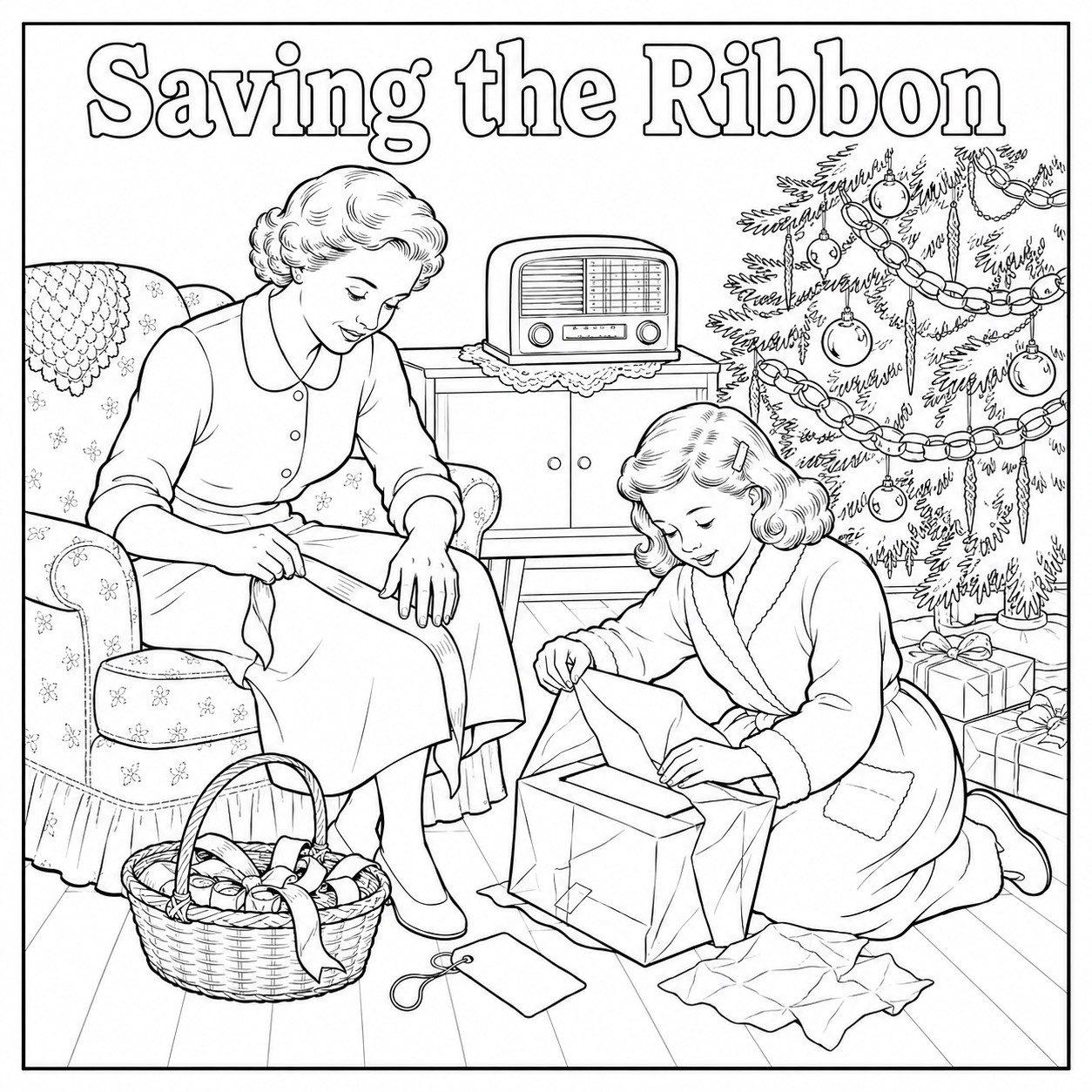
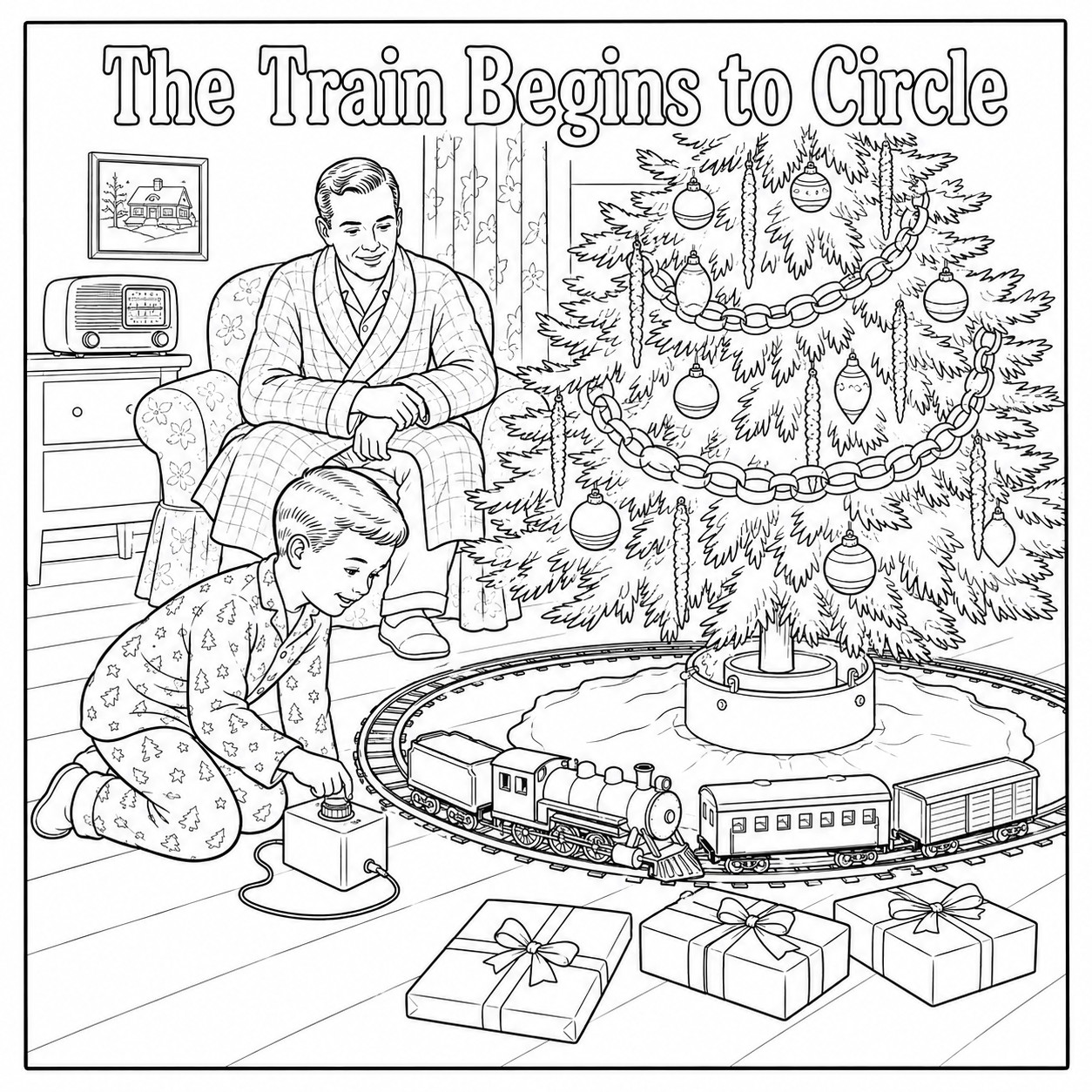
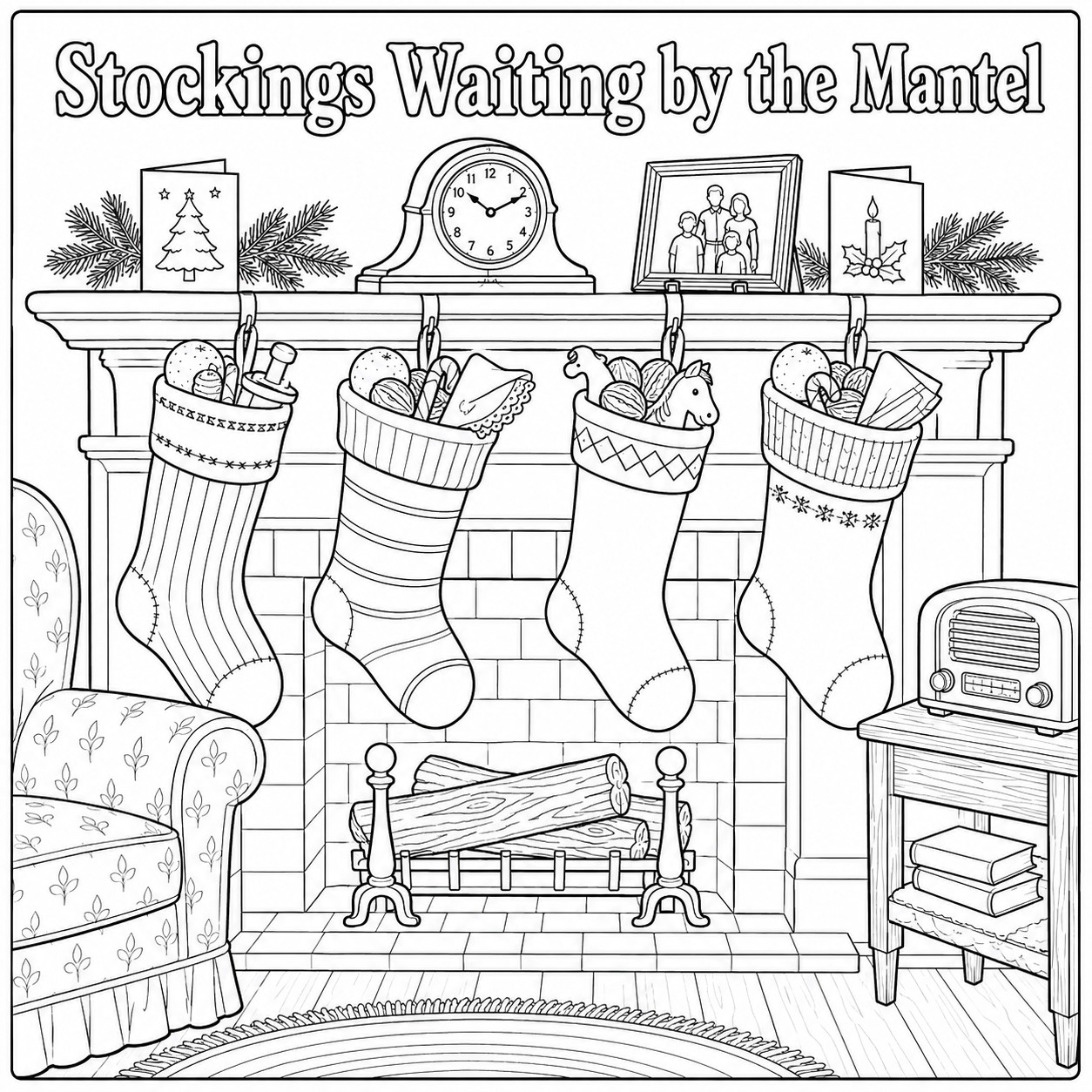
Memory-Lane Coloring Is One of the Steadiest, Most Gift-Driven Product Lines in Adult Publishing
Adult coloring is a proven, decade-long habit. And the warmest, least-crowded corner of it is memory-lane coloring made for older adults — books that recreate the world they actually grew up in.
The overall adult coloring market sat at roughly $150 million in 2023 and is tracking to $350 million by 2031 — a steady 10% a year, growing while most print categories shrink.
And the buyer for this particular niche keeps arriving on schedule: adults 65 and older are the fastest-growing age group in the United States — a reader with time, money, and a deep appetite for gentle, remember-when coloring. They aren't coloring a random mandala; they're coloring the kitchen they grew up in.
And the storefronts are wide open to you. Amazon KDP prints and ships every paperback on demand, and Etsy holds standing categories for printable senior and nostalgia coloring pages — a book you build once can sell for years.
You don't have to take my word for the appetite — look at what real buyers are doing in this exact niche right now:
These are not flashy products. They are simple black-line pages of a remembered world — a percolator on the stove, a station wagon packed for the trip — and that plain, personal warmth is exactly why they never stop selling.
So Why Isn't the Market Flooded With Them?
Because a good nostalgia coloring book is far more work than it looks from the shelf.
A finished book isn't one drawing — it's thirty of them, plus a cover, plus a title and description that actually get found, all pointing at one believable decade. And "vintage" is a minefield: put a wall phone with a cord in a 1980s kitchen and every reader who lived it feels the wrongness instantly.
Try it by hand and you slam into the same five walls that stop almost everyone:
Each wall is small on its own.
Stacked together, they're the reason most people make half of one book, get overwhelmed, and quit before they ever hit publish. That's the wall standing between ordinary people and a market that buys every single day.
Until now.
What if one paste did the drawing, locked the era, forced the senior-friendly lines, wrote every word of publishing copy, and then built and rendered the whole book into folders you upload as-is — while you went and made a coffee?
Introducing
336 Agentic Prompts for Memory Lane Coloring Book Series
Each of these is an Agentic Prompt — a complete production run for ChatGPT Codex and ChatGPT Work, with the entire job baked into a single paste. Your agent reads it and goes to work like a studio that already knows the whole book.
First it writes the full plan and shows it to you. In that plan you get:
You approve it — or ask for changes — and answer just two questions: the author name for the cover, and your go-ahead. That's the entire amount of thinking this asks of you.
The real magic is what happens next — automatically. The agent renders the color covers — front and back — and all thirty pages, one at a time, each a true 8.5 x 8.5-inch square at 2550 x 2550 pixels and 300 DPI. It even typesets the title page, copyright page, and welcome note, so what comes out is a complete book.
The interiors come out as pure black outlines on pure white — bold-to-medium lines, open spaces, clearly separated objects, the relaxed density an older hand actually enjoys coloring. No gray fills, no shading, no cramped tangles.
And it checks its own work. If a page comes out non-square, gray-toned, or drifting off the plan, it throws it away and re-renders it before moving on — the quality gate that hand-generating never gives you.
And when the agent reports back, what's sitting on your computer is a finished, ready-to-publish book:
The Agentic Advantage: One Paste Today, a Whole Series Tomorrow
These are Agentic Prompts — written for the newest class of AI: agents that plan, render images, check their own work, and save real files — the way ChatGPT Codex and ChatGPT Work do. A chat prompt gets you an answer; an Agentic Prompt hands your AI a full job description.
That's why one paste carries so far: the plan, the rendering, the quality gate, the typesetting, and the packaging all live inside the prompt — and the agent executes the whole sequence while you do something else.
And because the agent keeps the plan it wrote, the collection never runs out of books. Say "Volume 2" and it re-reads that plan, then builds a brand-new thirty-page book in the same memory world — without repeating a single page.
New rooms, new errands, new seasons, new small-town corners of the exact same era — then Volume 3, then Volume 4. A single kitchen becomes a shelf, and a shelf becomes the series readers collect and gift in sets.
That's what the word Agentic on the label means in practice: every one of the 336 prompts walks in like a hired book studio — and every studio can keep producing volumes for years.
Why Memory-Lane Books Keep Selling While Trends Come and Go
Memory-lane coloring sits on structural advantages most niches never get. Five of them work for you from day one:
Own 48 Proven Nostalgia Themes Buyers Recognize on Sight
These aren't random retro grab-bags. Every theme is a proven memory trigger — the scenes an older colorist recognizes on sight and reaches for first, chosen and ordered by how universally they land.
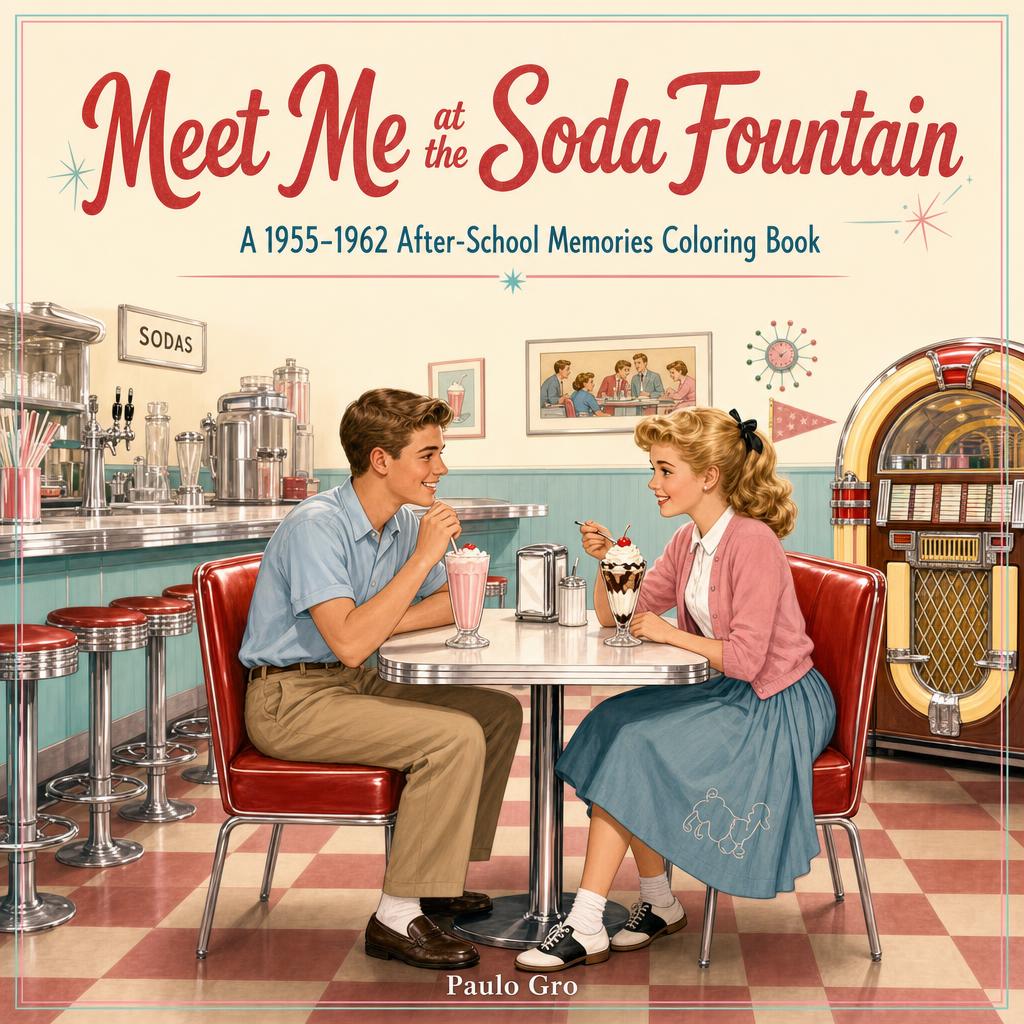
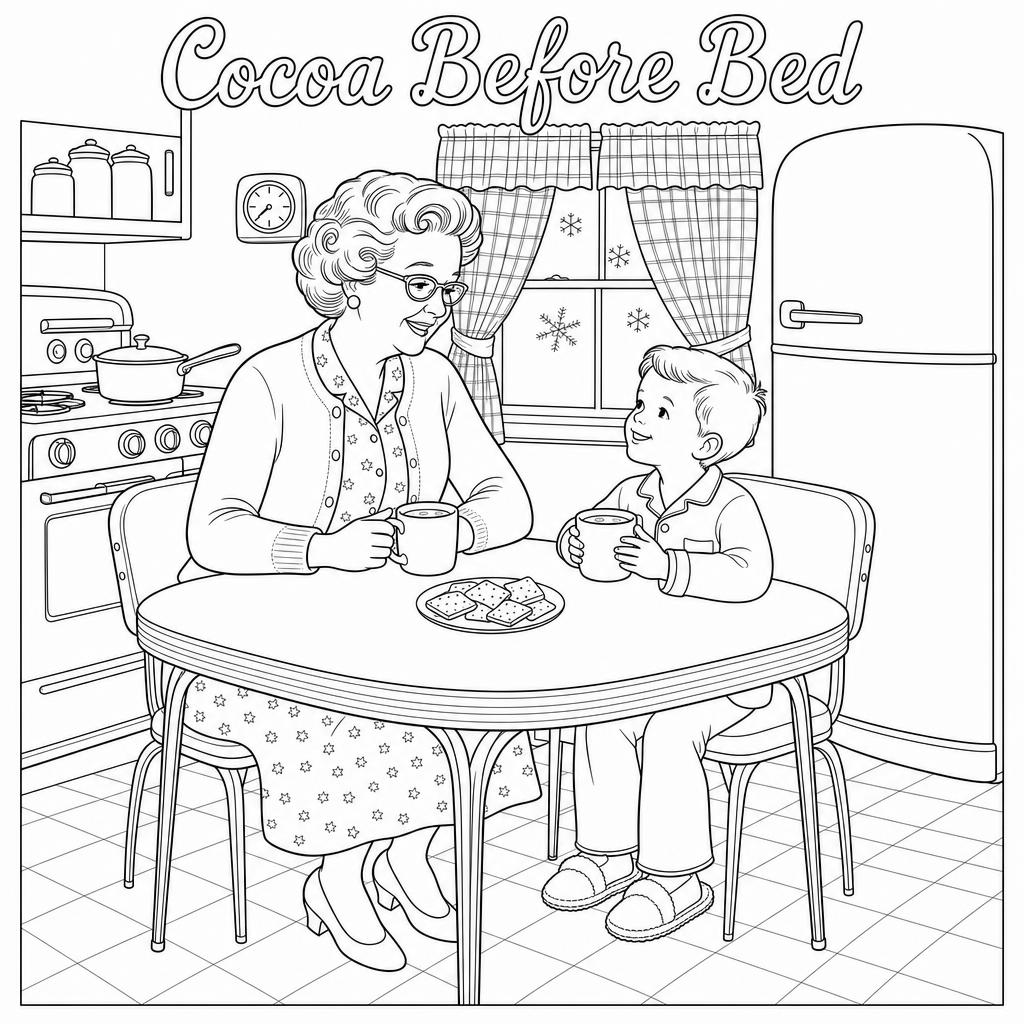
And because each theme holds several Agentic Prompts, you can publish a whole line inside a single niche — and then say "Volume 2" to go deeper still. Two more of these themes, rendered straight from their own prompts:
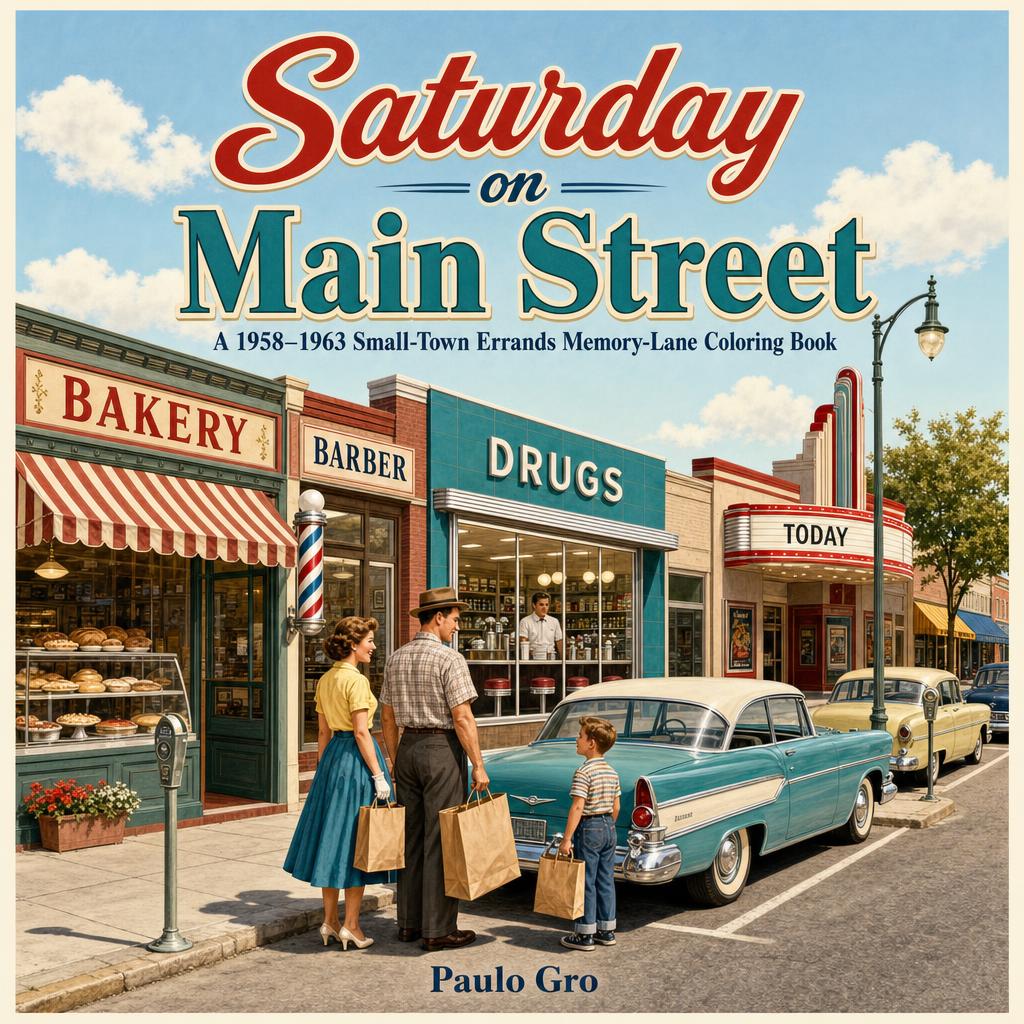
Here's the full list you get out of the gate:
From Paste to Publish in Four Easy Moves
Step 1: Drop One Prompt Into Your Agent
Open ChatGPT Codex or ChatGPT Work, paste any prompt from the collection, and hit enter. Nothing to configure.
Step 2: Read the Plan and Answer Two Questions
The agent lays out the whole book — title, description, keywords, cover, all thirty scenes — then asks for your author name and your approval. Tweak anything you want first.
Step 3: Walk Away While It Builds
The agent renders the cover and all thirty pages, checks each one, re-does any that miss, and drops everything into three tidy folders. Grab a coffee — this is the hands-off part.
Step 4: Upload and Sell
The Amazon_KDP folder gives you a complete print-ready interior plus front and back covers; the Etsy_Printable folder gives you one downloadable PDF of the whole book; the High_Res_Pages folder gives you all 32 images for bundles or any other platform. Want a second book in the same world? Say "Volume 2" and repeat Step 3.
Everything Comes Explained — Even on Your First Day With AI Agents
Everything you need to run these comes in the box, spelled out in plain English — set up once, and the whole system is a copy-paste away:
Here's the Actual Plan One Paste Produced
What follows is real, unedited output — the plan a single prompt from this collection produced for the A 1950s Grandmother's Kitchen Before Sunday Dinner theme, exactly as the agent handed it back for approval.
Book Title and Subtitle
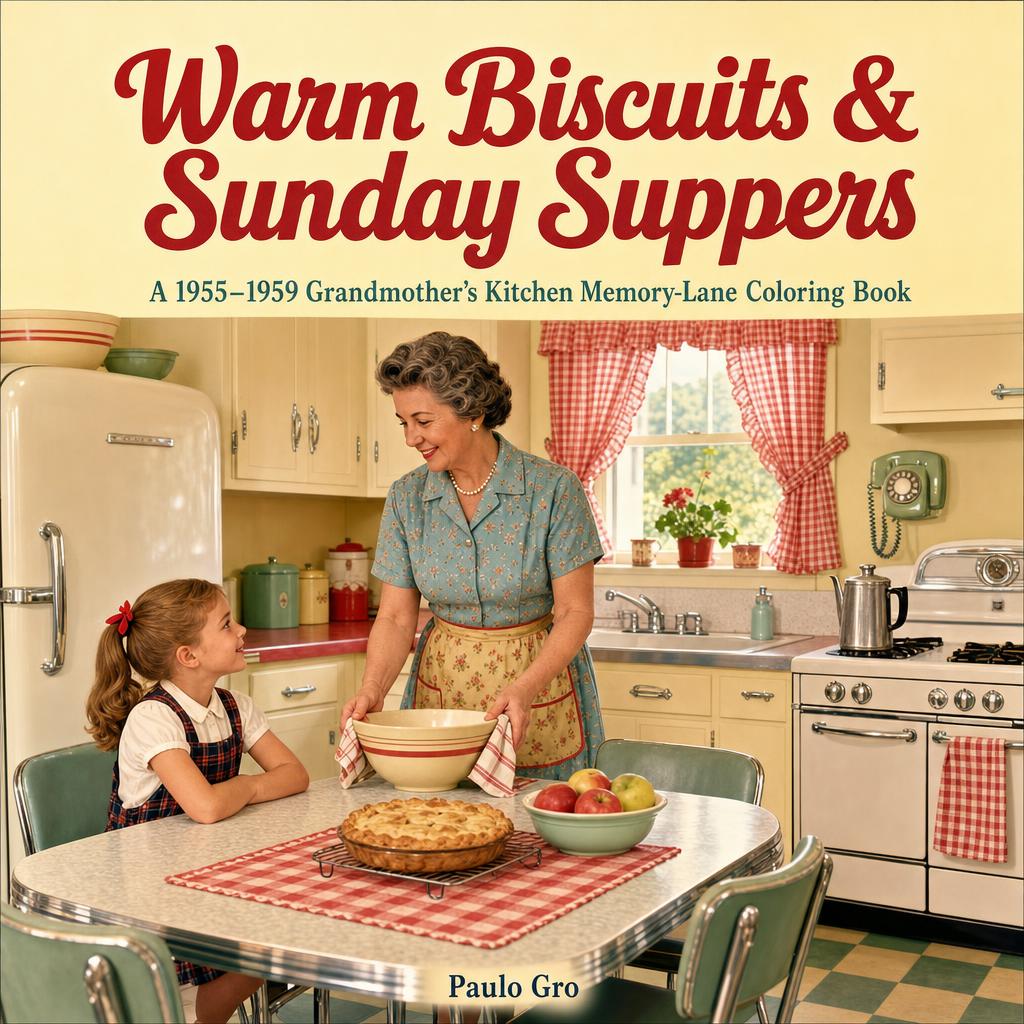
Warm Biscuits & Sunday Suppers
A 1955–1959 Grandmother’s Kitchen Memory-Lane Coloring Book
Product Description (marketplace-ready)
Step back into an American grandmother’s kitchen between 1955 and 1959, when coffee perked on the stove, pies cooled beside gingham curtains, handwritten recipes waited in a little box, and Sunday dinner brought everyone to the table.
Warm Biscuits & Sunday Suppers contains 30 original coloring scenes inspired by the familiar routines and treasured details of a lived-in mid-century kitchen. Readers can revisit breakfast at the table, a rounded refrigerator, a stovetop percolator, a wall telephone, pantry shelves, holiday baking, grocery day, church-supper preparation, washing dishes together, and the peaceful kitchen after the family has gone home.
Designed especially for adult seniors and anyone who enjoys gentle nostalgia, each illustration uses clear black outlines, comfortable coloring spaces, moderate detail, and uncluttered compositions. Period-faithful appliances, furnishings, hairstyles, garments, cookware, and household objects help make every page feel grounded in 1955–1959 rather than generically “retro.”
The finished book will contain approximately 36 pages, including 30 single-sided coloring designs, title and publication pages, and introductory material.
Back-Cover Blurb
Come home to the kitchen where coffee perked on the stove, gingham curtains stirred above the sink, and a handwritten recipe could turn an ordinary afternoon into pie day. These 30 gentle coloring scenes revisit breakfast around the table, grocery morning, Sunday dinner preparations, holiday cookies, dishes washed side by side, and the quiet room after supper. Created with clear outlines, comfortable spaces, and carefully chosen details from 1955–1959, this memory-lane collection invites adult seniors and nostalgic colorists to linger over the familiar rooms, routines, and family moments that made grandmother’s kitchen the heart of the home.
Seven SEO Keyword Phrases
Period Accuracy Lock (copied into every page prompt)
PERIOD ACCURACY LOCK: Set every visible detail strictly in an American home between 1955 and 1959. Use only period-appropriate architecture, appliances, furnishings, cookware, tableware, packaging shapes, telephones, radios, clothing, hairstyles, and printed design; show no visible brands or logos. Prohibit post-1959 technology, microwave ovens, digital displays, cordless phones, modern plastics, contemporary fashion, later decor, and any other anachronism; if uncertain, omit the detail.
Scene Distribution
19 scenes with period-dressed people; 11 people-free memory-trigger environments — chosen by where the nostalgia lands hardest, never alternating mechanically.
The 30-Page Interior Plan
Full-Color Front Cover Prompt (complete)
Create one single square printable page on an exact 1:1 canvas measuring 2550 x 2550 pixels at 300 DPI, corresponding to 8.5 x 8.5 inches. Keep this exact square canvas size and aspect ratio. Do not generate a portrait, landscape, vertical, horizontal, 17:22, 2:3, 3:4, 4:5, A4, US Letter, or differently proportioned image. Maintain an approximately 0.35-inch safe margin and keep all typography and important visual elements inside it. PERIOD ACCURACY LOCK: Set every visible detail strictly in an American home between 1955 and 1959. Use only period-appropriate architecture, appliances, furnishings, cookware, tableware, packaging shapes, telephones, radios, clothing, hairstyles, and printed design; show no visible brands or logos. Prohibit post-1959 technology, microwave ovens, digital displays, cordless phones, modern plastics, contemporary fashion, later decor, and any other anachronism; if uncertain, omit the detail.
Create a full-color, warm, commercially polished front cover for a nostalgia coloring book. Show a welcoming 1957 American grandmother’s kitchen with pale painted cabinets, a rounded refrigerator with a chrome handle, a freestanding range holding a stovetop percolator, red-and-white gingham curtains over the sink, a rotary wall telephone, a chrome-edged laminate table, and an apple pie cooling on a wire rack. Include a smiling grandmother in a tasteful shirtwaist house dress and practical apron, with a carefully constructed short curled hairstyle, setting a bowl on the table while a school-age granddaughter watches. Keep the figures secondary to the inviting kitchen memory and avoid exaggerated expressions.
Use a harmonious mid-century domestic palette of warm cream, soft red, pale aqua, butter yellow, muted green, and restrained chrome highlights. Render the scene clearly and warmly without sepia distress, fake aging, clutter, logos, branded packaging, photorealistic faces, or copied commercial characters. Preserve generous uncluttered space in the upper third for the title.
Place the exact title “Warm Biscuits & Sunday Suppers” prominently across the upper third in large, highly readable, warm cream or deep red display lettering with strong contrast. Place the exact subtitle “A 1955–1959 Grandmother’s Kitchen Memory-Lane Coloring Book” directly beneath it in smaller, clear lettering. Keep all title text straight, correctly spelled, and easy to read at thumbnail size. Place the author name “Paulo Gro” near the bottom center in clear, understated lettering. Do not include any other visible text.
Take in how much arrived from one paste: a named, described, keyworded book with its cover already written — before you lifted a finger. The title alone — Warm Biscuits & Sunday Suppers — is shelf-ready in a way "vintage kitchen coloring book" never will be.
And read those thirty page titles as a set — Coffee on the Stove, The Rounded Refrigerator, Church Supper Kitchen, After the Family Has Gone. That's not a pile of images; that's one coherent remembered world, sequenced like a book.
And Here's How Every Single Page Gets Its Orders
Three of the thirty interior page prompts from that same plan, complete and untouched — each one self-contained, each one carrying the Period Accuracy Lock word for word:
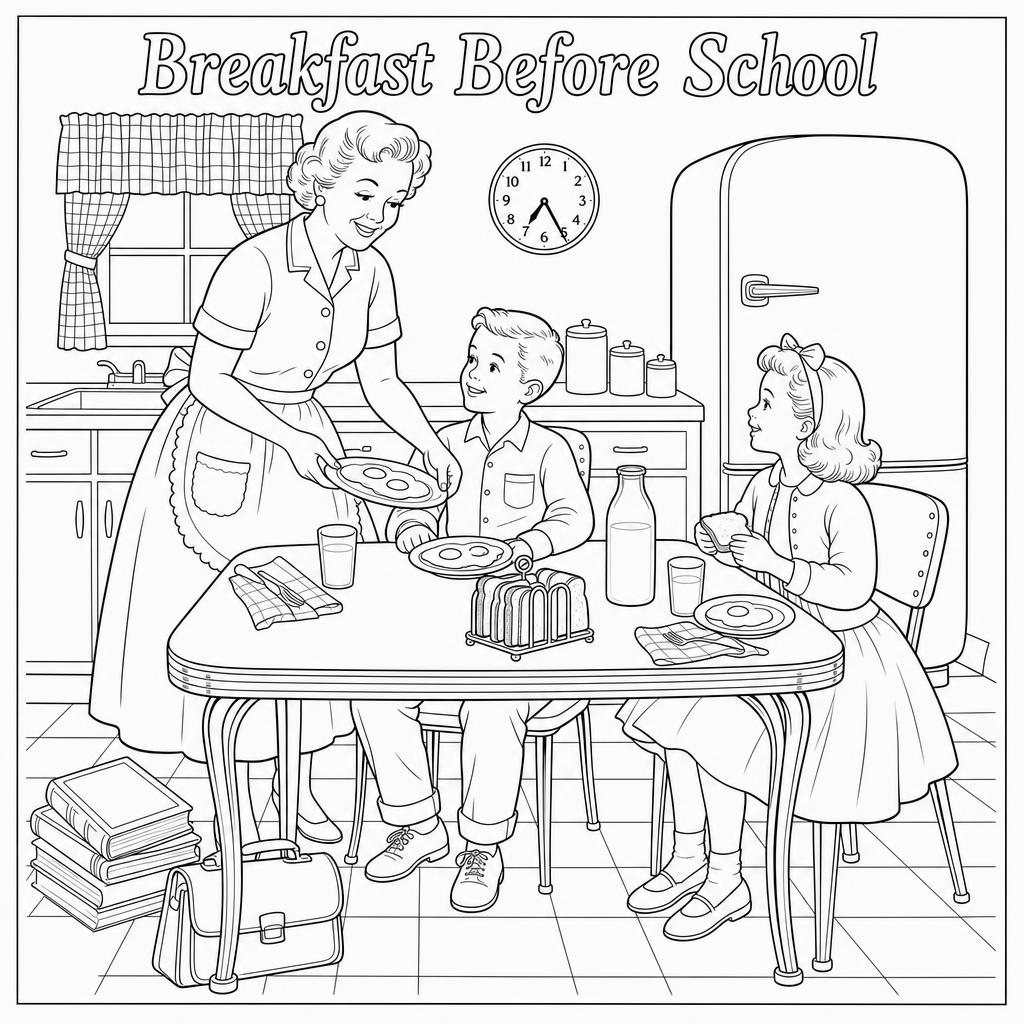
PAGE 1 — BREAKFAST BEFORE SCHOOL
Create one single square printable page on an exact 1:1 canvas measuring 2550 x 2550 pixels at 300 DPI, corresponding to 8.5 x 8.5 inches. Keep this exact square canvas size and aspect ratio. Do not generate a portrait, landscape, vertical, horizontal, 17:22, 2:3, 3:4, 4:5, A4, US Letter, or differently proportioned image. PERIOD ACCURACY LOCK: Set every visible detail strictly in an American home between 1955 and 1959. Use only period-appropriate architecture, appliances, furnishings, cookware, tableware, packaging shapes, telephones, radios, clothing, hairstyles, and printed design; show no visible brands or logos. Prohibit post-1959 technology, microwave ovens, digital displays, cordless phones, modern plastics, contemporary fashion, later decor, and any other anachronism; if uncertain, omit the detail.
Create a black-and-white adult coloring page titled “Breakfast Before School” at the top in readable, tasteful lettering. Show a 1957 grandmother in a button-front house dress, practical waist apron, and neat short curled hairstyle serving eggs and toast to two school-age children at a chrome-edged laminate kitchen table. Give the boy a collared shirt and cuffed trousers and the girl a simple full-skirted dress, cardigan, ankle socks, and tidy hair ribbon. Include everyday dishes, a glass milk bottle without branding, a toast rack, cloth napkins, schoolbooks, a rounded refrigerator, gingham curtains, and an analog wall clock naturally within the room. Make the figures warm and believable rather than caricatured.
Use pure black outlines on a pure white background, bold-to-medium clean contour lines, moderate visual density, clearly separated forms, and generous enclosed coloring spaces suitable for seniors. Keep a 0.35-inch safe margin around all sides and place all text and important elements inside it. Use no grayscale, shading, shadows, gradients, color, halftones, crosshatching, solid black masses, distressed texture, tiny patterns, logos, borders, or extra text.
PAGE 2 — MORNING IN THE KITCHEN
Create one single square printable page on an exact 1:1 canvas measuring 2550 x 2550 pixels at 300 DPI, corresponding to 8.5 x 8.5 inches. Keep this exact square canvas size and aspect ratio. Do not generate a portrait, landscape, vertical, horizontal, 17:22, 2:3, 3:4, 4:5, A4, US Letter, or differently proportioned image. PERIOD ACCURACY LOCK: Set every visible detail strictly in an American home between 1955 and 1959. Use only period-appropriate architecture, appliances, furnishings, cookware, tableware, packaging shapes, telephones, radios, clothing, hairstyles, and printed design; show no visible brands or logos. Prohibit post-1959 technology, microwave ovens, digital displays, cordless phones, modern plastics, contemporary fashion, later decor, and any other anachronism; if uncertain, omit the detail.
Create a people-free black-and-white adult coloring page titled “Morning in the Kitchen” at the top in readable, tasteful lettering. Show a quiet 1956 American kitchen shortly after sunrise: gingham café curtains above a porcelain-enamel sink, a rounded refrigerator with a large chrome handle, painted wood cabinets, a freestanding range, a chrome-edged laminate table with two tubular chrome chairs, an analog wall clock, and simple breakfast dishes waiting on the table. Suggest morning through the open curtains and orderly preparation, not through shading. The room should feel lived-in, modest, clean, and ready for the family to enter.
Use pure black outlines on a pure white background, bold-to-medium clean contour lines, moderate visual density, clear object separation, and comfortable enclosed coloring spaces. Keep a 0.35-inch safe margin and all important elements inside it. Use no people, grayscale, shading, shadows, gradients, color, crosshatching, halftones, solid black masses, tiny linoleum patterns, dense wallpaper, logos, borders, or extra text.
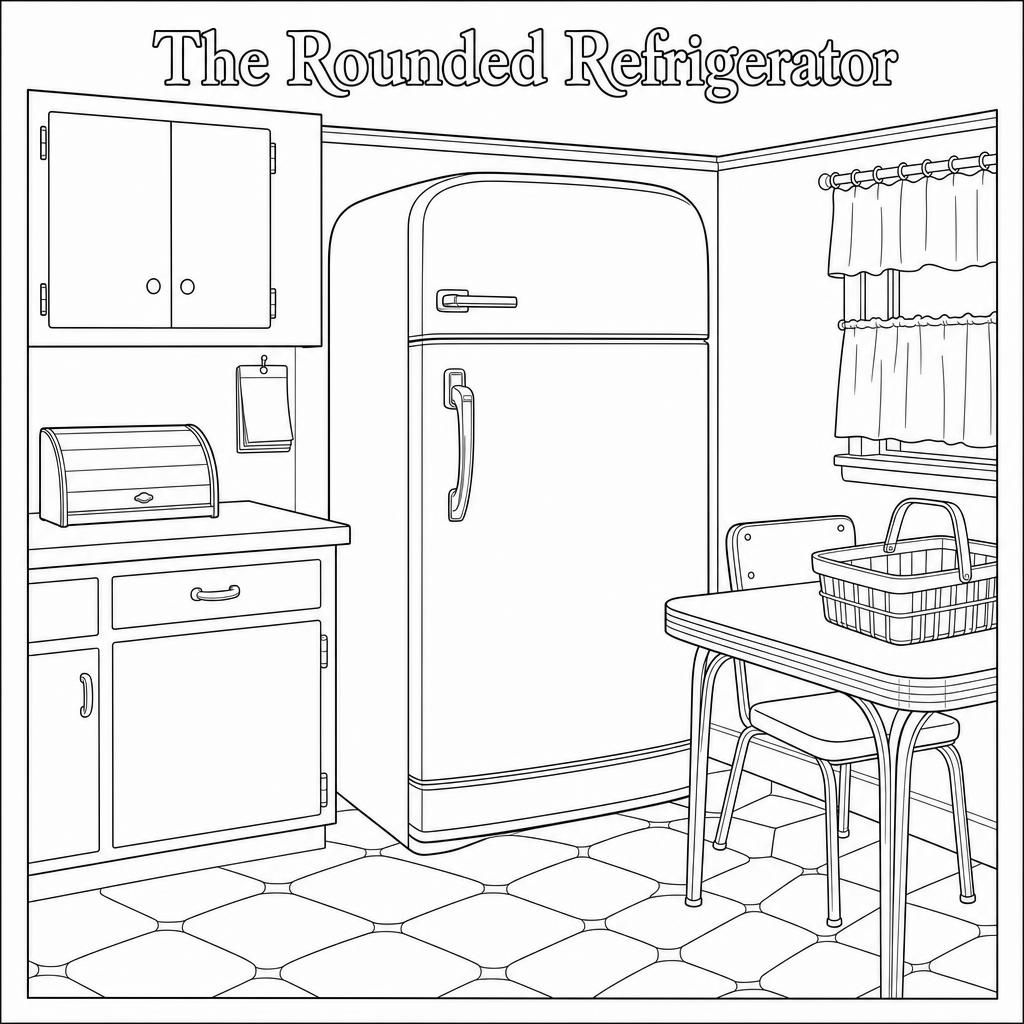
PAGE 12 — THE ROUNDED REFRIGERATOR
Create one single square printable page on an exact 1:1 canvas measuring 2550 x 2550 pixels at 300 DPI, corresponding to 8.5 x 8.5 inches. Keep this exact square canvas size and aspect ratio. Do not generate a portrait, landscape, vertical, horizontal, 17:22, 2:3, 3:4, 4:5, A4, US Letter, or differently proportioned image. PERIOD ACCURACY LOCK: Set every visible detail strictly in an American home between 1955 and 1959. Use only period-appropriate architecture, appliances, furnishings, cookware, tableware, packaging shapes, telephones, radios, clothing, hairstyles, and printed design; show no visible brands or logos. Prohibit post-1959 technology, microwave ovens, digital displays, cordless phones, modern plastics, contemporary fashion, later decor, and any other anachronism; if uncertain, omit the detail.
Create a people-free black-and-white adult coloring page titled “The Rounded Refrigerator” at the top in readable, tasteful lettering. Show a 1956 kitchen corner centered on a substantial rounded refrigerator with a smooth unbranded door, curved corners, separate small freezer compartment, and prominent chrome pull handle. Keep the door free of modern magnets and photographs. Place it naturally beside painted cabinets, a metal bread box, a small grocery-list pad with no readable writing, a market basket, and a chrome-edged table. Include restrained linoleum geometry with large shapes.
Use pure black outlines on pure white, bold-to-medium lines, moderate visual density, clear forms, and generous senior-friendly coloring spaces. Keep all details within a 0.35-inch safe margin. Use no people, grayscale, shading, reflections, shadows, gradients, color, tiny floor patterns, crosshatching, solid black masses, logos, decorative border, or extra text.
The senior-friendly rules aren't a suggestion in there — they're hard-coded into every page's orders: pure black outlines, bold-to-medium lines, generous coloring spaces, a 0.35-inch safe margin, and an explicit ban on the cramped micro-detail that ruins most AI coloring pages.
Now multiply this by 48 themes and 336 prompts — every one of them producing a plan this complete for its own corner of the memory-lane world.
Here's the Cover That Came Out of That Plan
Rendered straight from the cover prompt above — title, subtitle, and author name already placed and readable at thumbnail size. The rounded refrigerator, the percolator, the gingham curtains: every element the Period Accuracy Lock demanded, and nothing from a later decade.
The Main Street and soda-fountain covers you'll find in the themes section below came from two other prompts in this collection, exactly the same way.
Here's What the Interior Pages Look Like
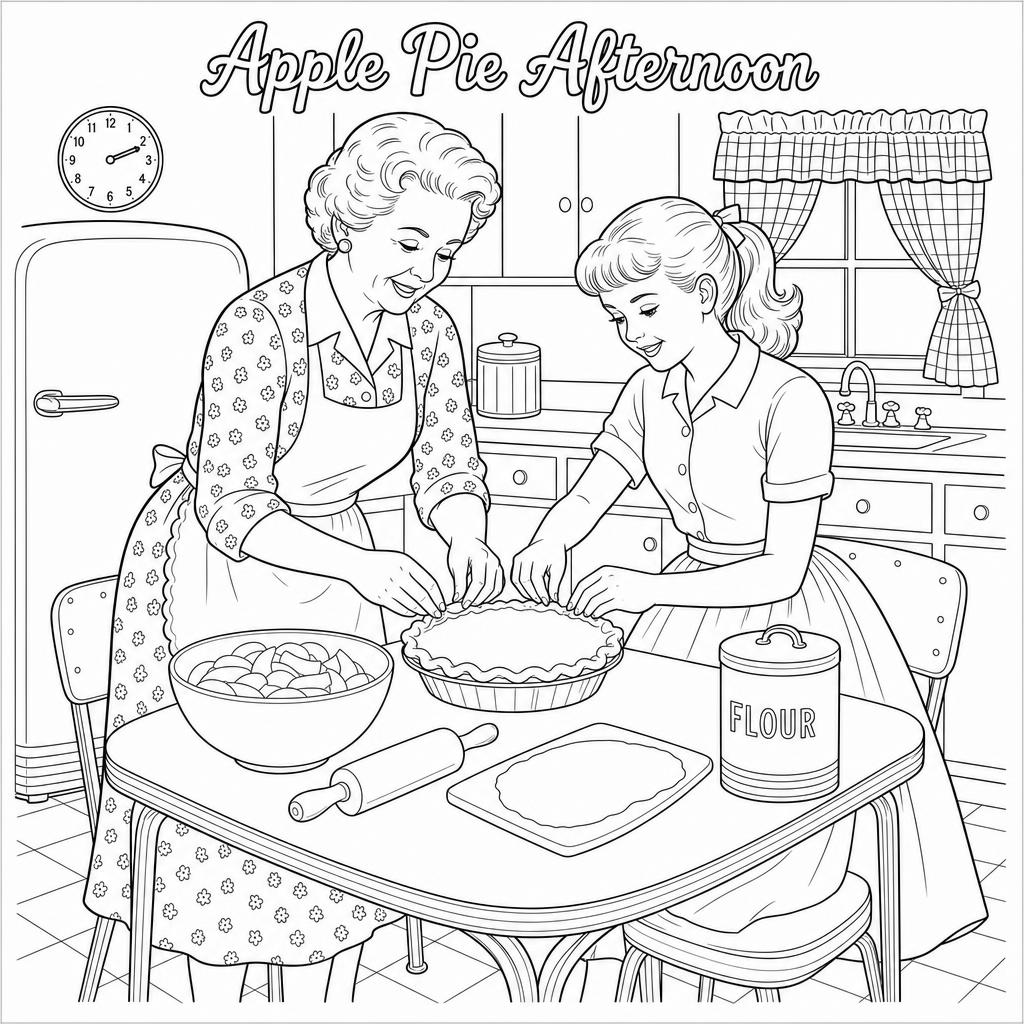
Fifteen finished pages from Warm Biscuits & Sunday Suppers, rendered by the agent from the plan you just read — bold, open, clearly separated lines an older hand actually enjoys coloring:
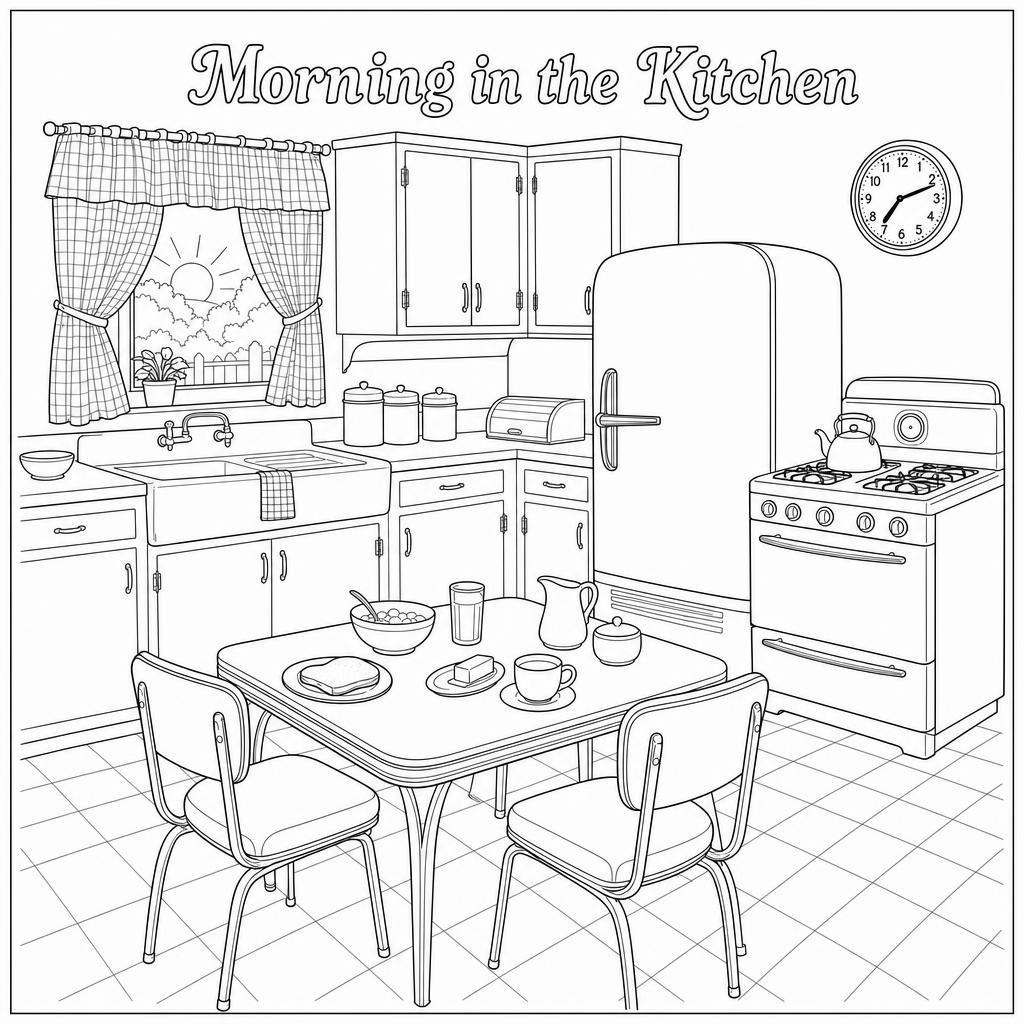
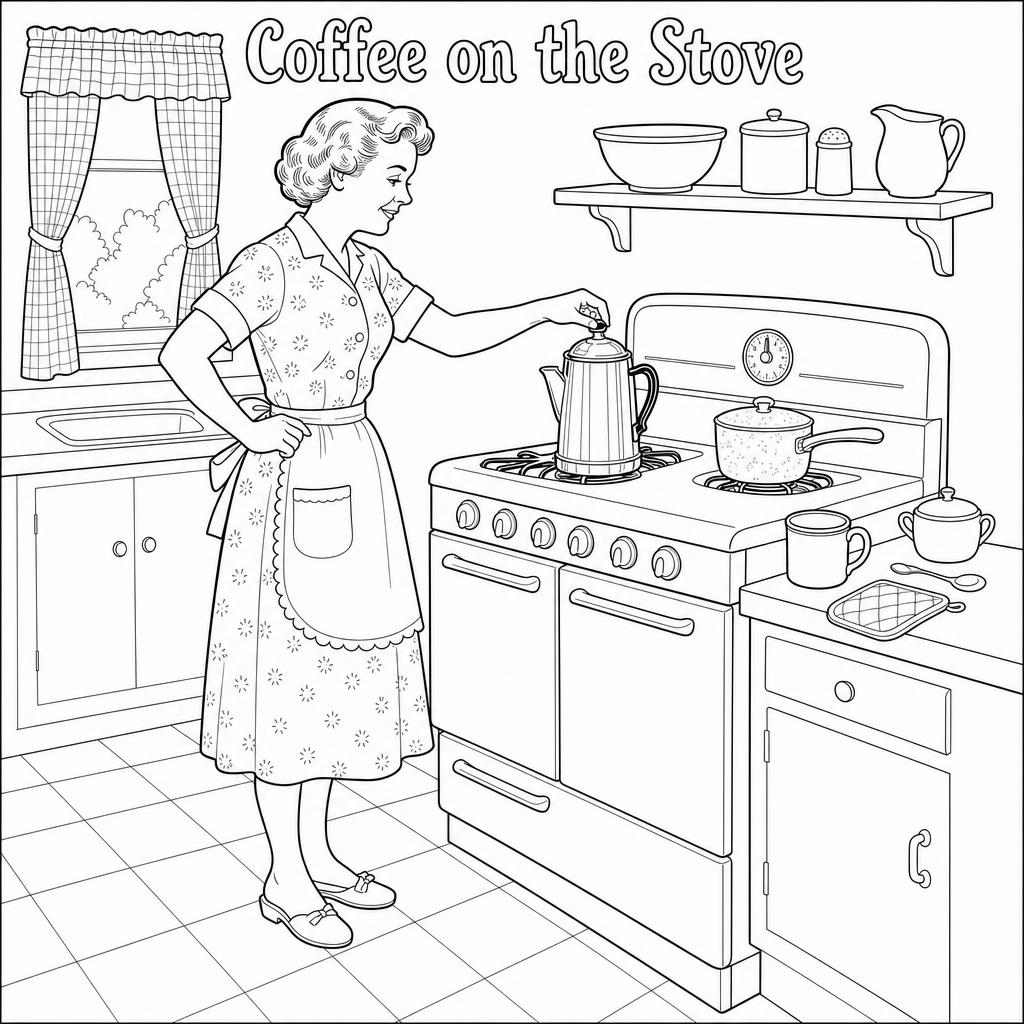
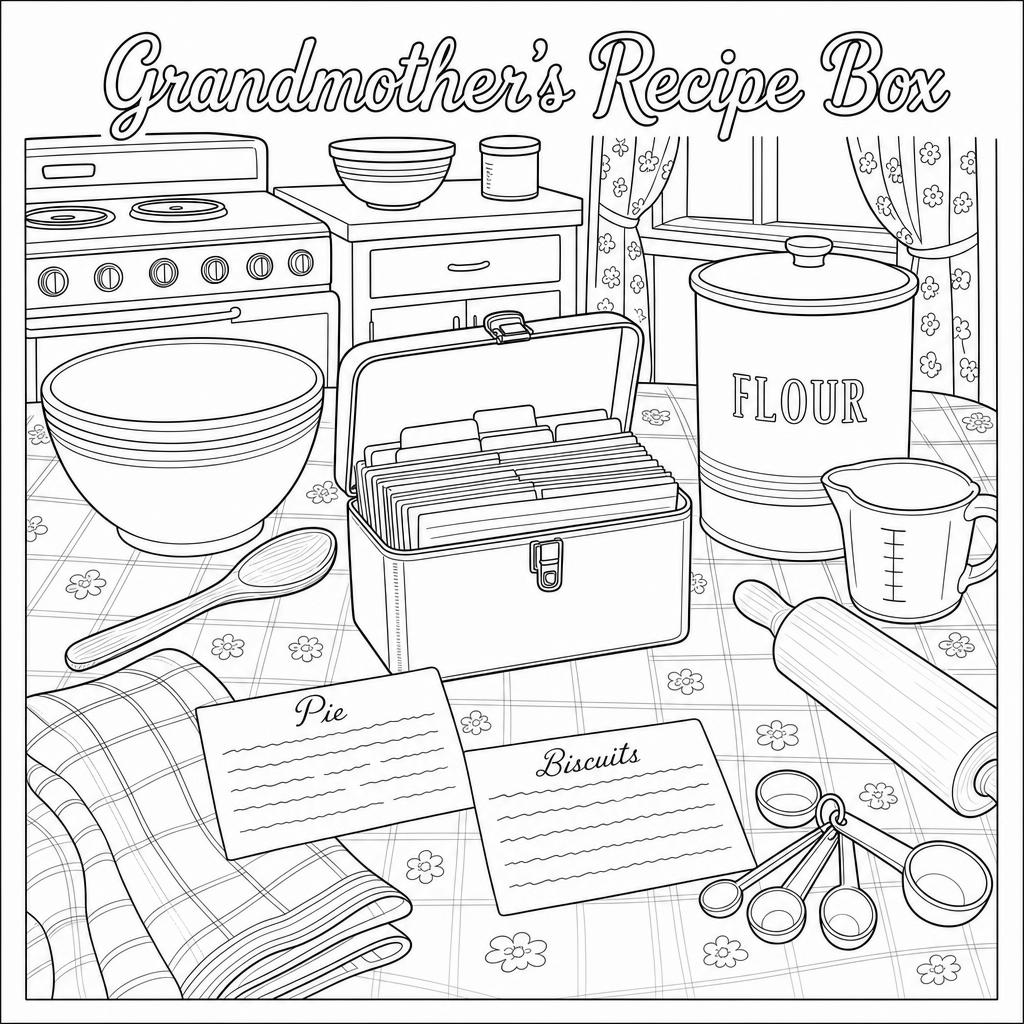
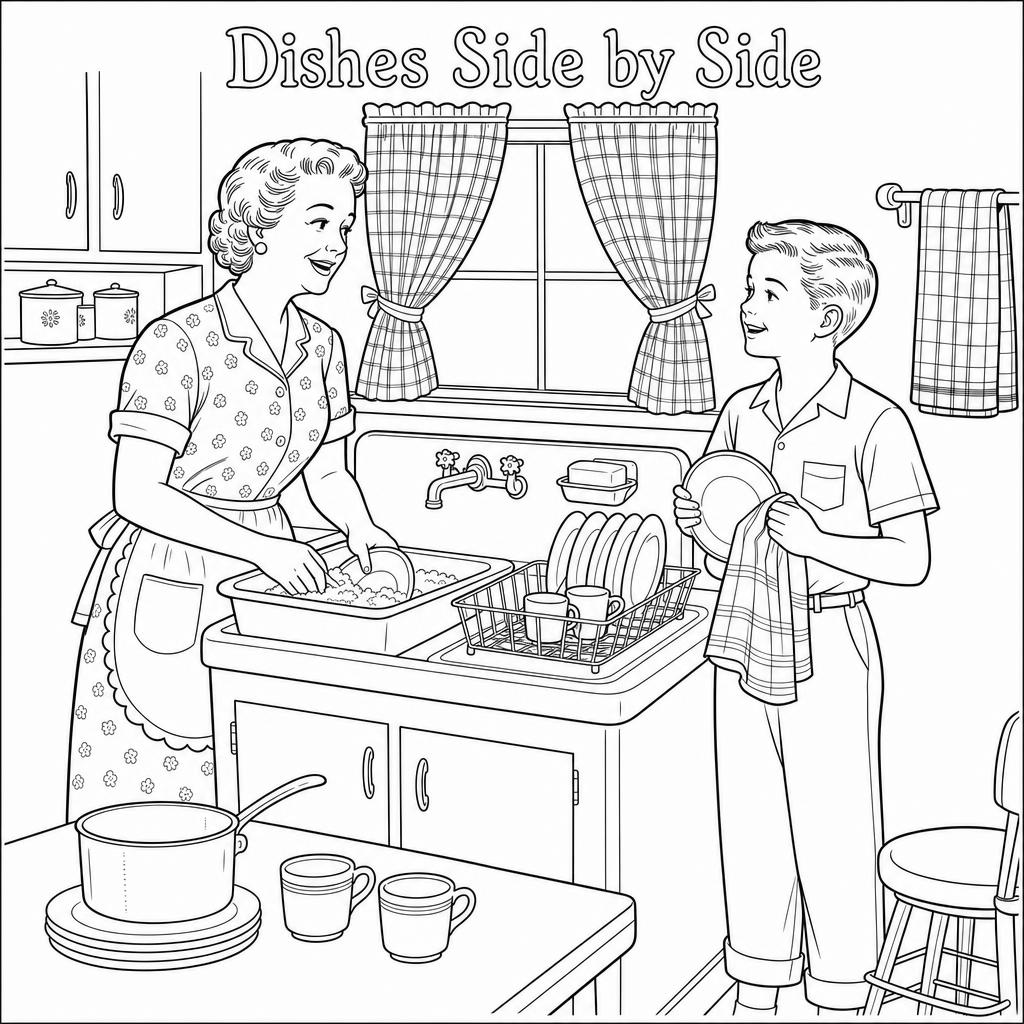
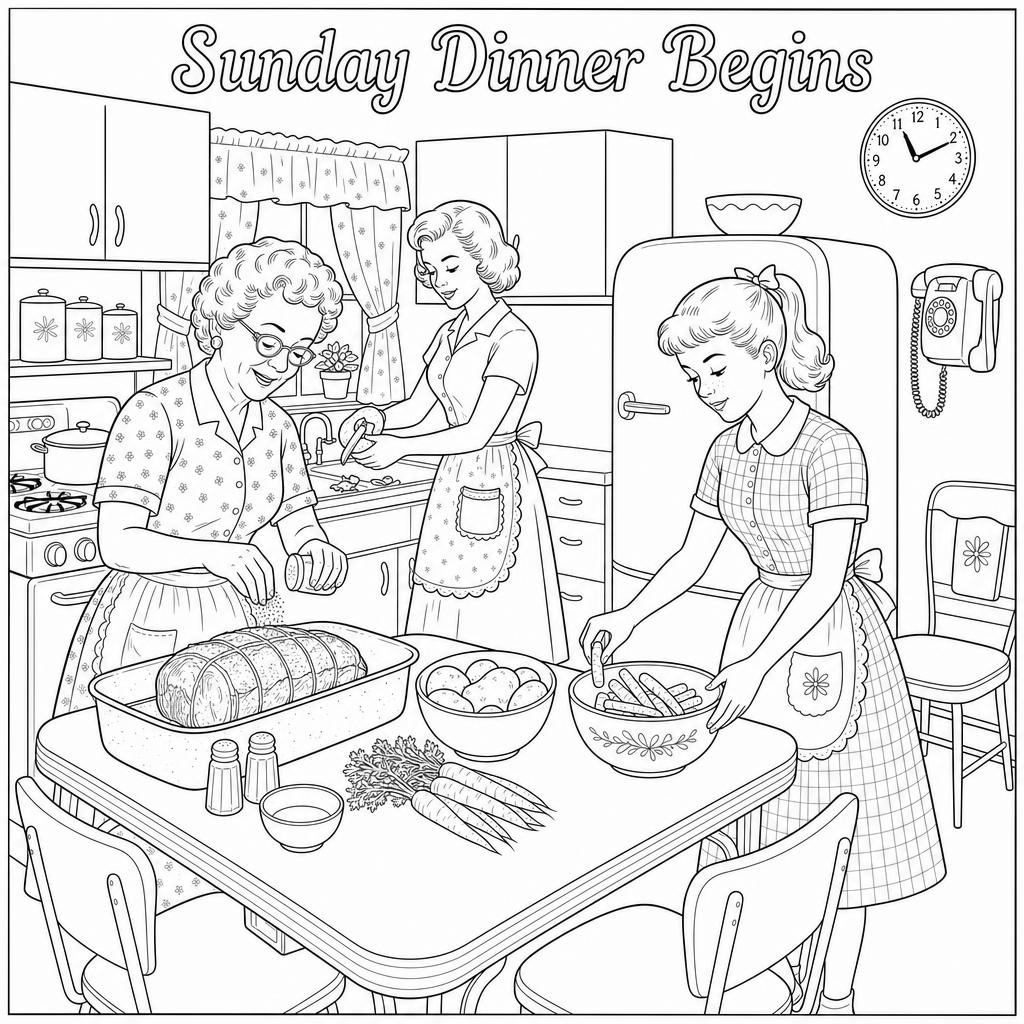
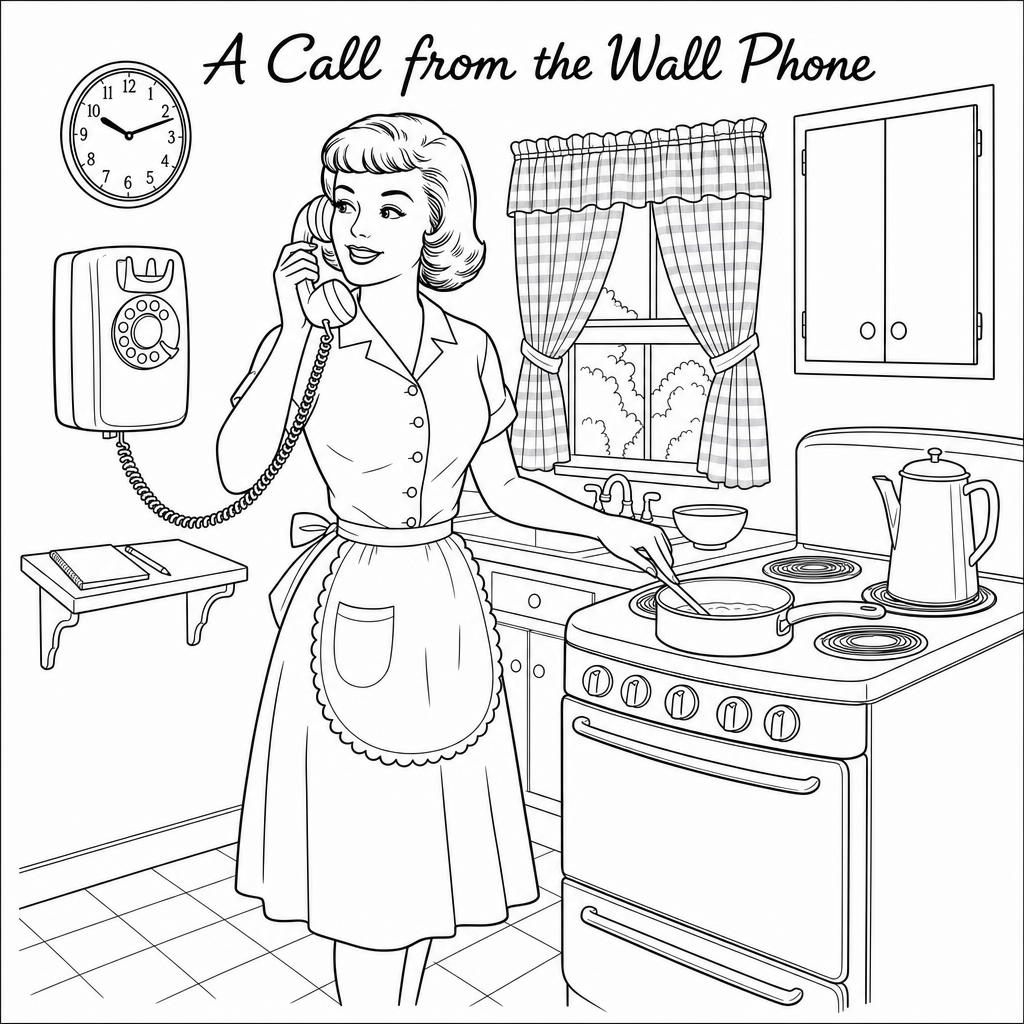
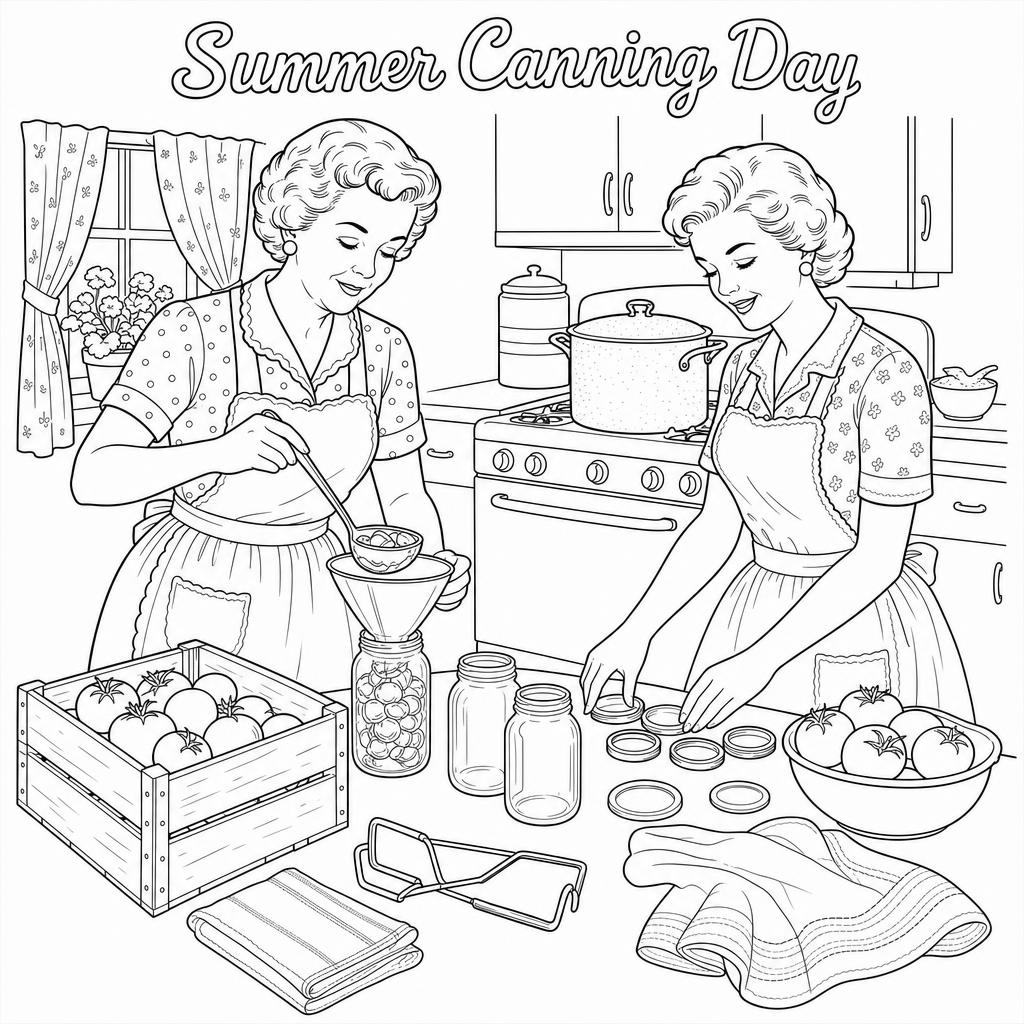
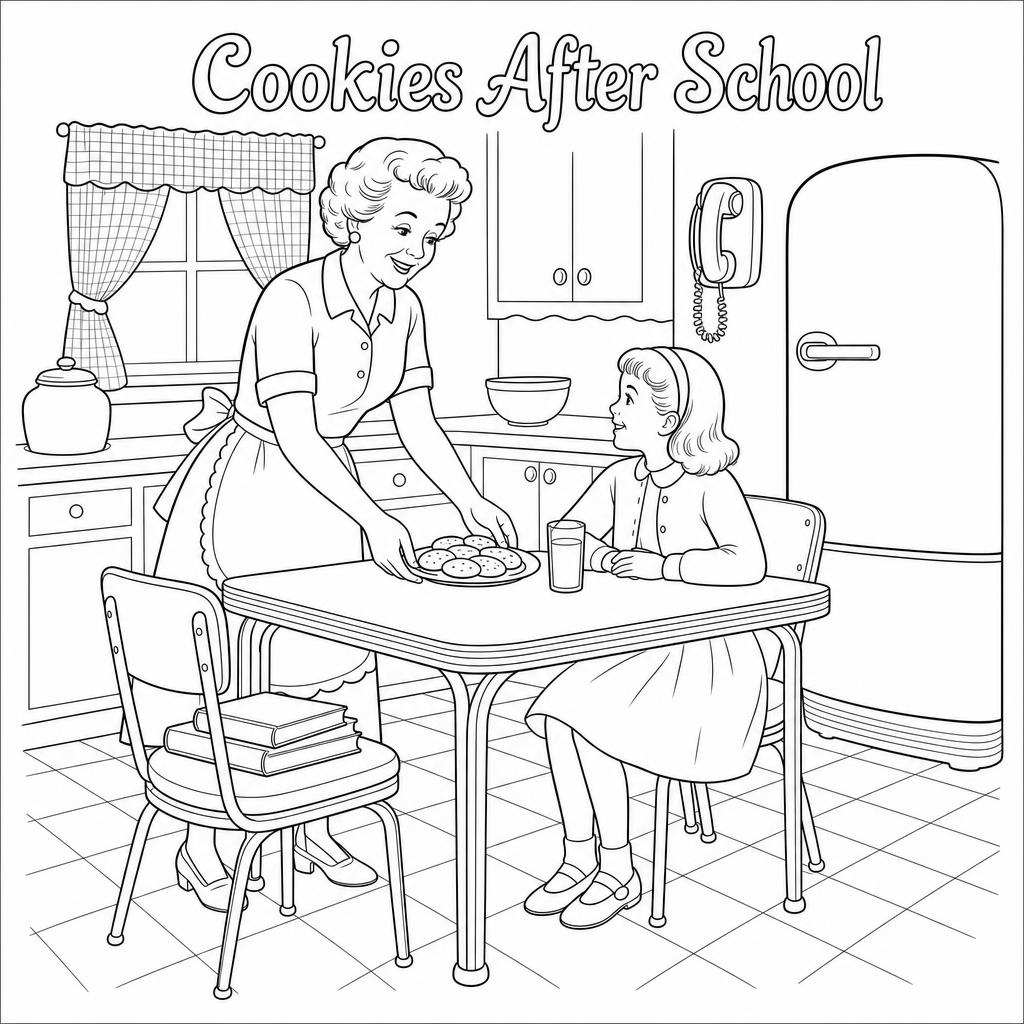
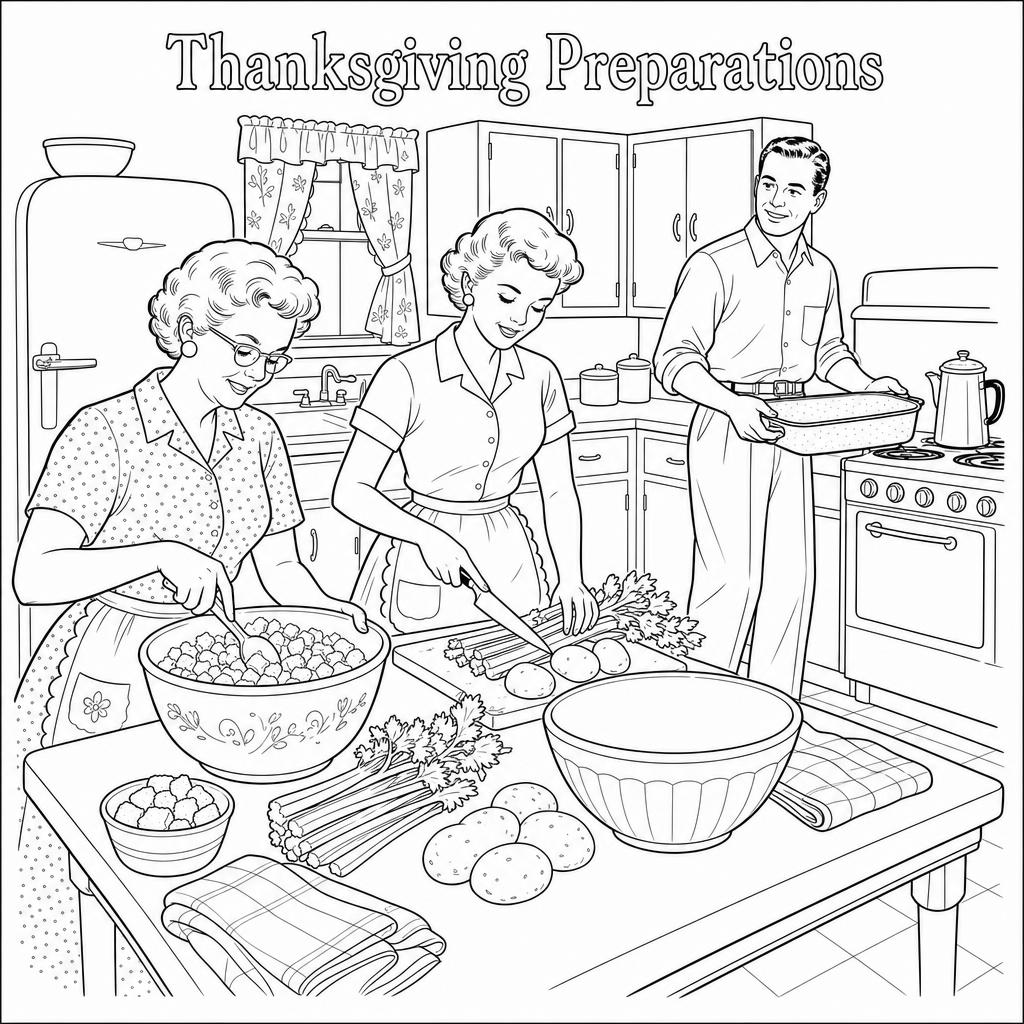
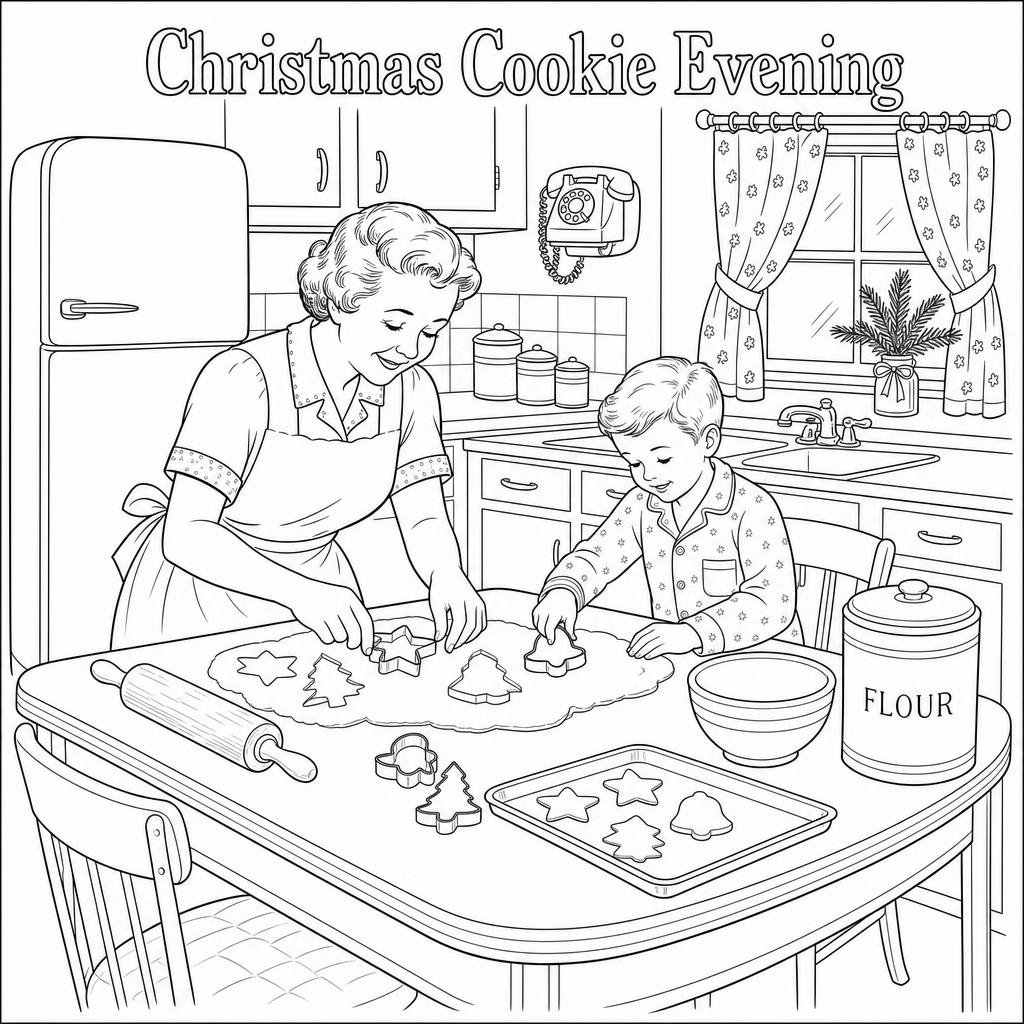
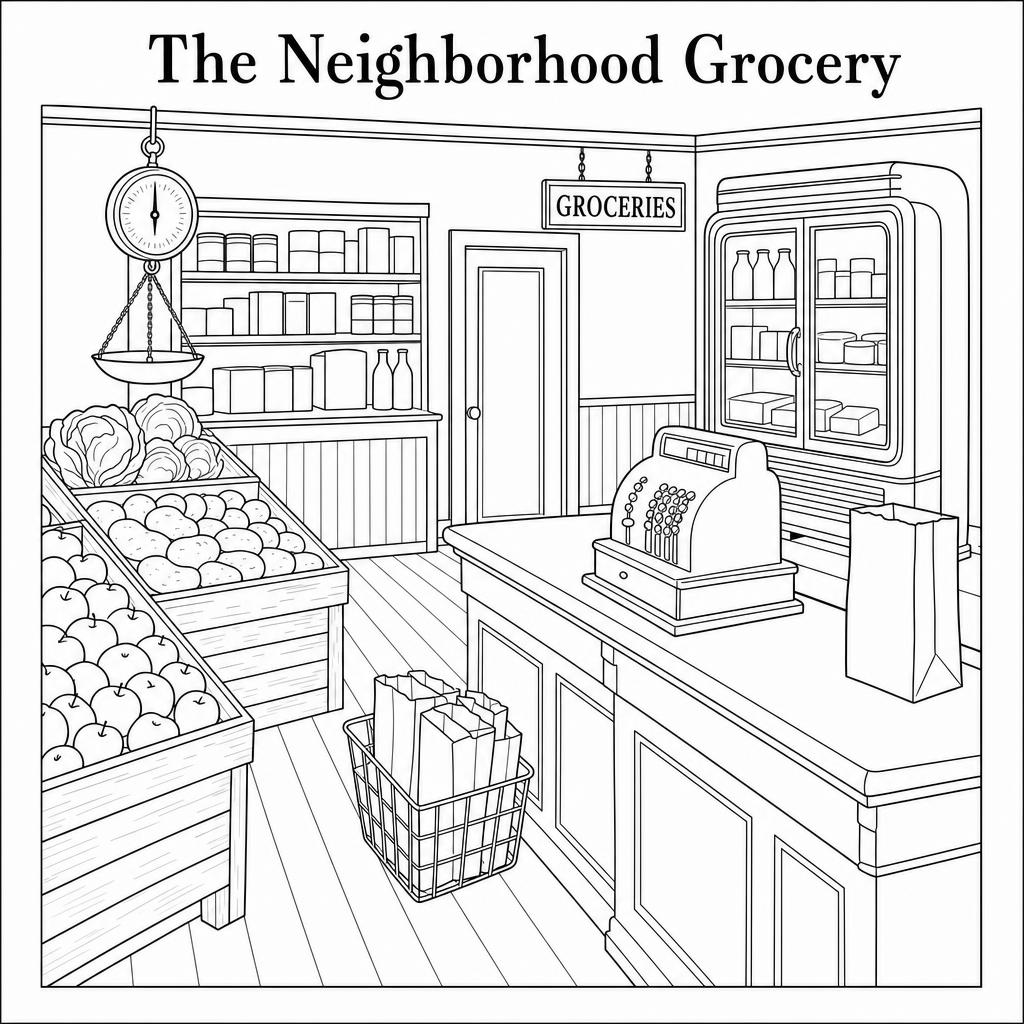
Study the details the era lock forced into them: the wall phone's coiled cord, the waxed-paper lunch wrap, the enamel canning kettle. A reader who lived those years spots every one — and that recognition is the entire product.
And note what's missing: no gray fills, no crosshatching, no tiny fussy tangles. Every page passed the agent's own quality gate before it reached the folder.
Here's What "Volume 2" Can Do
Same kitchen, same decade, thirty brand-new scenes with zero repeats — and its own Volume 2 cover. Here it is beside three of its pages: Biscuits Cut by Hand, A Recipe Shared with a Neighbor, The Borrowed Casserole Returns.
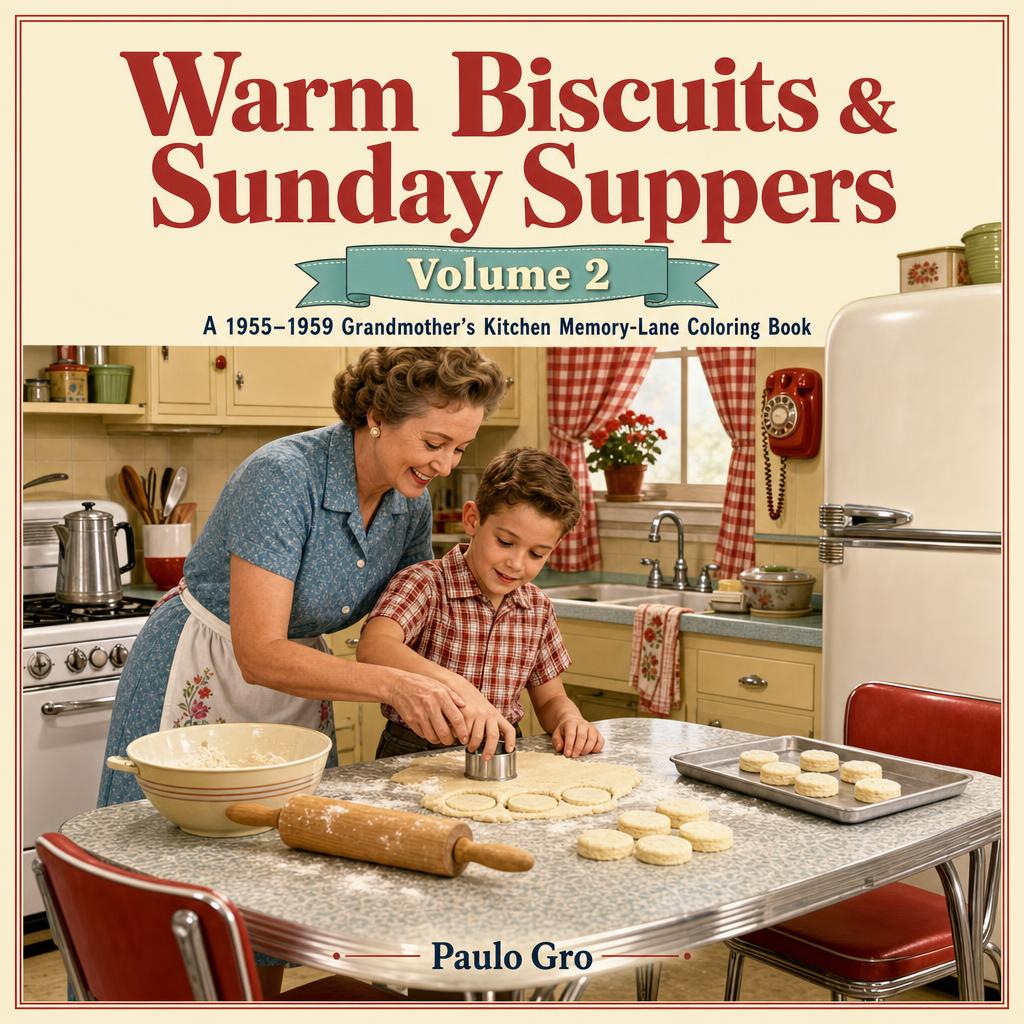
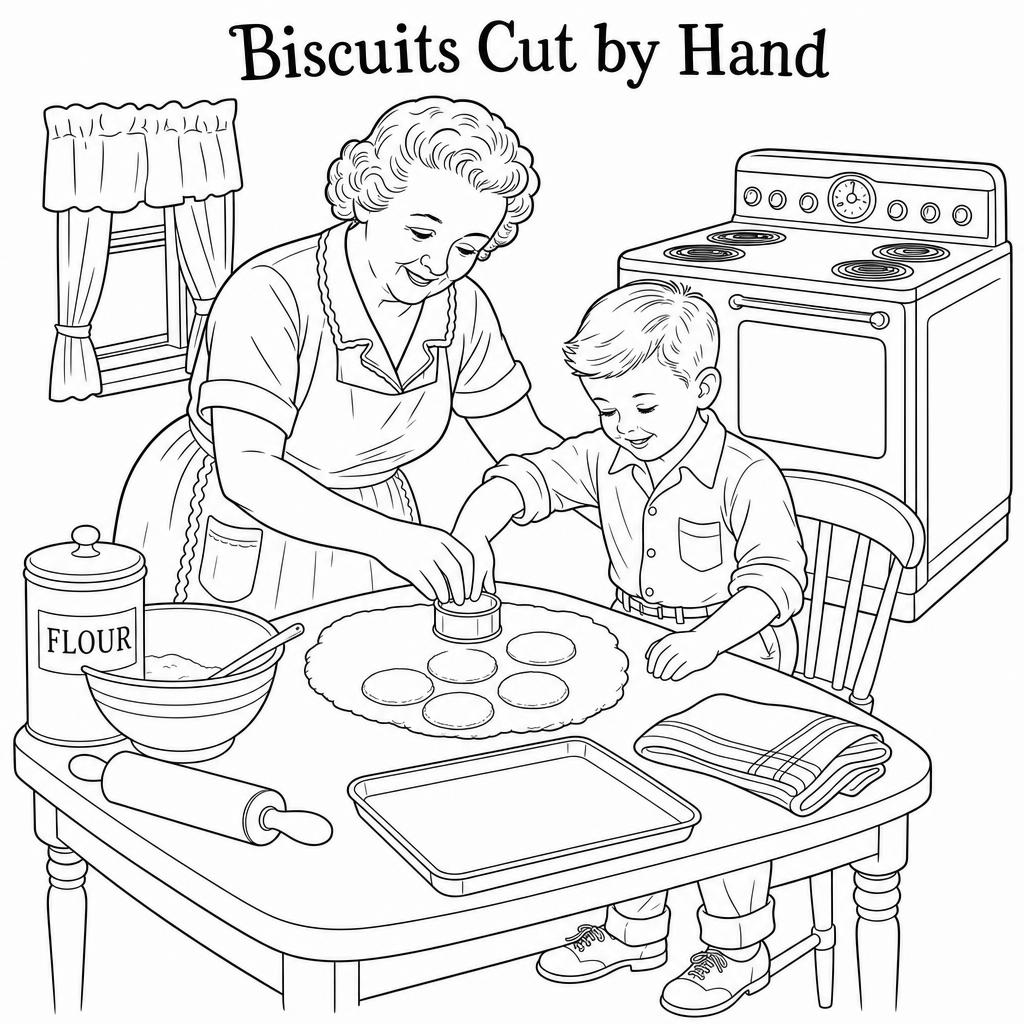
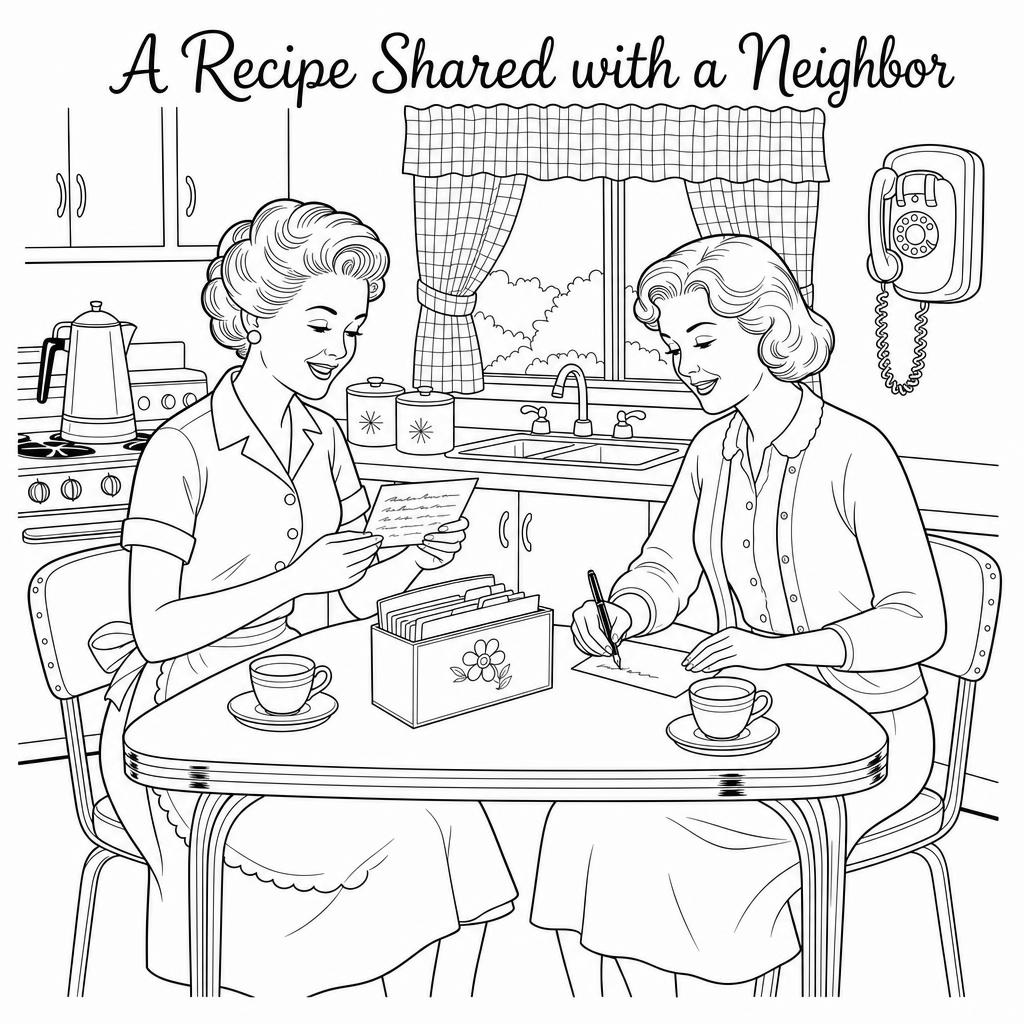
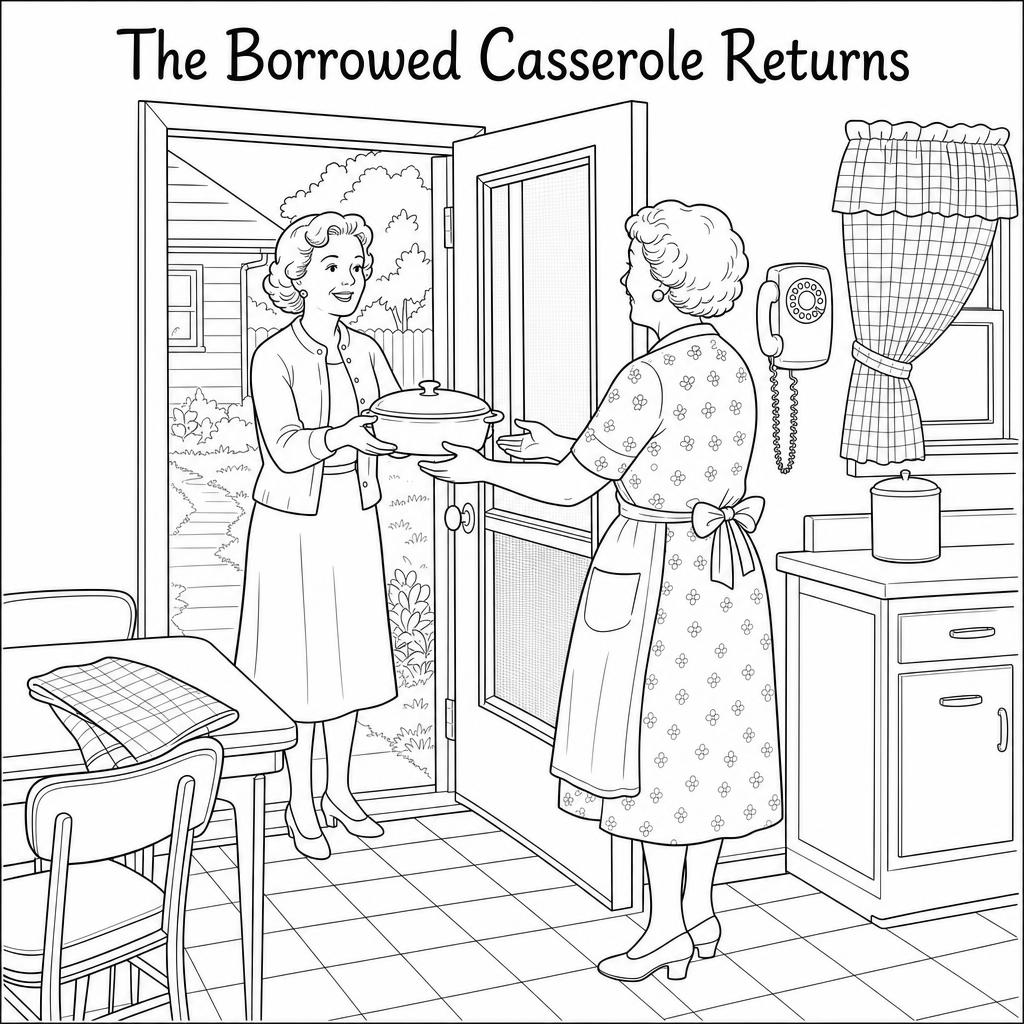
This is the moment a single book quietly becomes a series you can sell as a set — and every one of the 336 prompts carries this same second, third, and fourth life inside it.
Ten Doors the Same Rendered Book Walks Through
Notice that every channel on that list feeds from the same files: the book you render once can be a paperback, a download, a box set, and a gift-shop copy on the same day — none of them cannibalizes another.
And the effort curve only bends one way: the rendering happened once, but the listings keep collecting — every new volume stacks on top of the ones already out there earning.
The Engine Is Built. The Shelf Is Waiting. Only Your Name Is Missing.
A market that grows 10% a year toward $350 million, an audience expanding by the day, and storefronts that print and ship for you — the demand has never been in question.
Until today, the only thing missing was the ability to actually make the books — the drawing, the era research, the senior-friendly lines, the publishing files, thirty times over.
Now, you have that technology. Paste once into ChatGPT Codex or ChatGPT Work, and you get the full arsenal:
You are standing at a crossroads.
You can keep meaning to publish "someday." Another season of watching this niche fill up without you.
Or...
You can click the button below — and paste one prompt tonight, and hold a finished book by morning.
The good old days never go out of print.
Click the Buy Now Button and Secure Your Copy of 336 Agentic Prompts for Memory Lane Coloring Book Series Today!
Questions? [email protected]
All the best,

Paulo Gro
P.S. — What you're really getting is a book factory for a market that never cools off: 336 Agentic Prompts, each one holding a complete, era-perfect coloring book — and every "Volume 2" behind it — that ChatGPT Codex or ChatGPT Work renders and packages for Amazon and Etsy without you drawing a single line.
Remember the numbers: a category climbing 10% a year toward $350 million, the fastest-growing age group in the country as its core buyer, and platforms that handle the printing and shipping for you.
Somebody's grandmother gets handed one of these books this Christmas — and somebody published it. Decide tonight which side of that sentence you're on, before this launch window closes.
Click here and secure your copy of ‘336 Agentic Prompts for Memory Lane Coloring Book Series’ NOW!